
Busia school creates jackfruit wine and new income for farmers

By Antynet Ford
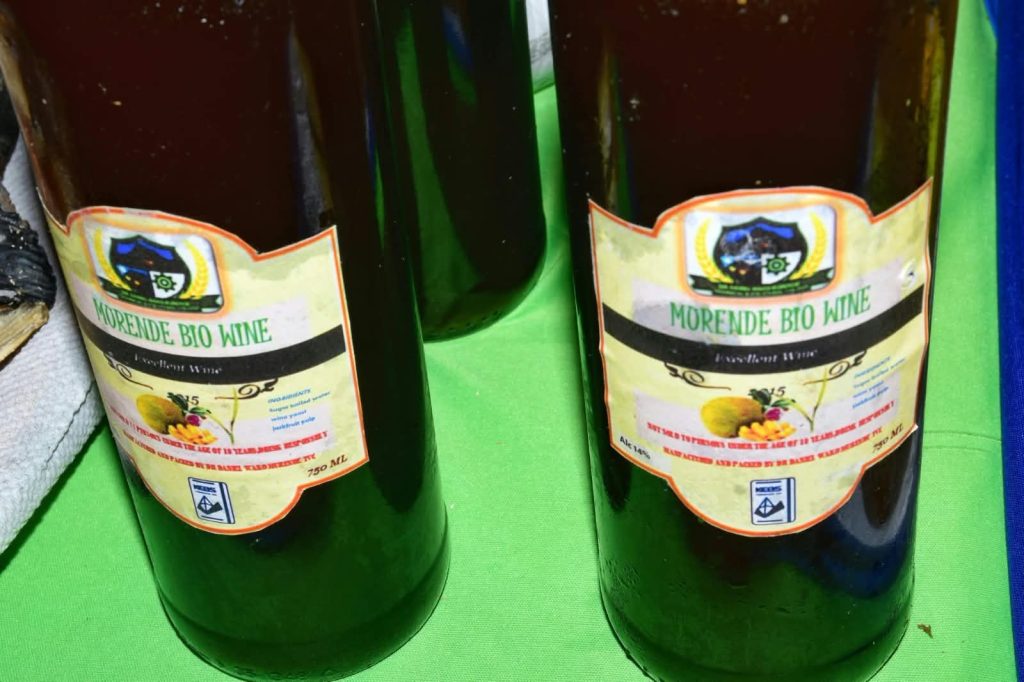
A technical vocational centre in Busia that began making jackfruit wine as a classroom project has hit so much success, it is now commercialising the wine and is preparing to source growing quantities of the previously discarded fruit from farmers in Busia and neighbouring Uganda
The Daniel Wako Murende Technical Vocational Centre began making the wine last year when one of the units being taught in applied sciences needed students to make alcoholic and non-alcoholic beverages.
“We decided to be more innovative and use the locally available materials to make wine as we could not afford making it from grapes, which are commonly used,” said Kuyali Zaida, the centre’s Head of Department, Applied Science, in an interview with FarmBizAfrica.
“We opted for jackfruit because like grapes, it also has a high content of sugar, which is necessary during the production process,” she said.
“Jackfruit is widely available in Busia county at large and most of the time it is underutilised and not many people know about its value addition so they just throw it away, or give it to their animals.”
“At first when we were trying out, we did not know how the product would come out, but after the whole process, it came out so well and we decided to proceed after the locals came, tasted from around and they gave feedback that it was good,” she said.
“The county government of Busia approached us when they heard about the production and asked we showcase at the 2025 devolution and when we did everyone loved the wine as they asked how they could buy it in their cities,” said Kuyali.
“As of now the 40 litres of wine that we produce on a monthly basis is just sold locally around Busia as we also do not have the right standard of the required bottles because we are just using these recycled ones,” she said.
“A litre of the wine costs Sh1,000, while there is some that we sell at Sh750 and even as low as Sh300 for the small bottle. The price is determined by the local community where we are located because we want all of them to afford the wine and learn the goodness of value addition from the fruit.”
Many in the community are also set to win from the wine in extra fruit sales too.
“We get the fruits from farmers around the village at the school where the farmers just bring the fruits and we take at Sh300 per fruit.”
“In a day, we get to see a farmer bringing three or even five fruits that are ripe and we buy it,” she said.
“Currently we are not buying in bulk, because we are still looking for the KEBS certification among the others, including the KEPHIS one for safety and trust that the product meets the required standard.”
But with the certification in place, the school hopes to launch into commercial production by the middle of next year.
It is now planting jackfruit seedlings in its own small farm during the October to December short rains, with fully grown jackfruit being the only tree in the world that produces fruits weighing up to 50 kilograms for over 100 years, in cold and high temperatures alike.
“The seedlings that we have acquired for planting will just be a supplement to what we get from the farmers. We do not have a big land which we can say that all the fruits we plant shall be enough.”
“Also putting in mind that the trees take time before they start producing and we are looking at starting the commercial production before mid of next year, the trees shall not be mature enough for us to harvest fruits of our own,” she said.
“After we receive the certification and now get fully into the commercial production, we shall be sourcing more from the farmers because they are ones who have it in plenty already.”
“The community around has been positive, with others now planting the fruit as well, because they know they’ll have somewhere to sell it, unlike before. They’ve also learnt that they can be able to value add the fruit to make more income,” she said.
“If the ones in Busia are not enough, we shall also import from the neighbourhood in Uganda, because they also produce the fruit in plenty,”
At Murende, when farmers bring in their fruits, they are first washed, then sliced and the process of squeezing its juices begins.
Other ingredients are then added to the juice before it is then left to ferment into wine.
Get your farming news by email.
Free. Market prices, crop news and farmer opportunities, straight to your inbox.