
Eldoret farmer beats feed shortage with super-productive Pakistan sorghum
By Antynet Ford
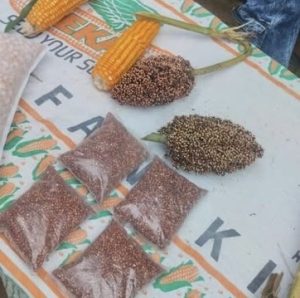
Eldoret farmer Edwin Ronoh has shifted from planting normal Kenyan sorghum to Pakistan’s Johar, harvesting five times, at 35 tonnes an acre, since January, to continue producing 30 litres of milk a day from his dairy cows throughout the year’s extended dryness.
Edwin switched to the sorghum as the main source for silage on his 20-acre Baraka Farm in Eldoret after buying the seeds at the 2025 Nairobi International Trade Fair from Kalro.
“I have this new variety of sorghum from Pakistan. It takes between 45- 60 days to mature. This is the one that I planted at the beginning of this year and I have harvested five times this year because of the high demand from farmers who have been buying sorghum silage from me in the region,” he said.
“I planted it in January and it has been producing 35 tonnes per acre and it takes, as I said, 45-60 days, as I told you, which is very fast. With that, it has been giving me a cheaper method to feed my cows and also make an extra income for myself through the sale of silage.”
“It’s called Johar and has long stalks, which are very good. It has 24 per cent protein and so the animals are getting enough protein for milk production.”
The variety’s high protein levels compare with 15 per cent in local sorghum, making a much richer fodder, which also thrives in drought.
Edwin also produces yellow maize silage, but had to irrigate to keep it producing for silage during the dry period, with it needing far more water than the sorghum.
“I had to start irrigating my farm to continuously produce throughout even when there was no rain. I had to turn to irrigation because I could not see my milk production going down like it’s been for other farmers here in Eldoret,” he said.
“Sorghum is good because it is drought resistant and perennial. When it was raining a little it would survive with it, but I also had to look for alternative means of ensuring it grows steadily by the introduction of irrigation,” he said.
“So I am still producing sorghum silage through fermentation for seven days. My production has grown by 10 per cent so far, since last year, when I last spoke to FarmbizAfrica, even while there has been depressed rainfalls this year.”
The sorghum has driven that increase, still growing after each cut, but, in the end, he has begun to sell out
“I have been selling sorghum silage at Sh1500 for 50kg bales, but, this month, it is sold out and will be available by mid next month. The demand has been high especially from dairy farmers around Eldoret as you know they have been struggling a lot with feeds for their animals as the prices for the other commercial feeds have been sky rocketing,” he said.
He still has maize silage available, which can still replace high-protein soya and sunflower thanks to its fermentation.
“What I currently have is silage for yellow maize and I have bales of 60kg and 100kgs, which I sell at Sh900 and Sh1800. I understand when farmers say buying feeds is very expensive and you may not be able to fulfill the needs of the animals so you’ll be underfeeding them,” he said.
Many of the country’s livestock farmers are now grappling with the cost of feed as their biggest challenge, with protein sources like soya and sunflower meal often priced out of reach, yet dairy cattle require diets containing 16 to 18 per cent protein for sustained milk production, while dairy goats perform best at around 14 to 16 per cent.
Conventional maize stalks typically contain only 6 to 8 per cent protein, offering little value when fed directly. But properly fermented silage changes the protein. Scientifically, it converts carbohydrates into lactic acid.
This makes it more digestible for livestock, and can raise protein levels to 15 to 20 per cent, making it comparable to many commercial rations, but at a fraction of the cost.
Get your farming news by email.
Free. Market prices, crop news and farmer opportunities, straight to your inbox.
Set county, crops and alerts
Become a free member so weather and saved tools follow your farm profile