
Exporters tackle red tape and expansion in new China market for dried chillies
By Antynet Ford
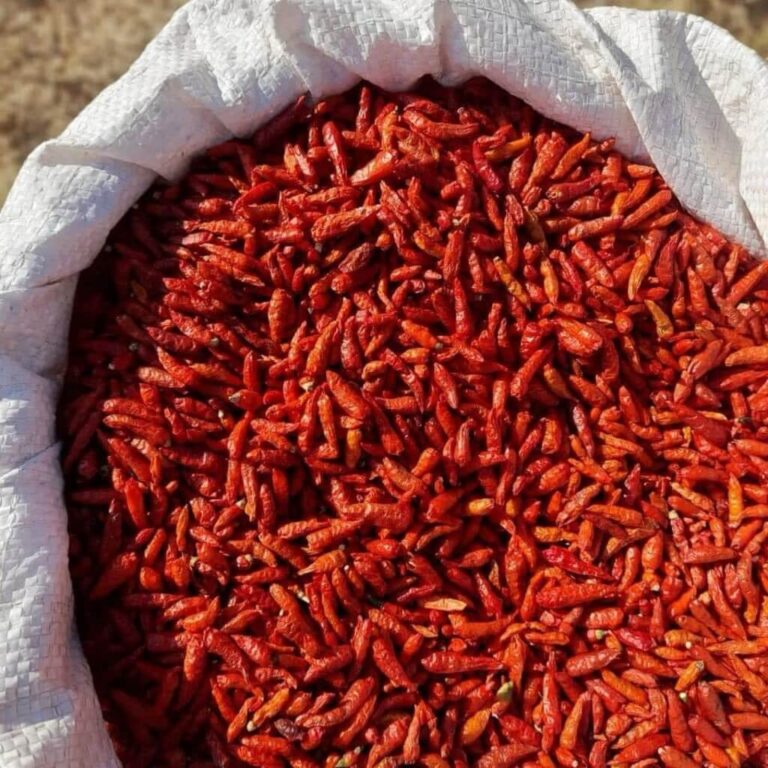
The Kenya Plant Health Inspectorate Services (KEPHIS) has announced the opening of China to dried chilli exports from Kenya, adding a new market for a sector that had collapsed in recent years on added requirements by its largest buyer, the European Union.
Kenya’s registered chilli exporters slumped from 63 in 2015 to 15 by 2020 following the adoption by KEPHIS of rules on netting chilli fields to prevent false coddling moth infestation, versus the alternative of hot or cold post harvest treatment to remove the quarantine pest.
The opening of a new, alternative market in China is raising renewed hopes in the sector, following the opening of the Chinese market to fresh chillies, just months earlier. But sales will require lengthy registration with the Chinese authorities, and the mobilisation of chilli drying capacity, say exporters.
“This is a new market and dried chilli will require me getting extra facilities to dry the chilli, storing it…But even before that, I have to secure a market first because I cannot just do it blindly,” said Beatrice Mwende, an exporter who has already applied for an export license for one of her FreshLink Exports clients for fresh chillies to China, where they have won an order.
For dried chillies, she said, “it is doable, as long as you get market.” But exporters need to be prepared for the time involved in getting the Chinese approvals.
“I made the application with the General Administration of Customs of the People’s Republic of China (GACC) in July and it is only this week (mid-October) that I received the email detailing what I needed to correct in the application. That is around three months and a lot can happen within such a long turn around period.”
“I know after I make the amendments, we might be among the very first people to make the export to China, because it has not been happening before. It would be nice being in the first pilots, which I hope will be easy as long as we get all the required approvals and meet the set standards,” she said.
“Apart from that, while I know dried chilli could pay a lot more than fresh chilli, you can imagine the amount required to get even a single container full. Maybe 40 tonnes of fresh chilli is what might make a single container of dried chilli. That means I need a very huge farm to produce such,” she said.
“That aside, I do not have the drying facility which I know will require a good fortune to set up…if a client has all that and requires FreshLink to export for them, we are very willing and very much ready to do it.”
“China is a market worth venturing into, especially with this new product of dried chilli as we have never exported it,” she said.
Drying chilli can be delicate, as farmers need to be keen to avoid rotting and aflatoxin infections, as alerted in the KEPHIS announcement of the new market, and they need to have the KEPHIS certifications that require registering the farm.
The regulator said key requirements are registering the export process and pack facilities with the GACC through KEPHIS, which will inspect the facilities before registration.
“Register farms, production sites, drying facilities and pack houses with KEPHIS and comply with the applicable requirements for export certification. Obtain the KEPHIS phytosanitary certificate for every consignment exported to China, confirming compliance with the prescribed requirements even as you implement the traceability systems, Good Agricultural Practice (GAP), Integrated Pest Management (IPM) and maintain pest monitoring records for a minimum of two years,” said KEPHIS.
KEPHIS also said exporters must comply with food safety requirements such as pesticide residue maximum limits, aflatoxins B1 levels, heavy metals limit, zero tolerance to Sudan dyes, applicable microbial requirements and moisture levels not exceeding 13 per cent, and absence of all China-specific quarantine pests.
For dried chillies, consignments must be free of the quarantine pests China has named, which are the khapra beetle, cowpea weevil and some bacterial and viral pathogens. The false codling moth is also a quarantine pest in China.
Get your farming news by email.
Free. Market prices, crop news and farmer opportunities, straight to your inbox.
Set county, crops and alerts
Become a free member so weather and saved tools follow your farm profile