
Farmer joins KIRDI to launch certificated cape gooseberry juice
By Peter Changtoek
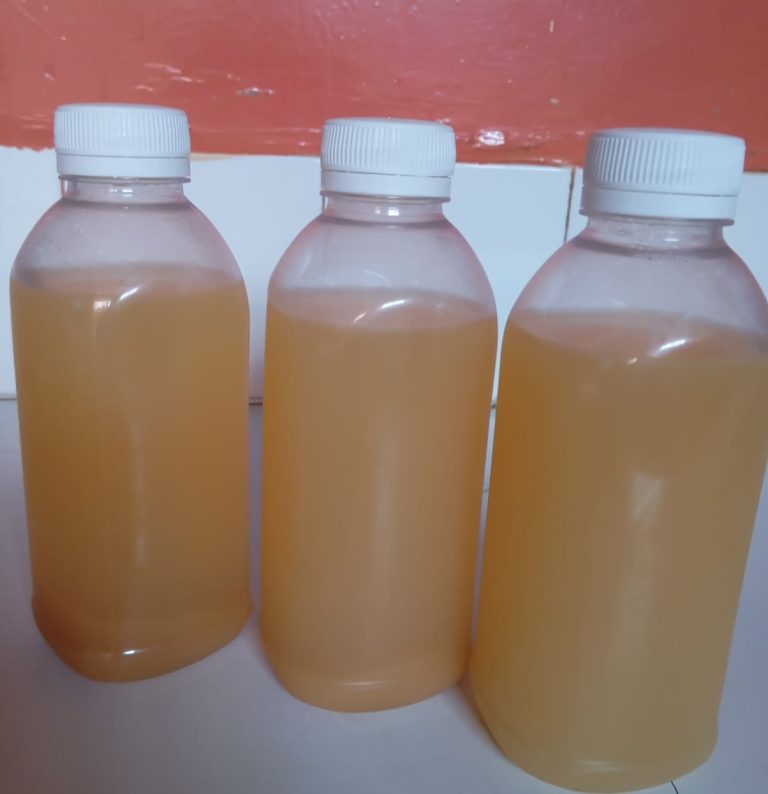
Onesmus Muthuri began making juice from his cape gooseberries with five free samples, but got a first order back within 8 hours for 500 litres, sending him to the Kenya Industrial Research and Development Institute (KIRDI) to learn how to formulate, certificate and move into processing the juice in industrial quantities.
“If the sample had gone the other way round, we would still be doing it as a hobby. The demand for that healthy product has completely changed the game,” said the Tawa Gardens CEO.
Instead, his next move was to register for a two-week course at the institute, which offers product development courses for microenterprises covering the development of standard products, branding and labeling to KEBS requirements, and routine product testing.
“What you do is to go and place your application, and once they formulate numbers for the cohorts, they will schedule you,” said Onesmus.
With courses costing as little as Sh3,000, he said, “I needed to formalise, so I sat down in class, and whatever I was learning is what I knew – I was just verifying that I was okay.”
“I just did five lessons”, he said.
“Once you qualify and you do the products and they run the test and they say you meet the specifications, they certify you.”
“Then, they recommend you to go and get a KEBS licence. It is an easier way of getting a KEBS licence,” he said.
Having grown the gooseberries since 2021, the course helped him to create several products.
“I am now able to produce multiple products from the berries, which has helped me to draw a clear pathway into the milestones. I am now going to set my target in terms of market….So it is easier for me to phase my development.”
“Once we are done with certification, we are definitely going to put up a processing plant that will be able to do multiple activities,” he said.
And the market earns well, he said, with probiotic on the shelves selling for Sh462 to Sh1100 per litre and gooseberry juice going for Sh780 per litre in one supermarket.
“So there is no price control; everybody sells for whatever the price they want. But you will not find them. Most of them are kombucha and are imported,” he said.
“The reason why the prices are high is because the supply is low; so I started specialising on the quality of the juice. I started sweetening the juice from production. The sweeter the fruit, the less the demand for white sugar or production sugar.”
When he began making the juice as a hobby in 2023, “I used to sweeten it with honey”, he said, and made some money from it in 2024. “I got the honey to sweeten the juice from Bomet and Kilifi.”
Honey, which turns juice into a product officially called nectar, has been found by researchers to keep the juiced fruit germ free.
Demand has continued to be strong, and Onasmus, meaning he is already making 200 litres of gooseberry juice per week that he sells for Sh500 per litre, packaged in 500ml and one litre containers.
He is also selling cape gooseberry seedlings to other farmers for Sh100 each, although he is not yet meeting 50 per cent of the demand, he said, and he is selling the fruit. “We have our online clients who started with us. We are looking at 360 to 400 kilos every week,” he said.
Get your farming news by email.
Free. Market prices, crop news and farmer opportunities, straight to your inbox.