
Farmers’ race into grapes drives growing seedling demand
By Antynet Ford
Keith Muriuki, a grape farmer in Embu, has been unable to meet the demand for grape seedlings as the fruit gains popularity across Kenya as a drought-loving high yielder, doubling his profits as he earns both from the fruit and from probating the prunings.
“People were coming at my farm to ask if I have seedlings or if I was propagating them and that’s what made me venture into the business because the inquiries were many. I started with my own nursery and I have it to date as I sell it to date,” said Keith.
“The market for the seedlings is high and I am unable to meet the target all together as I need to increase the propagation. I have people from all over the country and I have done deliveries as far as the western part of the country..”
Farmers are now successfully growing grapes across Naivasha, Nakuru, Laikipia, Kajiado, and the drier eastern counties of Machakos, Makueni, Kitui and Meru, with grapes thriving on a clear dry season during flowering and fruit setting, making them ideal as a semi-arid crop.
But the plant’s deep roots and success in drought, as well as the ability in Kenya to deliver two or more harvests a year, compared with only one in non-tropical climates, is seeing farmers experimenting with the crop over steadily wider areas.
Keith began in grapes with just two seedlings, but now has almost 30 vines and is looking for extra land to expand to 100, with demand so high.
“What attracts me to stick farming grapes is the multiple source of income. It gives me an income from both seedlings and the sale of fruits. So the profit is double i.e. seedlings and fruits,” he said. “One seedling goes for Sh150.”
“The street vendors are my biggest buyers. They have promoted me a lot. I have done a supermarket supply just once. What I was supplying to the retail chains a lot previously were passion fruits though I stopped farming them for a bit and concentrate on grapes now as it is not farmed by so many people,” he said.
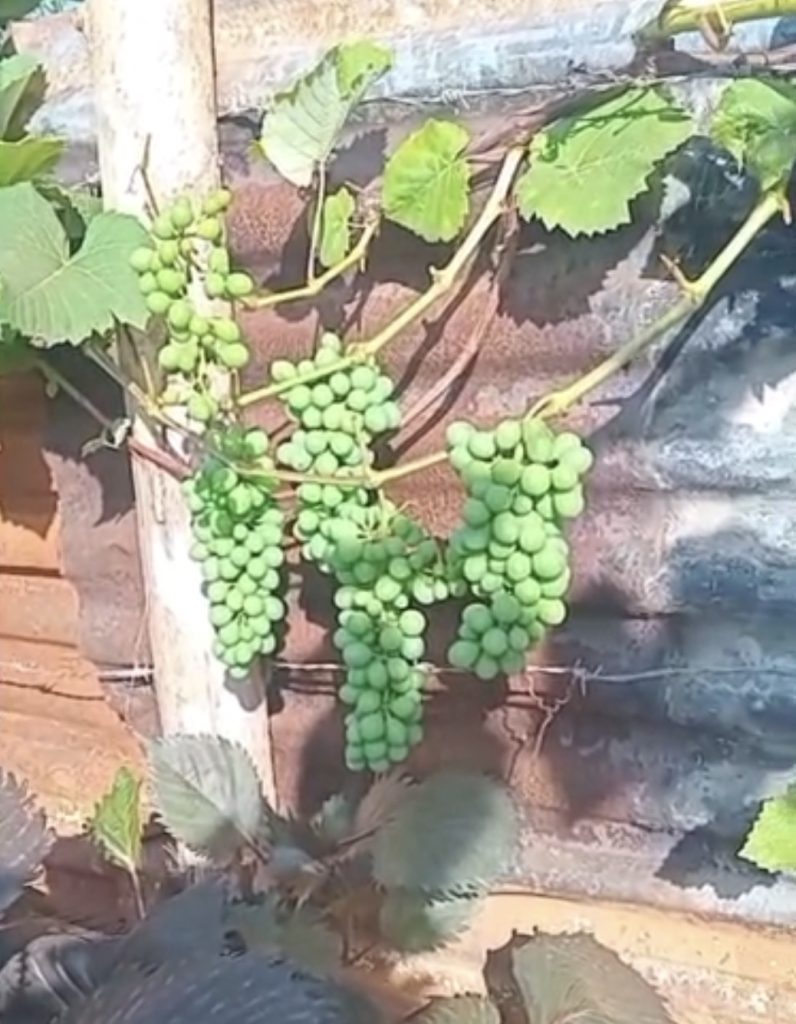
The vines take about 12 months to start producing fruits, but can then deliver almost continuous harvests across smart pruning.
“The fruits are sweet, so when you start, do not eat of them, at least sell and make an income from the farming. Start by looking for customers slowly and the market will grow as time moves,” he said.
Most of his sales are made through referrals and social media as he supplies to every part of the country, but most of his supplies have been to the western region.
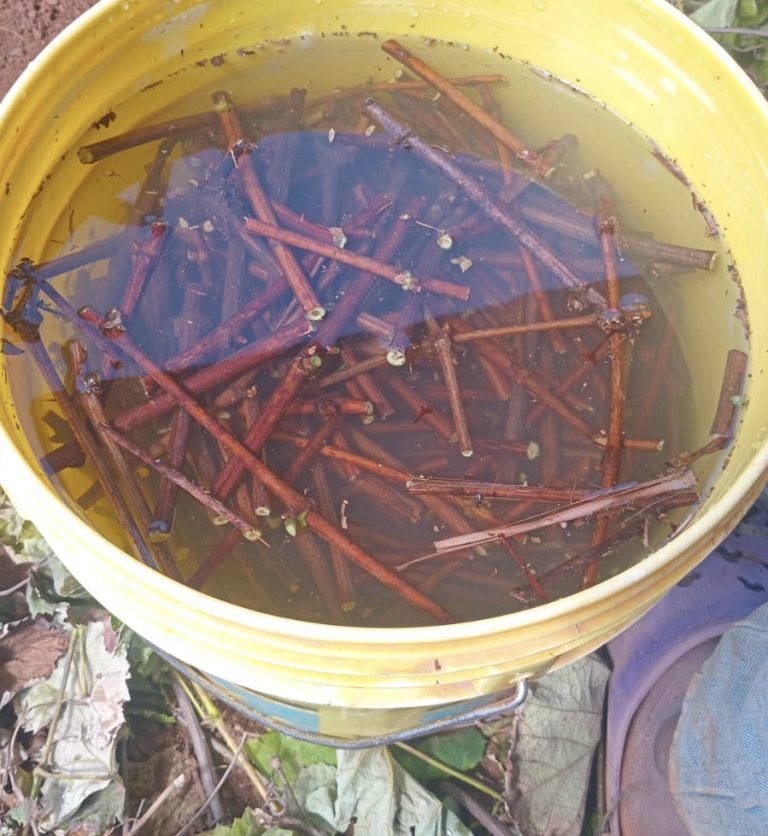
“When making the cuttings for the seedlings production, you look at the healthiest and strong brunch for good future production of the grape. The stem needs to have at least three areas of shoot. You first soak the stem in water, then after 5-7 days, you now place it in a nursery for propagation,” he said.
“At the nursery, at least two buds where shoot grows should be inside the soil with one of the three above.”
“In the soil, it may either sprout on the shoot above the soil or the one inside. When it has sprouted and put some few leaves, I later transfer it to the ready-prepared area for planting, or now sell it to the customers who have already made their orders.”
“At the nursery, it takes eight months or a year to ensure that the seedlings are ready for planting and that is why the two shoots are inside the soil, the lower one is for forming the roots, and if it fails, the second one does.”
“At the nursery, you can use fertiliser or manure to make the seedlings grow well and faster, but it is not a must,” said Keith.
Grapes tend to do well in poor soils, particularly soils that are a bit sandy and drain well, making them ideal for many areas of the country where soil fertility is low.
On securing more land, Keith is aiming to eventually top 1000 vines and move into value addition producing dried grapes called raisins, and trying his hand at making wine.
Get your farming news by email.
Free. Market prices, crop news and farmer opportunities, straight to your inbox.