
Fragmented FMD vaccination subsidy reaches fewer than 4% of Kenya’s cattle
By Marion Achieng
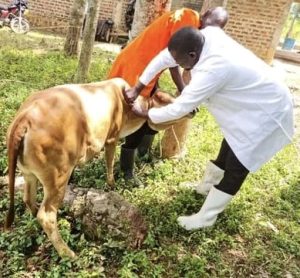
Kenya’s subsidised National Vaccination Livestock Campaign has delivered less than half the Foot and Mouth Disease injections targeted for its first 21 months, as government and media continue to claim the disease is ever-present, impossible to solve, and immaterial to milk production.
The degree of this dismissal this year triggered an acute milk shortage, and has continuously caused farmers losses and kept Kenya’s meat exports banned by the EU and other blocs.
It has also seen only a fraction of the subsidised vaccinations, available to farmers for Sh50 each, organised and taken up.
Over three years, beginning in January 2025, two separate World Bank funded programmes were due to deliver 8.8 million subsidised FMD injections.
This was never sufficient to get the disease under control, which requires that 70 per cent of the country’s 15 million cattle are protected.
“FMD is among diseases that need scheduled vaccinations. Even if you vaccinate, it provides immunity for six months, after that, the animal needs to be vaccinated again to continue being protected from the disease,” said the Deputy Director of Veterinary Services George Njogu, in an interview with FarmBizAfrica.
Thus the targeted 8.8 million vaccinations over three years were only ever enough to fully protect 1.5 million, or 10 per cent, of Kenya’s cattle.
Instead, the first 21 months of the programme delivered just 2.4m vaccinations, or 26.4 per cent of the target, effectively protecting less than 4 per cent of the nation’s cattle, and with just 15 months left to deliver the remaining 73.6 per cent of the targeted vaccinations.
In this, a real constraint is the number of dairy farmers that are members of farmers’ groups. The subsidised vaccine requires cooperative or farmer group membership, according to Dr Allan Azegele, Director of Veterinary Services, who told the Nation the scheme was being administered at ward level by cooperatives and farmer producer organisations
However, a 2026 report by the Kenya National Farmers’ Federation estimated that there are 1.8 million smallholder dairy farmers in Kenya, while the government’s Kenya Yearbook reported that dairy co-operatives have around 100,000 active members, meaning that only around one in 20 dairy farmers, or between 5 and 6 per cent, are cooperative members.
In addition, one of the two World Bank programmes organising the vaccinations has been designed to build farmer producer groups in every ward, and claims to have reached 227,000 farmers across 11 value chains, one of which is dairy. This has added a further percentage of dairy farmers eligible for the subsidised vaccinations.
But a large majority of dairy farmers remain locked out from the scheme, despite drives offering instant cooperative membership if they turn up for vaccinations.
At the same time, the misinformation on the severity of the disease has left many farmers with little interest in attending vaccination drives or in funding their own vaccinations.
The DVS, nonetheless, said it has been prioritising milk producing areas, which also have the highest cooperative membership..
Yet the coverage has remained so low that the severe FMD outbreak in Kiambu and the country’s other top milk producing counties in July 2026 slashed milk deliveries to the country’s leading milk producers, with the country’s top milk producing subcounty Githunguri reporting, alongside others, a sudden, unseasonal, and sharp fall in milk deliveries of 40 per cent by early August.
Kiambu County had exceeded its subsidised vaccination target of 59,538, vaccinating 59,854 cattle. But the county has 278,637 cattle, according to the Kenya National Bureau of Statistics’ (KNBS) 2025 National Agricultural Production Report, and each vaccination only provided six months protection in the last 21 months.
The consequent FMD outbreak in the county has also been substantially publicly ignored.
The DVS confirmed the outbreak, and multiple agencies confirmed its severity. But it has never been cited by the country’s leadership as the cause for the precipitous fall in milk production, with different government leaders citing drought, feed costs, and even co-op prices for the plunge – at the same time as vets reported cattle dying in large numbers and milk drops from 12 to 2 litres a day on the FMD infections.
The politics of FMD vaccinations has also spread claims that farmers are seeking out alternative vaccines at full price as preferable to the subsidised versions – based on which of the 7 strains of FMD they cover.
However, with 70 to 90 per cent of dairy farmers operating outside cooperatives and farmer producer groups, private vaccines are currently their only route to protection, making the volume of these private sales the only real indicator to Kenya’s progress in controlling the disease.
Eradication is still likely to remain beyond reach, with wild animals also spreading the disease. But control is possible, if a national strategy were put in place, and vets and farmers moved to consistently reporting the disease, which is, instead, now widely accepted as normal and rarely reported.
Until then, the fragmented vaccinations through the National Agricultural Value Chain Development Project (NAVCDP) and the Food Systems Resilience Project (FSRP), are being financed through a loan of Sh49.5billion, and appear to be falling badly behind, in an uncoordinated strategy across subsidised and private vaccinations targeted at a small minority of Kenya’s dairy farmers.
To get the government’s subsidised vaccines, farmers and their animals are registered on the Kenya Integrated Agriculture Management Information System (KIAMIS), which is the government’s farmer database. A farmer then gets an e-voucher and pays Sh50 through MPESA for FMD vaccination per cow.
Free members’ zone
Get your farming news by email.
Free. Market prices, crop news and farmer opportunities, straight to your inbox.