
Kenyans want cheap komboka rice, not Mwea’s pricey pishori
By Nadzua Mwadzaya
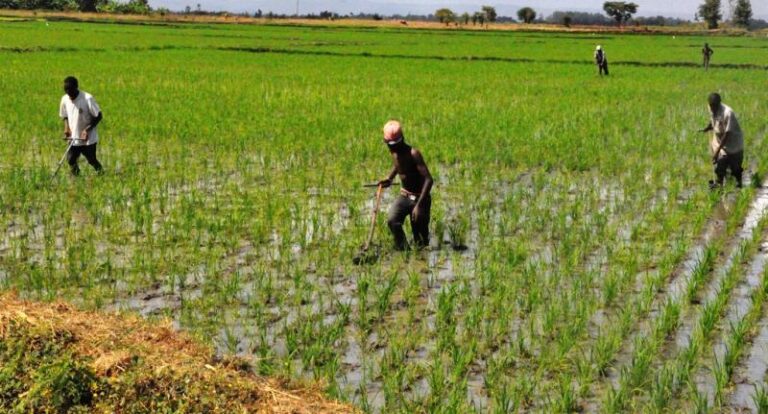
Kenyans are eating more rice every year, but traders report the country’s taste for rice is for the lowest price versus the finest aroma, leaving Mwea’s aromatic, but expensive pishori stuck, sometimes unsold, while growers of the new low-grade komboka rice are thriving
In 2025, Kenya imported nearly 786,000 tonnes of rice, for the first time spending more on imported rice than on wheat. Yet, at the same time, it produced less than 200,000 tonnes of rice, prompting increasingly urgent calls from government for greater rice growing.
But the demand is for cheap rice, say traders. More than 95 per cent of imported rice is ordinary rice without the aroma of Kenya’s pishori, according to the Agriculture and Food Authority (AFA). It sells for Sh80 to Sh100 per kg, where the Mwea pishori sells for Sh140 to Sh160.
This has left growers in Mwea, which produces two thirds of Kenya’s rice, out of step with local demand. A study in 2021/22 found 95 per cent of Mwea farmers still growing pishori. And although some have now moved to cheaper rice, the high-end volumes still appears to be too great.
In March, farmers were forced to take unhusked rice home after millers refused to buy. Traders said unhusked pishori dropped from Sh90 per kg to Sh80, and husked pishori in shops fell from Sh180 to Sh150.
By mid-year more than 50,000 bags had piled up in the stores of the Mwea Rice Growers Multipurpose Cooperative Society (MRGM), the country’s oldest and largest rice cooperative. The government stepped in to buy about 2,000 bags a day. By mid-July it had bought more than 30,320 bags worth over Sh233m.
But the new pile up follows fast on an earlier one. At the start of 2025, nearly 30 per cent of the cooperative’s rice was still unsold from the previous year. After heavy state buying, less than 1 per cent was carried into 2026. But by June the backlog was back.
This has raised heated political and legal tensions around imports, with local producers unable to match the import prices and meet their costs.
Pishori rice produces small harvests, of 20 to 25 bags of 100 kg an acre. It also needs a lot of water, which sometimes is not available, and has been further blighted in recent years by the invasive and virulent apple snail.
Yet, the newer Komboko rice, now taking off in Tana River, delivers higher incomes for farmers.
Unlike pishori, it delivers two harvests, yielding around 40 bags of 100 kg an acre. These sell for less than pishori, fetching about two-thirds of the price of pishori, but the rice uses less water, copes better with dry spells, and grows in both irrigated and rain-fed fields, meaning farmers earn more, averaging around Sh260,000 an acre, compared to pishori’s Sh200,000 an acre.
Bred by the International Rice Research Institute (IRRI) with KALRO and released in Kenya in 2013, for six years almost no one grew komboka. Less than 3 per cent of farmers had adopted it by 2019. But after the Mwea cooperative began promoting it, adoption jumped to close to 30 per cent nationwide. In Tana River, more than 90 per cent of rice farmers now grow it.
Rachel Wanjiru, a rice trader in Mwea, said komboka from the Bura scheme in Tana River now arrives in Mwea in bulk. “Rice from Bura is cheaper,” she said. “Suppliers of komboka rice come to the market in lorries.”
They arrive with Bura’s output rising rapidly. Paddy production there rose from 11,800 tonnes in 2023/24 to 14,100 tonnes in 2024/25, according to KNBS, making it one of the biggest gains of any scheme in the country.
One Bura farmer said he dropped pishori because the grains broke badly in the mill and buyers did not want them. Komboka grains stay whole.
The biggest constraint for komboka, however, is seed. Most farmers replant seed saved from their own harvest, so seed companies have seen little profit in producing komboka seed. But saved seed loses purity over time and gives smaller crops. IRRI has called for seed dealers to make komboka seed easier and cheaper to buy.
Bura farmers say middlemen have also sometimes offered as little as Sh40 a kilo for unhusked komboka. At that price, the farmer earns less than a pishori grower, despite harvesting more bags.
The AFA has urged farmers to sell through cooperatives instead of middlemen, saying cooperatives pay more.
Meanwhile, the National Cereals and Produce Board (NCPB) which paid Bura farmers Sh60 a kilo in 2022, has promised to buy all local rice, husked and unhusked, together with the Kenya National Trading Corporation, and to pay within 30 days.
This is set to help pishoti farmers too, who are also being helped in preventing passing off. The government reported to parliament in July that some traders were repackaging imported rice and selling it as Mwea pishori. Offenders now face seizure of their stock, fines, loss of licences and prosecution.
The government has also fought to keep imports open, as the country faces mounting staple food shortages, with rice that steadies prices to consumers and keeps them lower.
But, in May, People Daily cited Principal Secretary Paul Ronoh as saying the government would buy local rice first. “We must first buy all locally produced rice before importing the deficit,” he said, at the launch of a certified seed facility in Mwea.
Komboka has also opened a new path to markets outside Kenya. In 2025, it became the first rice variety listed under the COMESA trade bloc’s seed rules, which allows it to be sold across all 21 member states without being tested again in each of them. This is more of a win for KALRO than for farmers. But a further vote of confidence in the komboka rice.
Meanwhile, the government’s rice strategy is to raise Kenya’s output of husked rice from 128,000 tonnes in 2018 to 846,000 tonnes by 2030. Yey output had only reached 169,291 tonnes by 2024.
With Mwea farmers now planting for the December harvest, and still facing steep losses to apple snails, the main hope for local growth from here is through komboka, held back by the lack of buyable seeds.
Get your farming news by email.
Free. Market prices, crop news and farmer opportunities, straight to your inbox.