
Kwale goat farmer uses El Niño to dig trenches to water pan and start fruit trees
By Marion Achieng
As the predicted El Nino rains approach, Lawrence Nduva is protecting his goats from both floods and drought with a trench scheme around his five acre homestead and 25 acre grazing land in Samburu, Kilibasi in Kwale County.
Kenya lost around 29,000 livestock during the El Nino rains in 2023 and 2024, according to the International Federation of Red Cross and Red Crescent Societies. Many of these died of pneumonia after flooding, but animals were also swept away and drowned.
Lawrence has never had severe flooding that swept goats away, but in April this year, rainwater on his farm reached ankle-deep.
However, his bigger problem in Kwale has been drought.
Kenya lost 2.6m livestock during the 2020 to 2022 drought across the 23 arid and semi-arid lands (ASAL) that include Kwale County.
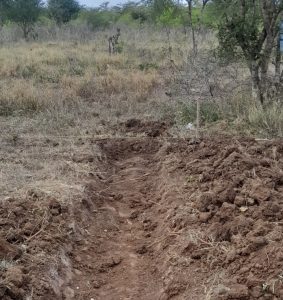
That has seen Lawrence seize El Niño as an opportunity to drain the rainwater on his land into a water pan on a quarter-acre by digging trenches.
“The trenches measure 2 feet wide by 2 feet deep…Farmers dig trenches for different reasons. For me, the reason I dug the trenches was to control water on my farm… to direct it to our water pan, that is why they are not too deep. Also, deeper trenches may hurt my goats as some may fall inside,” he told FarmBizAfrica.
“If we dig deeper, those trenches can become a river. When it rains heavily in Kwale, there is usually large amounts of rain water and they move fast. A deeper trench can become a permanent pathway for water,” he said.
Instead, he paid three people for five days at Sh800 each per day to dig the smaller trenches, having planned them ahead to stop soil erosion and draw rainwater off his land to prevent waterlogging.
“We will plant fruit trees and other types of trees inside the trenches after rainwater levels reduce. During the rains, we will plant grass, beans, or green grams and other legumes on the dug up soil to hold it together.”
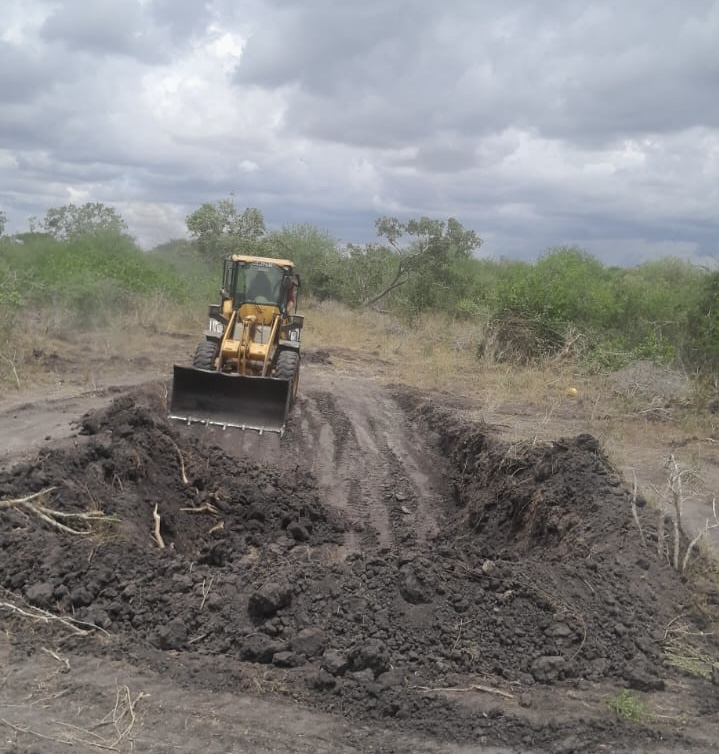
“There is a way we dig the trenches so that even when it rains, the water does not wash away the crops. I have done this on my other farm in Kitui, so I am transferring those skills to here in Kwale.”
Lawrence used a mechanical digger to dig out water pan, and said more help should be given to avert disasters. He currently rears 125 goats for breeding and meat and plans to grow his herd to 300,
“Counties should go beyond budgeting and planned evacuations. Evacuations should come as the last resort. They should help farmers before disasters happen. Having machinery for hire would make work a lot easier, faster, and the trenches would also be uniform, so better quality,” he said.
Get your farming news by email.
Free. Market prices, crop news and farmer opportunities, straight to your inbox.
Set county, crops and alerts
Become a free member so weather and saved tools follow your farm profile