
Milk slumps as farmers cut rations on soaring feed costs
By Marion Achieng
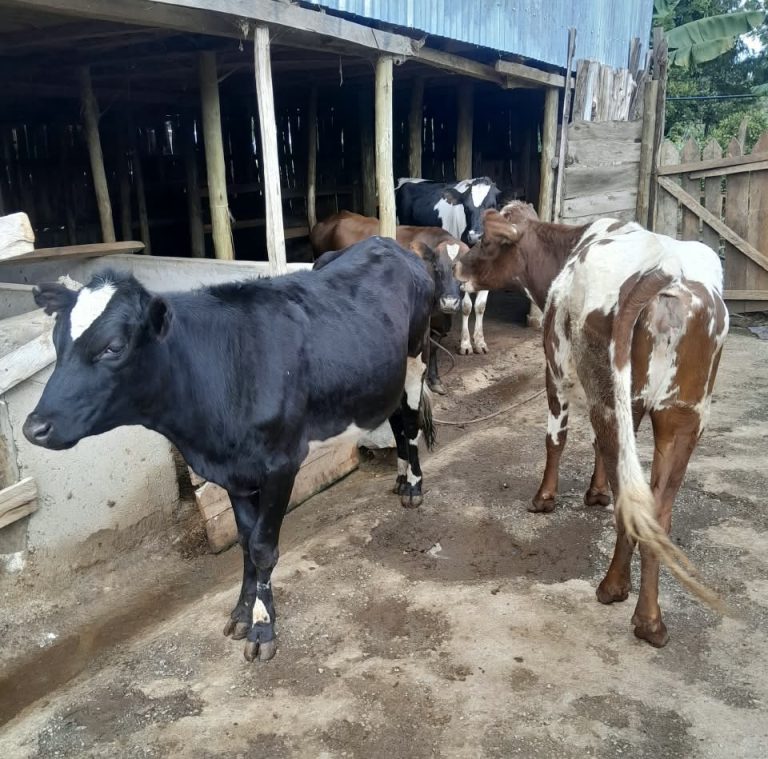
Milk farmers have become trapped in steep production declines on soaring cattle feed prices, with Raymond Kibet, in Eldoret, reporting a drop by two-thirds in his milk production as he has cut cow feed rations on soaring prices.
As recently as April 2026, Raymond’s four Friesian cows were delivering 60 litres of milk a day.
But Friesians are heavy eaters, requiring more food per litre of milk than more efficient cows such as Jersey cattle – and feed prices have shot up, said Raymond, in an interview with FarmBizAfrica.
“A cow needs to eat four percent of its weight per day, so around 30kg to 40kg of balanced feed daily,” he said, and it’s a volume that has just moved out of reach at current prices.
“The cost of silage today is Sh13 to Sh16 per kg up from Sh11 a kg, and it could rise because, right now, silage is not easy to find.”
“Dairy meal currently costs Sh50 to Sh55 per kg, up from Sh40.”
To afford even 25kg of feed per cow, instead of the 30kg to 40kg they need, would now cost him 25 per cent more than the Sh400 a cow he was spending at the beginning of the year.
“I could give one cow 20kg of silage and say 5kg of dairy meal, bringing the feed cost per day to around Sh500.”
But short rations have already brought his milk production down, meaning he can’t even afford the Sh500.
“Now, with my current 20 litres from four cows, my profit has reduced,” he said, to earnings of around Sh1180 a day, being all he has to feed all four cows.
He has been growing fodder on his one acre, which helps. “I plant Napier grass, but following the failed rains, its current regrowth rate is low and I am afraid my sunflower and desmodium may not do well due to the drought.”
But the cows have to have protein to produce milk.
“I cannot feed my cows Napier grass only. It is not enough for a cow to produce a good amount of milk. I add silage and Boma Rhodes grass to their meals and the price of grass has jumped from Sh250 a bale in April to Sh330 today.”
“I have no choice but to buy feeds even at higher prices,” he said.
This has seen him shift his sales to the best payers. At the beginning of the year he was selling 20 litres a day through a coop, 30 litres to local hotels, and around 10 litres a day to neighbours, all at Sh50 a litre.
But he now supplies most of his reduced 20 litres a day to the local hotels, because they have raised the price to Sh60 to keep the supplies coming.
The coop, which has stuck at Sh50 a litre, he now supplies with just 2 litres a day, down from 20.
With most milk prices flat, and those that are raised being up by less than the extra cost of feed, dairy farming is just without profit at the moment, he said.
“Currently I have around 50 sheep and the price for each is Sh25,000 to Sh30,000. They are more profitable. If all I had was dairy cows, I wouldn’t have an income in farming. We breed and sell sheep and the maintenance cost of dorper sheep is less expensive than dairy cows. Dorper sheep are also hardy so they can survive the dry conditions we have been experiencing in the past few months.”
Get your farming news by email.
Free. Market prices, crop news and farmer opportunities, straight to your inbox.