
Nanyuki trader gets 10x sales by powdering ginger
By Antynet Ford
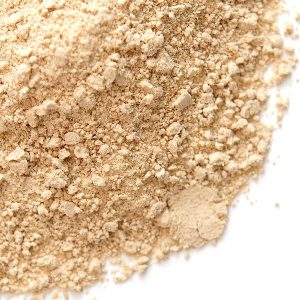
Herb and spice trader Evans Mwaura has expanded his business nearly 10-fold by shifting from selling fresh ginger to making dried and powdered ginger and getting sales of up to 5 tonnes a month.
Evans had been selling fresh ginger in and around Nanyuki, which he bought from Tanzanian farmers who were transporting it into the Kenyan market for sale.
“Most of the ginger sold in Kenya is exported from Tanzania. Some of them bring it themselves or there are people exporting it. There are those who also import from China, but Tanzania is cheaper, because it is near. So, I have friends who export, and also I know a few farmers who sell it here in Kenya,” he told FarmBizAfrica.
But fresh ginger has a short shelf life and the market was irregular, and sometimes very limited.
“When selling fresh ginger, I would buy a tonne and, in a month, I would not have finished selling it. The demand was slow, as most of the buyers were buying a few kilograms to sell in retail. I would never get someone getting like 500 kg or more,” he said.
“I did my own survey and research on the market demand after continuous poor sale of fresh ginger and I realised that powdered ginger sells more than fresh, because I sell dried herbs.”
With dried ginger his volumes moved up immediately.
“A month’s sales always depends on the orders that a client has places. Sometimes I sell three tonnes, two tonnes and even, on the highest, five tonnes in a month. The smallest amount I can get orders for is 500 kilograms, which is typically when orders are down, and a company has requested, for example, 100 kilograms of dried ginger, or perhaps 200 kilograms. So when you make the total calculations, you will find that it comes to 500 kilograms,” he said.
His buyers now are mostly suppliers to spice companies, and traders who sell the crushed ginger in smaller quantities in Nairobi markets like Muthurwa and Marikiti.
By drying ahead, he has so far managed to meet every order.
“I dry it before I crush it into powder. I will always ensure that I have the powder ready because those who sell it as powder in the dried herbs shops in Nairobi make orders every month, so I have to ensure that the stock is always ready,” he said.
“Other times, I find that there are people who want to import the ginger from China, and when I get such orders I buy from Tanzania farmers and sell to the person that wanted to import. The rates are higher with that, because for a Kilogram I will sell at Sh300 or even more per kilogram,” he said.
Depending on who is buying and the quantity, Evans sells the powdered ginger for between Sh500 and Sh800 per kg, sometimes making a profit of almost triple from the initial purchase of fresh ginger from the farmers and exporters.
That more than covers his extra costs in drying and crushing.
“The shift has been worth it as the sales have improved with a much greater profit and reliability than fresh ginger, where I would make losses because the sales were slow and I could no longer sustain it.”
“Powdered and dried ginger sell fast because they have a long shelf life and never spoil fast or easily. Also, transporting it is much easier compared to fresh ginger, especially when the order is huge, like say one tonne, though I never got anyone make such big orders when I was selling fresh,” he said.
For Evans, his goal is to now farm ginger, having now started farming Cardamom too, in a move to curb importation, which he says is expensive, as he has to buy from those who have already exported into the Kenyan market.
The demand is then strong once you approach it the right way, he said.
“When you are selling to someone that wanted to import, they accept because for them it reduces the price by say Sh500 which is a big difference.”
“The ones who sell the fresh ginger in Nairobi also get theirs from Tanzania. But you see now: if you start farming it here in Kenya, and assure them that you can fully meet their demand, they can accept and they will share with their friends who will also share widely and you will find yourself supplying to an almost whole market.”
“So I can properly farm it the way I have started slowly with the Cardamom,” he said.
“It is something good because, either way, I can sell it dried and powdered as I do currently, or sell it to those who buy the fresh one.”
Get your farming news by email.
Free. Market prices, crop news and farmer opportunities, straight to your inbox.