
Oil drives up imported sesame prices in new opportunity for Kenyan farmers
By Marion Achieng
Oil price rises are opening new opportunities for Kenyan farmers in replacing imported crops, with local prices surging for crops such as sesame, up nearly 40 per cent, this year, on regional transport costs alone.
Sesame seed prices have risen globally for several years on world shortages, spurring a near doubling in Kenyan production between 2023 and 2024, but the country’s sesame harvest has remained tiny compared to Tanzania, which is one of the world’s 10 largest producers of the seeds.
With global prices now substantially flat, but Kenya still importing from Tanzania and covering extra transport costs, sesame seller Lillian Kimani, said the current wholesale price in Nairobi of Sh25,000 for a 100kg bag is the highest she has ever seen
In an interview with FarmBizAfrica from her Kangemi shop, she said seasonal price swings for the crop have always been notable, but prices are now nearly 40 per cent higher this October than they were in April.
“The price of sesame seeds increases when the crop is out of season and lowers during times of harvest,” she said. But the peaks have been rising.
Sesame trades regionally and globally, with US prices peaking in 2023 at the equivalent of Sh506.25 per kilo, but 15 per cent higher just a year later, at Sh582 per kg.
This global climb has been driven by weather-related crop failures for global leaders India and Brazil, but India has this year expanded planting by 13 per cent, delivering fairly flat global prices.
Yet for Kenya traders, prices are still rising, driven by transport costs.
“The people from whom I buy sesame tell me it comes from Tanzania. The Kenyan market may have sesame from within the country, but in very little amounts,” said Lillian.
In fact, Kenyan production has been rising, with farmers additionally attracted by sesame’s drought and pest resistance.
Sesame production in Kenya almost doubled from 3,645 tonnes in 2023 to 6,004 tonnes in 2024, according to the KNBS.
But the output remains tiny compared with Tanzania, which produced 272,670 tonnes in 2024, accounting for over 4 per cent of the world’s total supply, according to trading information platform Tridge.
The 60 per cent surge in oil prices in 2026 has, however, created a new price advantage for local farmers, with buyers such as Lilian dropping trade where they pass on the higher costs from Tanzania to consumers.
Lillian caps her profits at Sh10 per kg of sesame seed, never going lower or higher, .
“You can’t sell sesame seeds at a very high price because there are other competitors. You can’t sell at higher prices than other traders. As traders, we control the prices ourselves. Everyone knows how they’ll sell their stock.”
“If you keep prices higher than another trader, customers will go to the outlet selling at a lower price. So as a trader, you have to find out at what prices other traders are selling their produce,” she said.
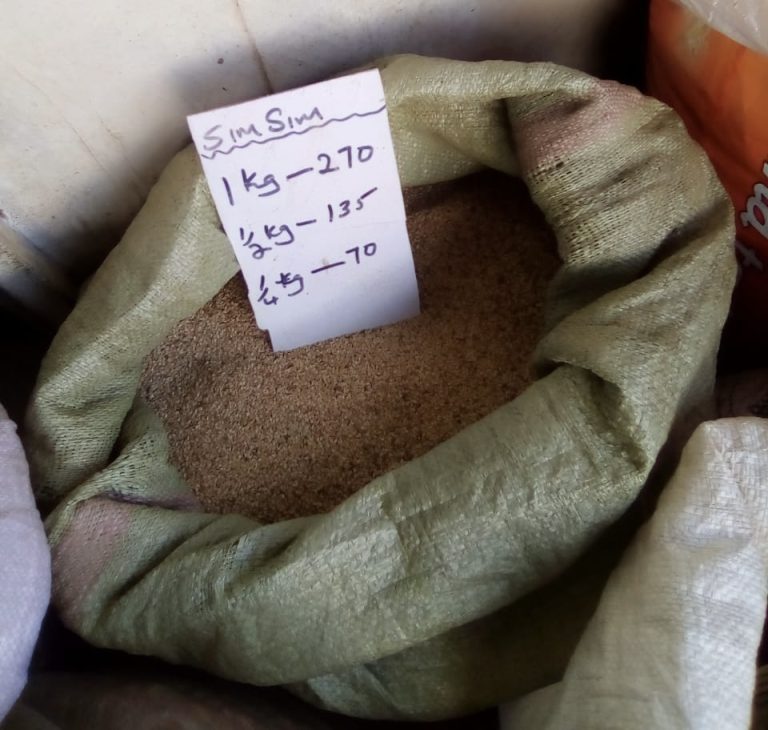
She now sells a kg of sesame at Sh270, sourcing from the Nyamakima market in Nairobi, but farmers are missing an opportunity, she said, with prices up so much on the importing and distances alone.
Get your farming news by email.
Free. Market prices, crop news and farmer opportunities, straight to your inbox.