
Potato prices double with no food alternative, say consumers
By Antynet Ford
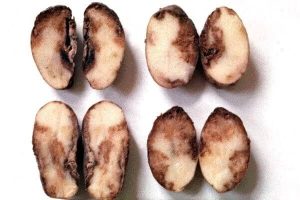
The country’s shortage of potatoes on heavy rains in the last season, and soaring levels of potato blight on pest control changes, has seen prices double since May this year, with no relief in sight and families saying they know of no alternatives.
In interviews with FarmBizAfrica as families struggle to buy just three small sized potatoes at Sh30, Peter Kithaka a potato businessman in the Desai, Nairobi said he saw no prospect of the prices now falling.
“I am currently selling the 50Kg sack at Sh7000 because I am getting it from Nyeri on my own. If you go to Marikiti, you will find that the sack goes for Sh7,500,” said Peter.
“It has been like this since May, because farmers say when it rained in the first months of the year, they lost a lot of their potato. When they did the harvest in April, they were left with almost zero seeds and they struggled a lot to plant for the next season, which they did the harvest recently, thus, they increased the price.”
“I do not see the price going down, because some farmers have been saying they still do not have enough seeds even as they prepare to plant while others are also harvesting, which they started last month, he said.
For Patrick Mwanjabala, a fast food (chips and bhajia) businessman said he had also been forced to double his prices.
“Around April or there about, I realized that if I continued selling viazi karai at Sh50, I would be out of business because I would be making losses. For this bucket of potato, we were getting it at Sh200, but now it is Sh500 and the person selling it does not even blink. I used to get five buckets for a two days’ stock, but now, I just get three, or other times just two, for me to sustain the business. Now, a small portion of the viazi karai is Sh100 but what shall we do, it is the reality of the day. There are no potatoes,” said Patrick.
Consumers, however, say they have no replacement.
“I have never seen people of my community say that now potatoes have become expensive and we shall switch to something else. If the price hikes, we adjust with the same. We have grown up with our parents telling us to prepare potatoes and cabbage as we think what to eat,” said Shadrack Nyakoe a family man based in Kayole, Nairobi.
“We do not stop taking waru (potatoes) because the prices have hiked, we adjust and learn to buy it at the prices which have been hiked. There is never an option to, for example, cook mukimo (mashed potatoes, maize and pumpkin leaves) with,” said Wangui Mbugua, of Ruaka Kiambu.
“Waru is the staple food for us from Central region even though we now live in town. We cannot even fathom switching to ugali because we did not grow up taking ugali on a daily basis. It was once in a while. Potato is our ‘daily bread’, we eat it on a daily basis. Any stew in our homes has to have waru. It is never a complete stew without it,” said Lilian Musilo, also of Ruiru, Kiambu.
“The prices are now something else because yesterday I bought one kilogram at Sh150 and we are being told that it may hike further, but we have no option regardless,” she said.
With maize production down, as well as potatoes, and rice production struggling against apple snails, experts are now warning of a full-scale staple foods crisis in Kenya.
Kenya’s declining staples have not been reflected in neighbouring countries, which have experienced similar weather extremes, but have not rolled out Kenya’s radical removal of pest controls, which farmers say is seeing them lose up to half of their crops to pests that were previously controlled.
With El Niño flooding now additionally predicted, the losses are set to be even greater by year end, due to the additionally adverse weather.
Get your farming news by email.
Free. Market prices, crop news and farmer opportunities, straight to your inbox.