
Scarce foot and mouth disease vaccinations leave milk sector unprotected, despite millions from donors
By Marion Achieng
Kenya’s efforts to control Foot and Mouth Disease (FMD) have yet to curb the disease that has, this year, caused a national milk shortage, despite millions in donor funding.
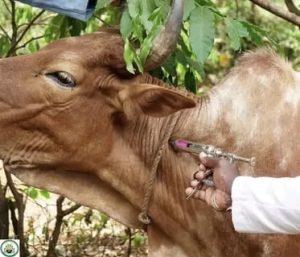
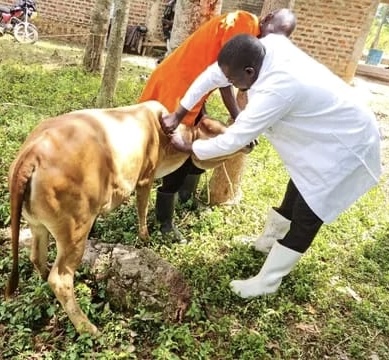
In a written statement shared with FarmBizAfrica, the Directorate of Veterinary Services reported that Kenya’s national vaccination campaign, which started in January 2025, had seen “2,007,432 dairy cattle (30% of the dairy herd) vaccinated against FMD”.
The dairy cattle classification has yet to be verified, with the DVS reporting the highest number of vaccinations had been in Laikipia.
“Laikipia County recorded the highest number of cattle vaccinated, at 121,874,” it said.
Laikipia states on its portal it has 72,860 dairy cattle and 221,760 beef cattle, making it one of the country’s lesser milk producers, and suggesting the 2m injections to date have been across both dairy and beef cattle.
But the figure confirms that coverage has been low in the country’s highest milk producing counties, such as Kiambu, which have been at the heart of the FMD outbreaks from July 2026.
Kiambu has around 250,000 cattle, but with fewer vaccinations than Lakipia’s 121,874, fewer than half of its dairy cattle can have been vaccinated under the current campaign.
Moreover, with vets in Kiambu reporting that even vaccinated cattle have contracted the disease in recent weeks – dropping their milk production by as much as 85 per cent – a second limitation is that each of the cattle vaccinated has only been protected for a six month window in the last 18 months.
This means that few of the cattle vaccinated in the national campaign are now protected.
With a new phase of vaccinations starting this month funded by the World Bank, the DVS briefed FarmBizAfrica that this would not be “an upscaling or continuation of Phase I”.
It is not clear whether this means that none of the two million cattle vaccinated since January will receive booster shots, or whether new cattle will get any more than six months of protection.
But with less than 13 per cent of the country’s 15.78m cattle, according to the 2019 KNBS census, so far getting the six-month protection window, the disease remains rampant.
In an earlier interview with FarmBizAfrica, Director of Veterinary Services Dr. Allan Azegele said the DVS was now focussing on controlling the disease in specific, high priority areas.
“Foot and mouth disease is not easy to eradicate so we are focusing on control to create disease-free compartments in the country,” he said.
These were primarily in high-dairy production areas.
“We are targeting 33 counties in the vaccination campaign. Primary high-risk counties are those in the highlands with more exotic animals. There are 5.3million cattle in high-dairy production areas. We want to cover 85 percent of these to achieve herd immunity.”
However, the very limited and temporary vaccinations to date failed to protect Kenya’s top milk producing subcounty Githingura this year, where milk production dropped 40 per cent from July on a new FMD outbreak.
At the same time, the limited Phase 1 vaccinations were spread across all of Bomet, Busia, Embu, Bungoma, Homa Bay, Kajiado, Kakamega, Kericho, Kiambu, Kirinyaga, Kisii, Kisumu, Kitui, Kwale, Makueni, Meru, Migori, Nakuru, Nandi, Narok, Nyandarua, Nyeri, Taita Taveta, Tharaka Nithi, Siaya, Trans Nzoia, Uasin Gishu, Machakos, and Vihiga.
This spread appears to have placed eradication of the disease completely out of reach.
Shadrack Mureithi, Kenya Veterinary Paraprofessionals Association Representative of the Upper Eastern Region, said the government was administering a quadrivalent vaccine that protects livestock from four strains of foot and mouth disease Serotype O, Serotype A, SAT1, and SAT2.
“Once we are able to do foot and mouth disease vaccinations for around five years concurrently, after every six months, and we are able to hit targets of around 70 percent vaccinations of the target stock of livestock, we can now declare the region disease free.”
Get your farming news by email.
Free. Market prices, crop news and farmer opportunities, straight to your inbox.