
Sugarcane farmer plants sesame to drive root-eating rat moles away

By Marion Achieng
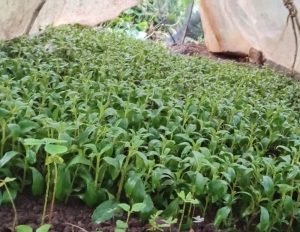
A Busia farmer has planted sesame (simsim) around and through his three acres of sugarcane to keep moles away, after the plant successfully protected his ground nut crops from the pest from 2021.
“Sesame roots are acidic, toxic to moles, that is why they stay away from a farm when they come across sesame roots,” Joseph told FarmBizAfrica, in claims that are supported by science.
Scientists have never tested sesame plants in crops for their power in keeping pests away, but they have confirmed that the roots include chemicals that are poisonous for moles and other rodents, and found in lab tests that the chemicals make voles ill.
This toxicity is part of ancestral knowledge, said Joseph, with several farmers around him using the plant as protection.
The moles feed on the sesame roots, which make them sick, he said, “then they are scared off and can go to another piece of land somewhere… They may come back but it might be the end of the season and I will have harvested my crops. But usually they don’t come back.”
He first used the method when he planted groundnuts in 2021, finding it worked completely in keeping the whole crop clear.
When he saw signs of mole damage on his canes, he bought sesame seeds, getting them from Nambale Market at Sh450 for a 2kg container, and planting them in 15 lines through the farm.
“Moles do not stay in a specific place. They can make holes around the whole piece of land, so I planted sesame after every five lines of cane and round the farm,” he said.
“We planted in rows around the field and sometimes in the middle of the farm so that any time a mole makes a path, it meets the roots of the sesame plant.”
“So, if moles come from a neighbouring farm, before they enter mine, they will meet the sesame that I have broadcasted around the farm and if they are in the middle of the farm, they will still meet roots of the sesame as they make their way around the farm.”
It was vital protection, he said.
“When roots of any crop planted come along a mole’s path, it normally cuts the roots. It removes soil from its way as it makes a hole, damaging roots of plants…When moles destroy sugarcane roots, strong winds can pull down cane stems, leading to crop losses.”
Moreover, sesame is cheaper, more effective, and lasts longer than the pesticides offered to clear the moles.
A 25ml bottle of pesticide would have cost him Sh500, compared with the Sh450 for sesame seeds, and “with chemicals, you may put chemicals at a given spot on that path of the animal but it will take maybe many months before it comes to the farm and then the chemicals will dry up.”
“When you use chemicals, you must first identify where the moles stay by identifying those paths they make in the ground and if you can’t get the paths, it is difficult to decide where to put chemicals because with chemicals you must put them where these animals have made holes.”
“But you see when you have planted simsim, it is a probability that anytime a mole makes a hole, it is likely to meet roots of the simsim. But with chemicals, you may use it and then it is rained on and gets diluted.”
“Also, some chemicals are smelly, they have an odour and when a mole senses that smell, it will not come around that part of the farm and instead go to another part of the farm,” he said, where it can still cause damage.
Joseph said he knew of other plants used to scare away pests like moles, adding to the list of chemical-free methods of preventing mole damage on farms. “There are other crops that are also planted around my area that also scare moles away but I don’t know their names in English or Kiswahili,” he said.
FarmBizAfrica is investigating further, and do please write to us, or send any photos, to info@farmbizafrica.com, if you are using any of these protection crops.
Read next

Get your farming news by email.
Free. Market prices, crop news and farmer opportunities, straight to your inbox.
Set county, crops and alerts
Become a free member so weather and saved tools follow your farm profile