
Tupande trials soya and chilli, as training lifts farmers in basic crops
By Antynet Ford
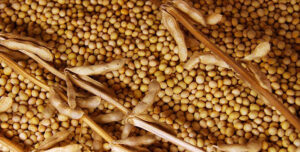
Tupande is trialling soya and chilli crops in Kenya with a view to expanding the seeds it offers on credit for each long season, towards higher earning crops, having lifted many of its core farmers above average yields since rolling out long-season training.
Launched by the One Acre Fund in 2022, farmers report that Tupande’s addition of training and greater flexibility on loan repayments has transformed their yields and removed many of the misfortunes that had followed the fund’s earlier credit model.
“Since they added the number of training, I can say that my maize production has increased by at least 40 per cent, comparing now and before 2022,” said Alfred Omusundi, from Kipkaren, Uasin Gishu.
“Before the first trainings, in the era before Covid, from my three quarter acre of land I would get a maximum of just four bags. But when I joined and started now doing the planning through the one year training they were giving us before harvest, I added two bags, and, as we speak now, with the increased trainings, I am at 12 bags in the same size of land,” he said.
With each bag of maize weighing 90kg, and farmers such as Alfred now producing the equivalent of 16 bags or 1,440 kg per acre, they have moved to well above the average level of production in Kenya of 680kg per acre.
The higher level is also outstripping the average for Africa, and other smallholder-dominated countries, such as India, although it remains much lower than production in South America and China, which currently sits at between 2,400 and 2,700 kg per acre.
However, many farmers report the productivity effect is cumulative, with Tupande training only covering each long season.
“Our clients mostly farm within the long rains season that is April to August. So, from September to December, we haven’t prepared them on any farm inputs or anything that will be happening as it is during this period that they make payments for the credit they took for their inputs,” said Gregory Mutekwa of Tupande.
But during the long season, the programme trains at each stage, he said.
“April to May is a planting season and this means the focus of a farmer is planting. So the client is given mostly training on planting, then in June to August, we educate them how to plant vegetables inside the maize plantation, or separately. They plant the saga, managu just in the same farm beside the main crops. From September to October, it is the harvest period and here we tell them to store their produce properly.”
“During the land preparation, we tell the farmers the importance of not using the same method to plough their land. For example, if this year, a farmer used oxen to plough, next year, they can use a tractor, or dig on their own. We tell our farmers to make the planting lines across the contour and not just straight up and down because if the rains are a lot, the seeds shall be washed away,” he said.
“After a farmer has prepared his or her land, they then apply lime to neutralise acidity or alkalinity in their soil so that the crops or seeds are not damaged. It is this period that we also share to them that when planting maize, from one seed to the other should be 25 cm with the rows being 75 cm apart.”
The trainers then give the farmers ropes marked with the correct planting distance, he said.
“This spacing is meant to balance the maize density with fertiliser, ensuring each maize plant has enough sunlight, water, and nutrients while maximising yield potential,” said Gregory.
The programme also helps match the best seed varieties to each area.
“The maize variety that is planted in Western Kenya is not the same planted in Nyanza. So we explain to the farmers concerning the different varieties and how they perform in their regions. We have a system that helps us to confirm the type of variety planted in, say, Western Kenya,” he said.
This can be critical to yields with some types of maize doing poorly at higher temperatures, or at higher altitudes.
For Alfred, even the intercropping advice has helped, “like the way you find sukuma wiki planted in sacks at my home”.
With the extra help, germination is often as high as 90 to 98 per cent, said Gregory, and farmers are then trained in weeding and when to apply the CAN top dressing to add nitrogen, and when it is best to spray. They also get some farmers growing beans between the maize rows and later kienyeji vegetables, and even groundnuts, before supporting farmers on drying their maize and using proper bags to prevent decay and aflatoxin.
“Before storing the maize, the farmer has to first properly sun dry it and ensure that it has no moisture content. After that, they then apply the appropriate pesticide to prevent destruction by weevils. They them use proper bags that do not allow moisture in and store in a proper place where it cannot be destroyed by rodents,” said Gregory.
Kelvin, also of Tupande, said “we also offer knapsack sprayers to them and we also have drying sheets which farmers can use to dry their maize and beans after harvest. We also give them wheelbarrows.”
For Alfred, his borrowings have varied across different years.
“I pay on a monthly basis depending on what I take at the start of the season. There are seasons where I have taken the drying sheet, the seeds, fertiliser and the lime. Other seasons, I just take the seeds and the fertiliser only. I always have something to pay every month and, nowadays…you will not find me struggling to repay like previously because even the output is great. By around October or September, I am always done with the season’s long loan repayment,” he said.
He has also benefitted from the greater flexibility around payments.
“The repayment rate is flexible, were it not I would not have been operating with them still,” said Albert.
“When a farmer encounters losses due to change of weather, say, for example the way we saw in North Rift and Western regions this year where the rainfall was depressed we have ‘crop insurance’ which is not applied to all farmers, but those affected by change, if weather where in case we have depressed rain for example, or flooding, we compensate the farmers by giving them a discount on their credits,” said Gregory.
“If the farmer had already finished paying their loan by the time the loss occurs, we give them a certain percentage of the amount they had paid just to ensure they are compensated well. When a farmer is unable to pay their loan, in the group of five that they are placed in, we try to ensure that they come up with a way in which they will repay it like a merry go round or Chama to avoid cases that we previously had of farmers being unable to pay and being harassed by their colleagues,” he said.
“The field officers train them to work together as a group and tell them the benefits like when we have incentives for the group if they finish their loan repayment early. The incentives are always a Jembe, which motivates them to work together and as a team. But when it comes to those who have dragged in repayment the field agents try and coerce them to pay.”
Tupanda does not get involved heavily in reducing these risks, but does relay national weather alerts.
“As Tupande we only give farmers seeds as they prepare to plant. For weather information, we depend on information by Kenya Meteorological departments of the counties that we operate in. We normally send an SMS to prepare them or send our officials to their area just to give them agricultural information,” said Kelvin.
With productivity generally rising, the fund is also now looking at higher value crops, with farmer incomes from maize, particularly, at the low end for the earnings that are possible from each acre.
“We are doing trials for Chilli and Soya beans which is still not the entire country but some regions only. For chilli, we are doing the trial in Mount Kenya region and soya beans in Western Kenya. We have separated Western into the lower and upper western. So the soya beans trial is being done in the lower western part,” said Kelvin.
“If a farmer needs the equipment or seedlings, they need to be in a farmers group. The officer who registers you puts you in a group. A group has a minimum of five members and a maximum of twenty-five members. Where a group has five members, to be given any product you have to pay ten per cent of the loan amount. There should be five members who have paid the five per cent, then from there, they are directed to our shop to pick the products then they’ll pay the loans for a period of eight months,” said Kelvin.
“Also farmers can always call us and we shall direct them where they can be supported in enrollment. We have our offices in all areas that we operate in. After a client is directed to where our shop is situated and we shall help them get the products,” he said.
Get your farming news by email.
Free. Market prices, crop news and farmer opportunities, straight to your inbox.