
Ugandan honey co. buys from 6000 farmers, open to more through aggregators
By Antynet Ford
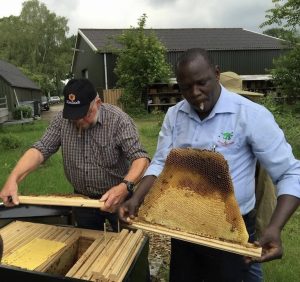
Uganda’s Barkman Best Bees has used commercial honey aggregators to stop honey adulterations, increase traceability and reduce poor post-harvest handling for its local and export honey supplies to the Netherlands, UK, Germany, France, and the US, and beeswax to Japan, meaning it has now expanded to buying from thousands of Ugandan farmers.
Barkman Chief Executive Officer Robert Okodia said the company initially started with just 20 farmers from his village, but after it grew in numbers to meet demand, it became hard to trace where the honey was being harvested and how farmers were handling it after the harvest, meaning they had to find a way to get more controls and checks in place.
“The biggest challenges we were facing is quality control and assurance because some farmers are not very consistent in terms of quality. There was always some adulteration, as they had challenges with how they store the honey; this is why we now use commercial agents to check all this for us, where farmers are having the challenges, so that it is catered for properly. Those who are well off are now the ones who supply to us directly,” Robert said.
“The agents have very good experience, as others have been handling honey for over ten years. They harvest on behalf of the farmers, then deal with the storage properly to avoid contamination. With this, we are able to do the traceability easily and work on the quality, which is very important during export,” he said.
Barkman has increased its exports by over 80 per cent by using the commercial agents model, said Robert.
“We have farmers who are contracted to supply Barkman, and then we have the model of the coomercial harvest model, where we have twenty commercial agents in Northern Uganda which consists of Lango, Acholi & West Nile regions among other districts who aggregate and source on our behalf. They also sell equipment on our behalf and get some commissions and discounts from the sales,” he said.
“If there is anyone who is looking for where to sell their apiculture products, we are readily buying them. There is no restriction. If you are unable to meet the requirements, we shall direct you to our aggregation agents, who will help buy your products at their aggregation centres in the various districts in the Northern Uganda region, as I mentioned.”
“We have currently recruited 2000 farmers, and the rest, around 6,000, we work with them under the commercial agent model.”
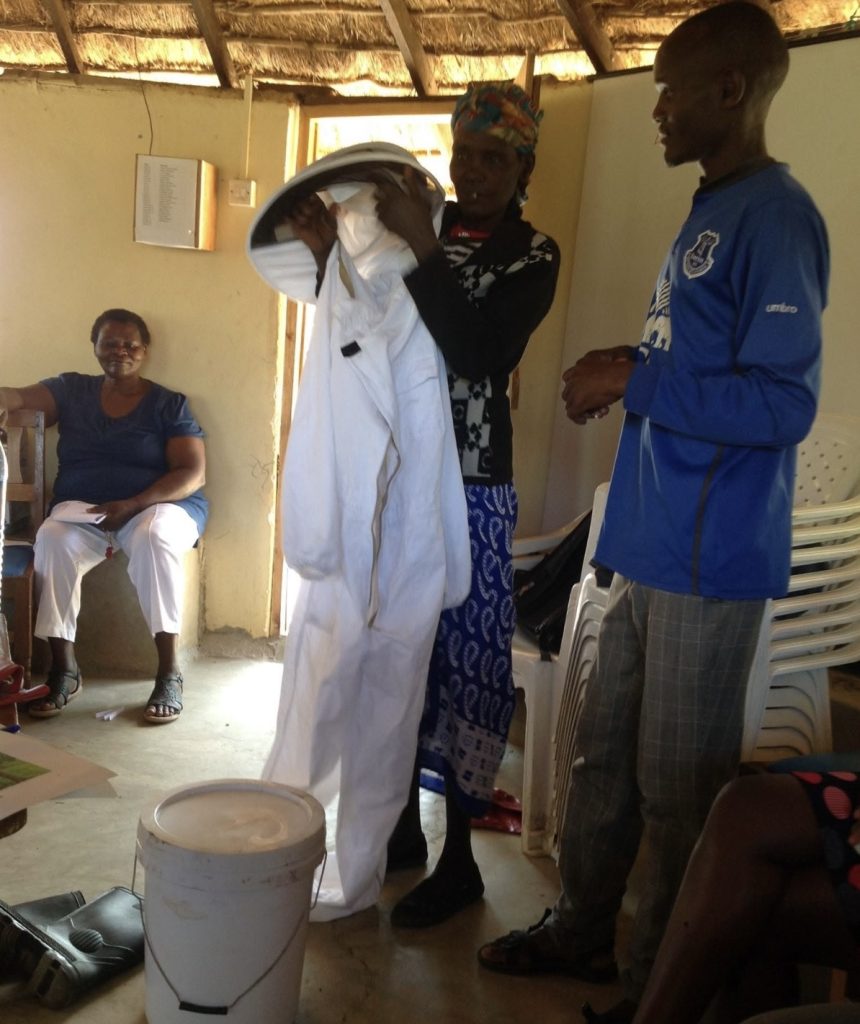
The company also offers training to all farmers and along the value chain on production, harvesting, and post-harvest management to ensure they meet the quality needed for the export market.
Initially, known as Wimrob Bee Company, Robert said they had to rebrand last year to be more appealing internationally.
They now pay an average of Uganda Shillings 12,000 per kilogram to farmers for supply, which they process and package into 25 kilogram buckets to export, after paying logistics, commissions, taxes and regulatory charges.
“We export in buckets, not barrels, or packaged in other ways. We use 25-kilogram buckets, which are exported in two seasons of Ugandan production. Every season, we produce five tonnes of beeswax, and honey, we export three to five tonnes of honey as well,” the CEO said.
While they only export beeswax and honey, they also offer Propolis and bee venom locally in Uganda and the East Africa region, and sell around 20 tonnes a year of honey locally.
In Uganda, there are two seasons of honey: the one that runs from January to March, and then there is one that runs from September to November, which is the small season, as the first one is the biggest one, especially for exporting.
“What determines the difference between the two seasons is the climate- I mean, the weather, of Uganda,” he said.
Free members’ zone
Get your farming news by email.
Free. Market prices, crop news and farmer opportunities, straight to your inbox.