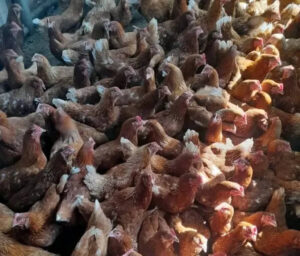
Kenyan pastoralists key in eradicating cow plague

The buy-in by Kenyan pastoralists into the eradication of the deadly rinderpest disease was instrumental in bringing a permanent end to the disease, according to the International Science Journal. On taking up the cause, the pastoralists achieved higher than 80 per cent herd immunisation in a week, which represented far higher levels than previously achieved by veterinarians.

It was an engagement that has ended a disease that was capable of knocking out half a herd or more within days.

As part of a public-private-community partnership that lasted eighteen months, scientists working on the eradication of rinderpest, especially in Africa, led by ILRI’s Jeffrey Mariner, who is also credited with inventing  the temperature-stable rinderpest vaccine,trained local pastoralists who were willing to travel on foot and able to work in remote areas—on how to deliver the new vaccine.

The pastoralists carried the vaccine from herd to herd, immunizing all the cattle in their communities.
The local herders performed  better than veterinarians in the proportion of herds immunised, to such a degree that the result was the eradication of a disease that had plagued most of the world for millennia. The pastoralists were not only good at delivering the vaccine, but also knew more about the disease and how to stop it than many of the experts.

Related Articles


Scientists have launched a project to develop a vaccine for the eventual eradication of the fatal Contagious Bovine Pleuropneumonia (CBPP), commonly known as lung plague. The highly contagious bacterial disease present in some 26 countries in Africa is estimated to be costing Africa's 24 million livestock farmers some $2bn a year in losses.

The project, an initiative of the Kenya Agricultural Research Institute (KARI) and the international Livestock Research Institute (ILRI), in partnership with the Vaccines and Infectious Diseases Organization (VIDO) of Canada, hopes to develop a vaccine that is affordable, heat stable, easy to administer and with little or no side effects, within the next five years.

“We want to move from just control of the disease to the total eradication of the disease in Africa like the rest of the world has and the team that has been involved in the research has come up with positive feedback that we can indeed eradicate the disease completely from Africa,” said Dr. Peter Ithondeka the director of veterinary services at Kenya's Ministry of Agriculture.

While vaccines for the lung plague do exist, they have not been practical in the African environment. “This explains why the rest of the world has been able to eradicate the disease, but we haven't managed to in our region. The vaccines that exist are not very effective, since, for example, they cannot tolerate climatic conditions in Africa since some need to be transported long distances to reach the livestock farmers. There is therefore need to have a vaccine that is responsive to African conditions,” said Hezron Wesonga, a scientist from KARI who is also a lead researcher in the CBPP vaccine project.

The lung plague is one of the three major cattle plagues with the other two being Rinderpest and Foot and Mouth Disease. Although Rinderpest has been substantially contained, Foot and Mouth is still widespread all over the world, while CBPP has been eradicated from all parts of the world except Africa.

The disease which was introduced to the continent through livestock imports in 1853 has managed to beat scientists on the continent due to its transboundary nature. Livestock owners move livestock from one area to another looking for market and any contact between infected and uninfected livestock leads the disease to spread. Control methods suchas restrictions on animal movement and the use of live vaccines have failed to work effectively in Africa, with studies concluding that the disease cannot be eradicated in African conditions using these control methods since livestock farmers have to keep moving in search of pasture and trade.

“ An outbreak of CBPP in one herd poses a threat to neighbouring herds when movement control is not enforced. The disease has therefore to be controlled from a national and regional approach. Once the effectiveness of this potential vaccine has been demonstrated, stragegies to avail to the farmers will be designed,” said Kenya's Livestock Development Minister in a speech read on his behalf by the director of veterinary services Dr Peter Ithondeka.


The $3.7 million project is being funded and supported by Canada's International Development Research Centre (IDRC) and the Canadian International Development Agency (CIDA) under the Canadian International Food Security Research Fund which brings together Canadian and developing countries researchers to produce lasting solutions to combat hunger and food insecurity in the developing world.

“The project combines the vaccine expertise of Canada’s Vaccine and Infectious Disease Organization with the Kenya Agricultural Research Institute’s and the Kenya-based International Livestock Research Institute’s know-how and skills in infection and handling of cattle with CBPP,” said Hezron Wesonga.

Written by Bob Koigi for African Laughter

Kenyan scientists from ILRI have released a new global study mapping the diseases humans get from animals, which presents a ‘top 20′ list of geographical hotspots, including both Ethiopia and Tanzania, and highlighting the danger of human disease from transboundary livestock trading and poor farm management.

Goat keepers are recording new cases of a goat disease traditionally confined to pastoralist areas, which is now spreading into other areas including Central and Eastern province, causing a slump in goat prices, by as much as 75 per cent, and prompting the building of a new vaccination facility.

The disease, scientifically known as Peste des petits ruminants (PPR),  or plague of small ruminants, threatened to wipe out large swathes of livestock in North Eastern in 2006-2008, when 5 million animals predominantly goats and sheep were infected with 50 per cent of them dying.


The disease also threatened food security in these areas where the population is predominantly pastoralist and relies on livestock for food and income. Aggressive and concerted efforts between government and organisations such as The Food and Agriculture Organization of the United Nations (FAO) greatly reduced cases of new infection. But the gains are now being reversed due to pastoralist migrations with the spread being attributed to close contact between infected and the non infected small ruminants.

Areas in Laikipia and even Kieni in central Kenya have now recorded new cases of the disease, whose immediate symptoms include lassitude, fever, discharges from the eyes and nose, sores in the mouth, laboured breathing and diarrhoea. Farmers rearing the goats have already recorded sever business impacts, with the majority of their goats either dying or the farmers being forced to dispose of the goats at cheaper prices since buyers are wary of the disease.

Muthoki Kihekia, who has reared livestock for a decade in Laikipia, says he has always managed to sell his goats for Sh3000 to Sh4000 when they are in good health, but the goats are now selling for as little as Sh1000, a fact he attributes to buyers flight to safety. “No one wants to buy goats, because they hear that the outbreak of the PPR disease has never been fully been addressed. When we sell them due to lack of pasture, it’s like we are disposing of them, because they attract a very low price,” said Muthoki.

Victor Lomde, another seasoned herder from Turkana District has never recovered from the 2006 plague that claimed 300 of his goats in three months. He, however, made a resolve to have all the remaining livestock vaccinated.

“My veterinary surgeon has taught me a lot. This vaccine works wonders, it’s like the vaccine they give children to prevent them from Polio. Once you have it, you are covered. There have been pockets of outbreaks since 2007, but I can comfortably say that I haven’t recorded any deaths any more.”

The disease, which typically claims the life of the infected ruminant within a month, can easily be contained through frequent disease prevention and control interventions. The PPR vaccine provides protection for about three years for small ruminants.

The spread of the disease,  which until recently was considered to be a parochial disease of West Africa, has received international attention, with the FAO recently announcing that its member countries, Kenya included, had passed a resolution shifting the attention of the organisation from rinderpest, an equally notorious and fatal disease among cattle, to the goat disease, after declaring rinderpest eradicated globally.

This followed an announcement in May that the World Organisation for Animal Health (OIE) at its General Session had passed a resolution to the effect that all countries in the world had been formally accredited as free from rinderpest, which had previously been a huge menace to cattle.

As part of the call by FAO to member states to address the plague in their respective countries, the Kenyan government is working on building a KARI vaccine production centre, which will increase the capacity of producing the PPR vaccine with the hope of improving the flock immunity from currently less than 30 per cent to 70 per cent, and reduce annual losses related to the plague by at least 60 per cent by 2013.

Written by Bob Koigi for African Laughter


“We soon discovered that the livestock owners knew more than anyone, including government officials, researchers and veterinarians, where outbreaks were occurring. It was their expertise about the sizes of cattle herds, their location, seasonal movement patterns and optimal time for vaccination that made it possible for us to eradicate rinderpest,” said Mariner.
Based on their immense expertise about migratory patterns and in recognizing early signs of infection, the herders were able to pinpoint, well before scientists ever could, where some of the final outbreaks were occurring and where conventional surveillance activities like weekly livestock dips had failed to disclose disease.


Harnessing this knowledge of rinderpest through “participatory surveillance” of outbreaks, combined with the animal health workers' delivery of vaccination, proved to be the most successful approach to monitoring and controlling the disease, according to the researchers.
“It effectively removed the disease from some of the hardest to reach areas, and most disease ridden communities,” said Mariner.


Adu Ojok, one of the pastoralists involved in the vaccination,attributes the success to having learnt the hard way how to deal with the disease. For the two decades he has practiced pastoralism he has lost over 200 cows, the majority through Rinderpest. “But we struggled with many cures and even the government appeared at times to have been overwhelmed by the constant outbreaks. We were also very disadvantaged since the vaccines that existed then were heat sensitive and before veterinarians could reach all pastoralists the vaccines would have lost potency since the heat here is unbearable,” said Ojok.
Years of trying to understand the disease saw them learn prevention measures, for example,when a cow is infected it had to be taken far into the forest, tied and left to die. “The disease is highly contagious and can spread to other livestock in a matter of minutes and wipe the whole herd. In 2010, in my village, we lost about 2000 cows in 3 days. It's that serious,” he said.
However, while livestock and those who depend on them for food, transportation and economic stability are now safe from one major calamity, with scientists now certain that the disease is no longer present in Africa, the pastoralists continue to be plagued by a number of other dangerous and debilitating diseases. like goat plague.

But it is now believed that the model of intervention used for rinderpest, of working with the pastoralists, may assist scientists in the road to eradication of other major diseases.


Rinderpest, known as "cattle plague" in English, is thought to have had its origin in the dense cattle herds of Central Eurasia more than two millennia ago and subsequently spread through warfare and trade to cattle in Europe, Asia and eventually Africa. Caused by a virus related to measles, rinderpest could infect cows, water buffalos and other cloven-hoofed animals, leading to a high fever, severe diarrhea, then dehydration and emaciation. The pathogen could kill 90 per cent of a herd, wiping out an entire farm’s livestock in just a matter of days.


While rinderpest is not dangerous to human health, its impact on humanity has been significant. Its path of destruction has been linked to many history-changing events such as the fall of the Roman Empire,the French Revolution and famines throughout Africa since the 19th century. Indeed, nearly three-quarters of the rural poor and some one-third of the urban poor depend on livestock for their food,income, traction, manure or other services.


In Africa, livestock provides poor households with up to half their income and between 6 and 35 per cent of their protein consumption. The loss of a single milking animal can affect a family’s economic health,as well as depriving it of a primary source of nutrition.

Written by Bob Koigi for African Laughter

Wed, 22nd May 2013