
Busia farmers retreat to sugarcane, slashing income for payment certainty
By Marion Achieng
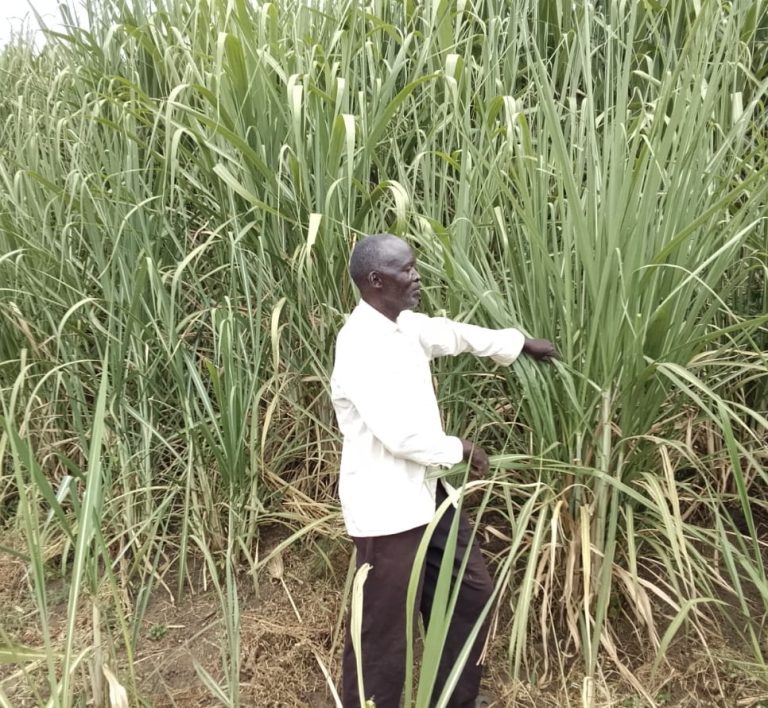
Joseph Ombucha last year gave up more than three-quarters of his possible earnings for the certainty of payment, planting sugarcane for the first time in five years, for earnings equivalent to just Sh13,000 a month per acre.
With many farmers now retreating to sugar to escape payment risks, the price is better than it used to be, said Joseph, in an interview with FarmBizAfrica, at Sh5,000 a tonne, compared with Sh3,500 the last time he planted.
But it’s a big sacrifice for farmers compared with growing better crops.
“Growing sukuma wiki is way more profitable than sugarcane, but the problem is the market. A farmer can get a tender to supply sukuma wiki to a school, for example, but you will get paid per week. They get payment for the first term and second term, but come the third term, you may not get paid, because some parents tend to not pay fees for that term, so money to pay a supplier could be strained. The school may pay you the following school year,” said Joseph.
“Some parents grow sukuma wiki, too, and could bring the produce as payment for fees, so a farmer who has a tender encounters a problem there. When you have a tender to supply sukuma wiki for five days a week then financially disadvantaged parents bring their sukuma wiki to cater for school fees, the school reduces your days to two. If you have planted two acres of sukuma wiki, you will have nowhere to sell your produce.”
Few farmers have traders’ contacts or a back-up sales network for when a tender skids, and the vegetable quickly goes to waste if it isn’t sold.
“Sukuma wiki falls in the perishables category, if you don’t get market readily or closer, they go bad in a very short time,” said Joseph.
“They can also be destroyed by a drought of one month. There is also the issue of pests, and bad weather (hailstone) can destroy the whole farm in one instance.”
“Also sukuma wiki and cabbage can be stolen by neighbours. They can steal the entire produce on the farm.,” he said.
Thus, isolated from regular or ready buyers, weather protection, and even the ability to stop the crop being stolen, farmers take the certainty of a fractional income growing sugar, locking themselves, their region, and the nation into poverty for farming families of typically five people per family, including children.
“Sugarcane becomes a not so ideal option, but you are certain of a buyer because there is demand for it and market. We have sugar factories near us,” he said.
“I plan to sell my sugarcane to Olepito Sugar Factory. One acre can produce around 40 tonnes of cane, four stacks of 10 tonnes. That said, soil type and fertilizer use determine how much tonnage a farmer can get in the end,” he said, meaning it can be less.
But the soil in Busia is suitable and farmers get paid in a lump sum, said Joseph, meaning they can use the money for bigger purchases.
Sukumi wiki can earn Sh270,000 in just six months, compared to sugarcane’s Sh200,000 in 15 months, but “money from sukuma wiki trickles in,” he said.
“You may sell here and there. There is the temptation of using that money for some smaller needs like balancing your family’s diet by buying beef. Money comes in, but you are also spending it at the same time. You could sell Sh20,000 worth of vegetables, but if you have a need or are tempted to use the money for something, you end up not doing much with the profit. Sukuma wiki is good for daily subsistence. With sugarcane, you get a larger sum of money at once. That way, you can plan it better and do a significant project with it at a go,” he said.
The crop also saves farmers from farm management risks.
“Growing sugarcane is not as risky as sukuma wiki. A farmer can worry about fires, but those are rare. Ants also damage sugarcane, but they can be easily controlled. Sugarcane can also withstand harsh climatic conditions; it is not affected by too much rainfall, unlike sukuma wiki.”
Crops like spring onions that can earn Sh183,000 per acre per season, and onions at Sh308,000, according to FarmBizAfrica’s farm earnings maximiser HarvestMax, also require more farm management, said Joseph.
“If not sugarcane, I would have planted indigenous crops such as African nightshade (managu), spider plant (saga), cow pea (kunde), and jute mellow (mrenda)on the three acres, but these crops’ perishability and a lack of consistent market deterred me from growing them. I could also grow cabbage but I don’t have the know-how on cabbage farming,” he said.
“The cabbages we eat here are from Limuru. We see lorries supply cabbages to our markets. Busia County is not growing cabbage so we get it from places as far as Limuru,” which is over 400km away by road and more than 6 hours’ drive, adding large extra costs for locals.
“Farmers here are not ready to risk growing cabbage. ”
Get your farming news by email.
Free. Market prices, crop news and farmer opportunities, straight to your inbox.