
Kakamega hub ends African Bollworm infestation with pyrethrum flour
By Jael Maunda
A farmers’ centre in Kakamega has got rid of African bollworm on its tomatoes by dusting the plants with pyrethrum flour, ending losses that can destroy half the crop.
The Agri-Hub in Malava, run by Ripple Effect Kenya, had seen the method at an agricultural show in Nairobi, but only tried it when its own tomatoes became infested with the bollworm, which affects crops across Kenya, causing yield losses of up to 50 per cent, with some of the highest losses in tomatoes, according to researchers.
Studies have found farmers generally fall back on synthetic pesticides when eliminating tomato pests. But Agri-Hub, now working with 50 farmers and aiming to reach 1,000, specialises in teaching natural pest control and soil care, which is far cheaper for farmers.
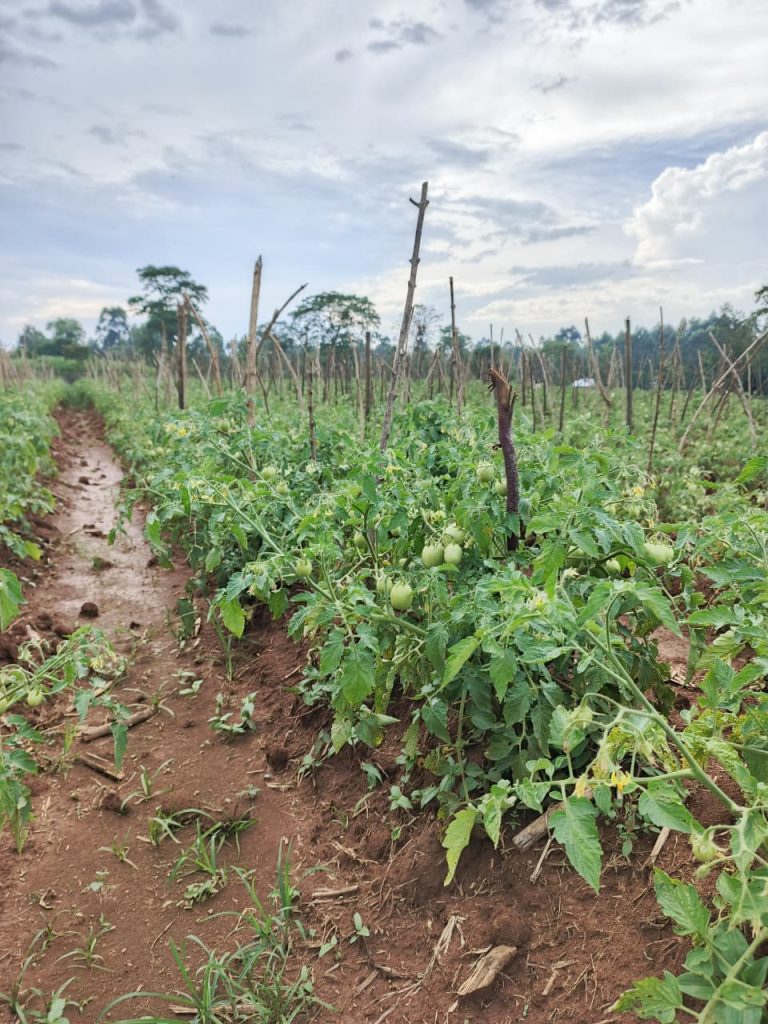
“Bollworm eats the fruit, so when our tomato crop started producing fruits, we noticed some dark holes on the fruit, when it was about 10 per cent of the damage,” said Isaac Ogutu the farms system coordinator.
“I learnt how to use flour dust in a symposium in Nairobi with a company called KAPI Limited, which is an organic pestside company, which introduced us to the flour dust hack, which is made from pyrethrum flowers, and that is why we decided to use it on our farm, since ours is also organic. And it really worked for us, ” he said
“We decided to apply pyrethrum flour dust by sprinkling it on the leaves. A handful of it is enough for between 5-7 plants.Although it is organic, you can sprinkle it as much as you want on the leaves of the crop. We sprinkle them on the leaves and not the fruit because, at night, the dust is systemic. It enters into the plant system, so the bollworms get the effect of the dust because it is taken in through the (plant’s) stomata,” he said.
“Sometimes you can apply it and then it rains, so that means the rains will wash it away. You will have to sprinkle it again. We encourage our farmers to sprinkle it in the evening,, because by the time the sun shines and degrades it, the bollworm would have died.”
“Also we sprinkle it in the evening, because during the day bollworms have hidden themselves and so, at night, they are all over the plant to feed.”
“Once we noticed the bollworms, we applied flour dust at least three times a month,” he said.
The hub also had to solve an outbreak of blossom end rot, with a calcium foliar.
“During the season there was not much rain when they started flowering, so when they started producing fruits, they developed a deficiency symptom known as blossom end rot where the tomato dies at the bottom, a very hard black spot develops at the bottom of the fruit,” said Isaac.
“So we had to supplement it with calcium through foliar spray. We applied the Easygrow calcium. Though you can apply any other calcium-rich foliar. For us, Easygrow was the one available at that time.”
“When applying calcium on the plant, you will have to mix 30 grams in 20 litres of water and then spray them on the plants. We spray it twice a month. That is, after every two weeks, as applying it as a foliar means its strength will be over after 14 days. This gap also allows a farmer to pluck his fruit.”
Ripple Effect Kenya uses the farm to train farmers. “We are organic. We teach our farmers how to make their own organic manure and use it on their crops and not to depend on synthetic fertilisers,” said Isaac..
The hub is intended for both households growing food for their own consumption and farmers interested in developing commercial enterprises, to help farmers diversify their production.
“Most of them are doing sugarcane. But you can’t eat sugarcane. So, it’s more of just food production and teaching the local community how to manage their natural resources and produce their own food that you can use and eat at home, and they can also learn more about how to sell and develop that into an enterprise. We want them to know how to plant their own food and know that they can do other forms of farming apart from sugarcane,” said.Veronica Omwombo, the organisation’s Communication and PR Manager.
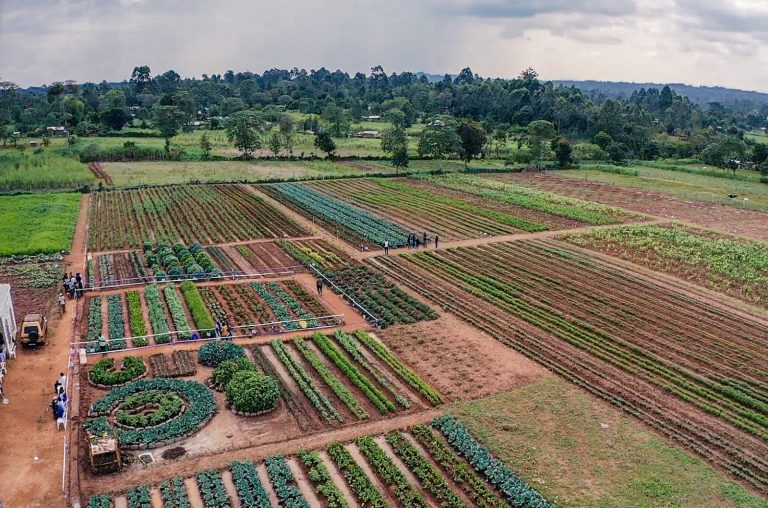
The hub has “five demonstration areas covering fruit trees, cereals, indigenous vegetables such as spinach and tomatoes, horticultural crops, and forage grasses. Its gardens showcase keyhole, mandala, double-dug, and sunken-bed designs, alongside composting and different crop demonstrations. The aim is to give farmers practical knowledge they can apply on their own farms,” she said.
“We want them to learn more about organic farming that is also healthy for them, as opposed to other farming practices, since some of the fertilizers used are normally not so good for farmers’ health and not so good for long-term consumption. We really want to emphasize the different techniques and teach them about climate adaptability when it comes to farming, and using the techniques which they can also teach other communities, that’s now the ripple effect of it… We want them to learn more, grow more, and sell more for those who want to develop their businesses.”
The Agriculture-Hub is also helping farmers find local and larger markets for what they grow.
Read next



Get your farming news by email.
Free. Market prices, crop news and farmer opportunities, straight to your inbox.
Set county, crops and alerts
Become a free member so weather and saved tools follow your farm profile