
Millionaire jackfruit flour moves on from farms in India to make high-health bread
By Antynet Ford
Jackfruit farmers’ in western Kenya and Uganda could earn more from their harvests by turning their fruits into flour, which farmers in southern India have been using for decades to make chapati, porridge, pancakes and baked goods, creating an all-year food and an extra market from the fruit.
As a traditional food in Kerala, India, growing awareness of the flour as a natural heritage food is now seeing its popularity rising in modern kitchens across India, according to research by the Kerala Agriculture University, delivering huge growth for the flour’s new producers.
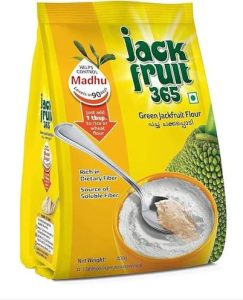
The founder of jackfruit flour company Jackfruit365, which relaunched its green jackfruit flour in India in July 2021, said his Amazon revenue from selling the flour had grown ten-fold within a year – from around $1,260 a month to $126,000 a month, or Sh16.4m – making it the third best-selling grocery product on Amazon in India after Maggi noodles and Tata salt.
To perfect the flour for baking recipes, the Kerala Agriculture University study tried different combinations of refined and jackfruit flour to get the best mix, finding that 80 percent jackfruit tasted the best.
“Realizing the demand for baked products, rusk was proposed to be standardized, with different combinations of refined flour and jackfruit bulb flour. A formulation in the ratio of 20:80 was adjudged as the best treatment by the sensory panel,” reported the study, published by the International Journal of Pure Applied Bioscience.
Unlike wheat flour, jackfruit flour has no gluten, which many consumers are sensitive to. The Kerala study also reported it absorbs more water and swells more than wheat flour, making the dough less elastic and stretchy, and rise less when baking. But the resulting heavier products stay moist for longer than wheat baked goods.
In Kenya, the fruit, which is the largest tree fruit in the world at up to.30kg per fruit and sometimes even 50kg, has been widely disregarded, with many of the ripe fruits thrown away. But as a traditional local flour from Indian villages, jackfruit flour is easy to make.
The mature green unripe fruit can be sticky, so farmers generally oil their knife and use gloves to cut up the fruit and cut off the spiky rind and central core, pull out the bulbs and remove the seeds.
Some farmers add the sliced sections to boiling water for a few minutes, or soak them in salt water or lemon juice, before sun drying them on racks for two to four days.
Traditionally, farmers have used pestle and mortars or grinding stones to mill the flour, but posho mills can work too, if the fruit slices are completely dry, although if they are moist and gummy they will clog up the mill.
The flour also needs to be stored in airtight plastic bags or containers or it takes up moisture from the air and can go bad.
In Uganda, flour is already being made from the fruit’s seeds, with Busaino Fruits and Herbs of Jinja processing gluten-free seed flour that it exports to the Netherlands.
But with jackfruit bulb flour also proven as a tasty gluten-free flour that additionally regulates blood sugar for diabetics, and is easy to make on the farm, it may be an opening for new agropreneurs, where, in 2019, a study in Uganda found 60 per cent of jackfruit farmers were losing at least 15 of the huge fruits a year left rotting unused.
Get your farming news by email.
Free. Market prices, crop news and farmer opportunities, straight to your inbox.
Set county, crops and alerts
Become a free member so weather and saved tools follow your farm profile