
Potato supplies swing back up as blight eases
By Antynet Ford
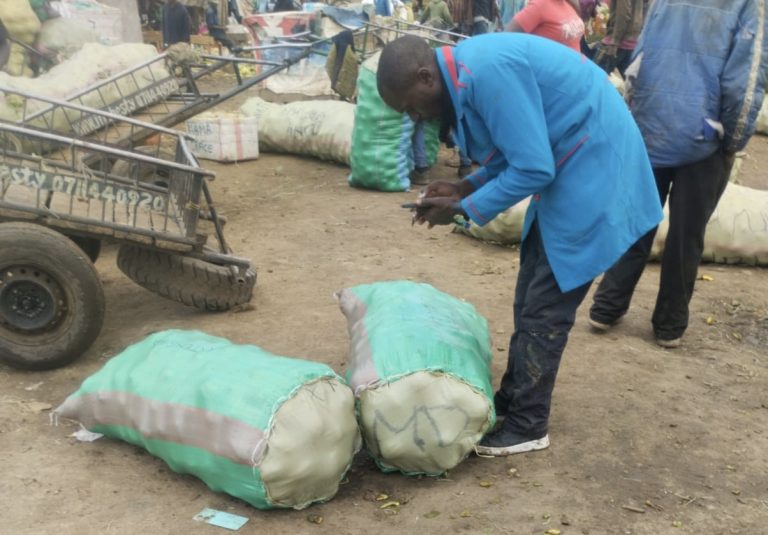
The potato shortage caused by severe blight following the year’s heavy early rains has eased in the last month, with new harvests starting to arrive at the market that were planted in the dry season when the disease had eased.
The higher survival rate has brought potato prices down from their peak of Sh7,000 per 90kg sack to now She4,400 and falling, said Marikiti market trader Aura Kamau, speaking to FarmBizAfrica.
“For the last like five months, there has not been enough potato in the market, but end of last month, and now this November, the supply has gone up and the prices dropped” he said.
“At the start of October, going back for four months, the 90 kg sack has been going at Sh7000. It started slowly from Sh5:000 then shot to Sh7,000 when the scarcity increased as there were no lorries coming in with the produce.”
National media and government cited the weather as the cause of the shortage, but farmers said the weather made the blight worse from March, as a disease that increases with rain and higher temperatures, and it was then left uncontrollable on the government’s fungicide bans.
Fungicides, known as dawa or medicine by farmers, are the drugs that prevent or treat plant diseases. The Kenya government has banned the main fungicides for blight, Dithane M-45 and Bravo, which were used by over 70 per cent of farmers, without effective alternatives.
As a result, Michael Waweru, a potato farmer from Nyandarua County, told FarmBizAfrica he had lost over Sh3m to the disease this year.
“I lost a huge amount of money, I had planted 47 acres of certified potatoes, I had followed all the right agricultural practices. What I harvested did not give me even Sh400,000. Blight affected my crop such that I could not recover the seed that I had planted. The crops were affected to the extent that even if we applied the (remaining permitted) curative fungicides, they did not work,” he said.
The drop left the potato market nearly empty of lorries from Nyandarua, where most of Kenya’s potatoes are grown, said Aura. But traders were able to get them from Tanzania, for Sh6,500 per sack.
“That period we have sold a lot of potato from Tanzania” he said.
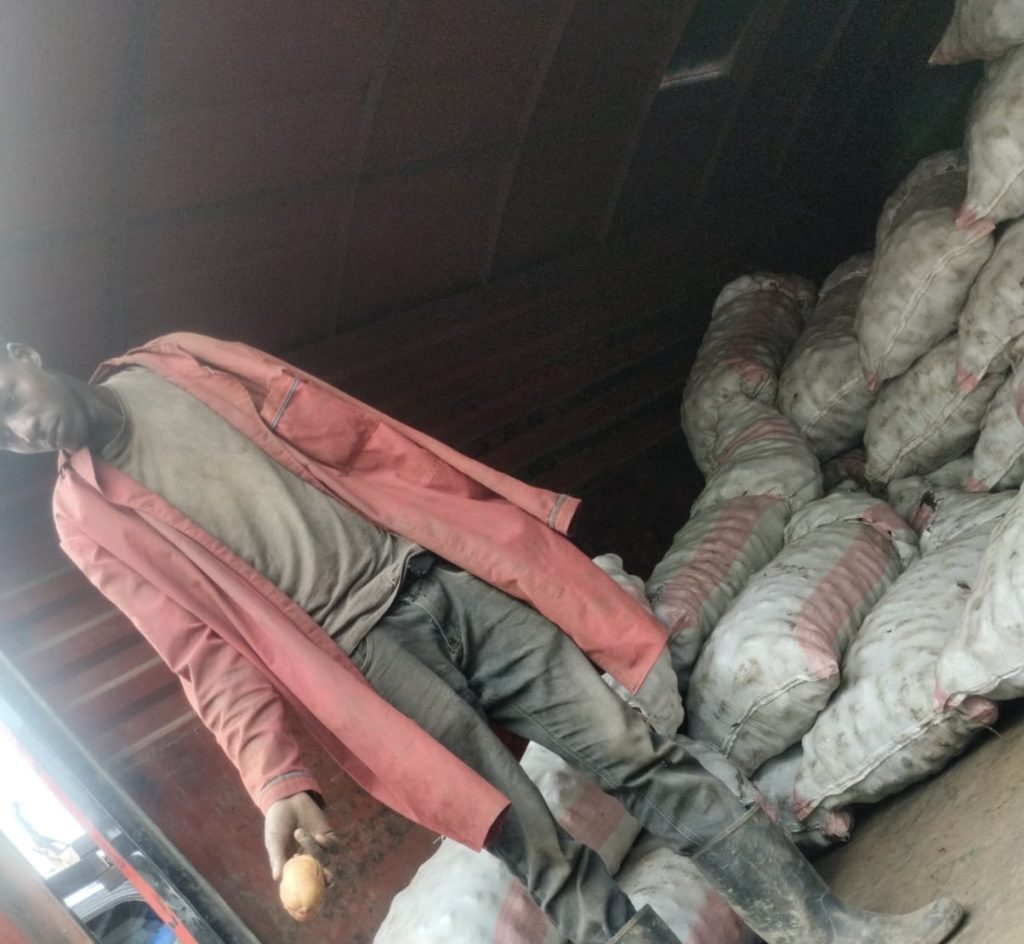
South west Tanzania, the country’s main potato growing region, was also hit by heavy rains in February and March, but farmers were allowed to use the normal treatments for late blight.
However, when there was only a lorry or two at the Nairobi market, prices were high, and selling was slow, said Aura.
“When there was scarcity, a lorry that contains 120 sacks of between 90-105kgs would even sell for two or three days. And what was happening is, if you would get the 90kg sack, for example, if there was no lorry coming in the next day, it is when you would find the price hiked by Sh1000 to Sh7,500 because there was absolutely nothing coming in,” he said.
“If there are few lorries supplying, then obviously, the price has to be high.”
However, as soils got drier in Kenya later this year, crops finally went in that managed to get through without late blight.
“When the rains reduced end of June there (in Nyandarua) to July, farmers planted potatoes and this is what you’re seeing us sell in the market, because the soil became a little dry. The other thing is, others have learnt to improve the drainage to avoid water logging by digging trenches,” said Aura.
“Now we are doing well and the supply is coming well.”
“Actually, with the Sh5,000 and Sh4,400 average, it is because we are heading into the festive period and that is why the pricing is still a bit high even though the market is flooded with potato. Otherwise, if it were the normal months, it should have been at Sh3000 or thereabout,” he said.
“Currently on average it is selling at Sh4,400 and this is very low as there is surplus.”
“When there is plenty of potato at Marikiti, work is also easy for us. There is not a lot of bargaining and stuff. By say, now it is 12pm, I am already done for the day, and I will be back tomorrow very early when the lorries start coming in at 3:00am,” he said.
Read next


Get your farming news by email.
Free. Market prices, crop news and farmer opportunities, straight to your inbox.
Set county, crops and alerts
Become a free member so weather and saved tools follow your farm profile