
Unprepared farmers face heavy livestock deaths in El Niño disease surge
By Antynet Ford
Heavy rain from October to December is set to cause a surge in animal diseases that will kill livestock wherever farmers don’t take preventative action, the Kenya Veterinary Association (KVA) has warned in an interview with FarmBizAfrica.
The diseases must likely to rise sharply in coming weeks, said KVA Vice President Ambrose Kipyegon, are diseases carried by mosquitoes and other insects, at the same time as flood-contaminated water and foods create a deadly cocktail for unprepared farmers.
“With heavy rains,” said Ambrose, these insects “get a good environment to flourish. You will find diseases like Rift Valley Fever (RVF) will be on the rise because of the increase of vectors (disease-carrying insects).”
More than three-quarters of Kenyan RVF outbreaks since 1950 have been during warm El Niño periods, when a rise in vegetation and shallow water pools rapidly increase the populations of the insects that carry the disease.
The disease is deadly for livestock, killing 90 to 100 per cent of infected lambs within three days, as well as 10 to 30 per cent of infected adult sheep, up to 70 per cent of infected calves and 5 to 10 per cent of infected cattle.
With an El Niño now underway that scientists globally have warned may be the most severe on record, farmers can still use RIFTVAX vaccinations on non-pregnant animals that start protecting animals within one to two weeks. However, these cannot be used on pregnant animals as they often cause abortions.
“We encourage farmers to prepare early through vaccinating their animals because we know for sure the diseases will be there, because rain environment favours their growth. So we are encouraging farmers to vaccinate their animals now so that by the time we are having the rains or when they are over, their animals are protected, because they’ll be having immunity to fight these diseases so us to minimise the losses that farmers will incur,” said Ambrose.
The peak protection from RIFTVAX is at three months, according to researchers.
The rains also raise other disease risks, said Ambrose.
“Apart from RVF, other diseases that can affect the animals are production diseases like mastitis, which will be on the rise because of the wetness of the environment and the possibility that the animals will stay indoors longer.”
Most farmers suffer cases of mastitis, which infect cow’s udders and sometimes affect milk production, but these are always more widespread during rainy seasons, normally more than doubling.
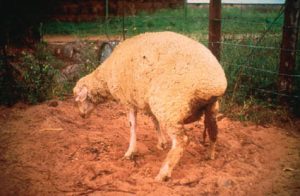
“The other disease is foot rot which happens when animals stand in stagnant water or mud or slug. When an animal stands there for long, their hooves become softer and become increasingly susceptible to foot rot,” said Ambrose.
The disease can cause severe pain, lameness and weakness in animals, and flystrike in sheep and goats,
“Our advice.,(is)…for farmers to make sure that the animals’ area will be dry or, let’s say, avoid stagnant water or mud or sludge within the animal area. You’ve seen photos of animals standing in mud or slug. Those are the animals that will have foot rot problems, which may be difficult to manage.”
“The problem with foot rot is that the animal is in pain and production will not be optimal thus the advice is to keep the animal area dry and if they cannot keep the areas dry because of the rains, they should have a foot bath area with copper sulphate, which they can find in any Agrovets around them. They can be helped by vet officers in their area to prepare the foot bath,” said Ambrose.
The veterinary officer also advised farmers to move livestock to higher grounds to avoid being drowned by floods and drinking contaminated water.
“Flood comes with many contaminants, which will make the drinking water not safe for the animals.”
“If farmers can ensure that they can collect rain water in drums and it is the only water that they can say it is safe for the animals at that moment.”
“But, you see, when the animals are out there in the field and there is stagnant water, the animals may drink without the farmer’s knowledge, so if they can move the animals to a higher ground where such stagnation will not happen or flood water bringing contaminants to the drinking water they will be safe,” he said.
“The other thing that farmers can do, especially in flood prone areas, is that animals will not be able to graze because of the flooding. The animals will just be standing because there’s nothing to eat, so if farmers can stock hay or some other feeds then it will help cushion their animals from starving, but even as they do stocking of food it is important to protect the food from aflatoxins.”
The aflatoxin fungus causes liver damage and death in humans and animals alike.
“There are aflatoxins that come with improper storage of animal feed. So if a farmer bought feed and stored it in a damp environment, they might be thinking they have feed but they actually have aflatoxins. Aflatoxins will be counterproductive. And this is the same for concentrates like the dairy meal, pig finisher layers’ mash etc and they are keeping it in a place that is wet or damp, dampness will lead to what will cause aflatoxin to the feeds,” he said.
Across grazing shortages, food and water contamination, and rain-driven epidemics, the most livestock losses are set to be for cattle, followed by piglets, and then chicken, said Ambrose.
“Farmers have a variety of livestock, but, for now, the ones which are likely to be impacted more and need the vacation are cattle. For the other animals, like poultry and pigs, they also suffer during the rains, especially piglets, which are more susceptible to reduced temperatures and so during that time, if a farmer has piglets, he or she should make plans to ensure that their piggery is warm,” said Ambrose.
“This is if they have piglets because the older ones can resist, but the piglets can die because of the cold.”
“Wetness is also associated with coccidiosis because that particular organism that causes it will multiply faster in wet environments, especially when the farmer is not clearing the chicken waste,” he said.
Coccidiosis is one of the biggest killer of chickens in Kenya, with farmers most at risk in the counties in Western and the Coast that normally flood.
Free members’ zone
Get your farming news by email.
Free. Market prices, crop news and farmer opportunities, straight to your inbox.