Farmers cash in on emerging hay and cattle delivery sub-sector
4 min read
By George Munene
As more farmers adopt zero-grazing and modern feeding methods that incorporate dried hay feeds that can be stored and used over the dry season, this has spurred the creation of an auxiliary agricultural sub-sector: the ferrying of feed (mostly hay) and sometimes animals to farmers. For Joseph Kiarie, this has been his line of work since 2016.
Currently, he transports up to 1500 bales daily which weigh between 14-17 kilograms each and costs Sh160-200 per bale depending on location. With his two trucks and through outsourced transport he now works with farmers across the country.
Before focusing on the logistics of fodder transport, Kiarie grew hay which he then sold to brokers. Increasingly he saw an emerging opportunity for himself to handle the entire farm to farm value chain as there was an influx of people into commercial dairy farming and a growing focus on more modern feeding methods.
With his ballooning client base, he no longer just relies on his own farmed hay. Hay is harvested from farmers when the weather is dry, this allows him to meet his orders even over the usually rainy March to May months.
Related News: Journalist farmer pioneers CCTV-surveyed farming, reports jump in produce and connection
Related News: Transport problems slashing Kenyan fresh exports, despite demand in Europe
The hay is then baled by contractors. He is working on acquiring his own baling equipment— two tractors and a baling machine—which could significantly cut on cost. Though expensive, costing upwards of 6.5 million, he hopes to have his own machines at the start of the next year.
While Joseph has the capacity to keep over 10,000 bales in his own storage shed, he outsources most of his storage to bigger farms such as Delamer and Gicheha in Nakuru. This owes to their having a better road system around them that is usable even when it rains and a lot of the country’s link roads are impassable. This is also far cheaper than incurring the cost of building and maintaining storage facilities he argues.
“Milk prices have been on the rise, which has enticed more people to commercialize their cow rearing methods; unlike before, now when I drive around areas of Nandi for example, I’ll rarely see farmers grazing their cows on the side of roads. More people are opting for more intensive rearing practices such as zero-grazing that have higher outputs,” Kiarie says.
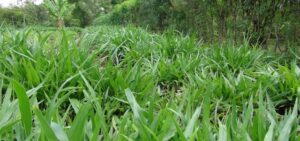
As more farmers opt for high-value grasses such as Rhodes as a supplement to traditional fodder or look to improve their breeding stock by seeking better yielding cow varieties from across the country; he is the man who handles the logistics of this making sure everything gets to the farmer in good order and on time, cash on delivery, he insists.
Related News: Accountant earns double from dairy and hay production after quitting job
Related News: Graduate earns about Sh1m a season from hay production after leaving Sh10,000 salary job
The real headache in his line of work comes in the numerous government permits needed to operate within and transit across counties. A KeNHA wide load permit is a prerequisite, various counties then have their own required licenses. For counties such as Machakos and Garissa, you’ll need an operating license, these can be paid per load or as a one-off monthly cost, Sh 3000 and 6000 respectively. Counties such as Nakuru charge for moving goods from one farm to the next while in Kisii for example he also has to part with an additional charge in parking fees.
Orders to far-flung counties require outsourcing to people with preexisting networks: “getting a loader to deliver hay to Mombasa makes more economic sense than it would if I did it myself. Regions such as Nairobi and Mombasa also have a lot of returning lorries that are often empty, I work with them to have them delivered to farmers across these routes at a much-reduced cost,” Joseph explains.
Having just delivered some Ankole cows, a breed especially popular in western Uganda, to a ranch in Narok county for a client he insists will remain unnamed, his bet on the niche agri-transport business is proving brisk business.
Joseph Kiarie: 0721804344/+254705271961
Are you a farmer looking to grow the most profitable crop on your farm, with or without irrigation. Use FarmBizAfrica’s HarvestMAX on https://harvestmax.farmbizapps.com and it will tell you in less than a minute what the highest income-earning crops are for your weather, soil type and this season, based on your seasonal weather forecast. Don’t make weather losses ever again, and more than triple your income.