
Laikipia group doubles honey by attracting bees to fill empty hives
By Wycliffe Musalia
Osuguroi Self-Help Group in Laikipia has more than doubled its honey earnings by changing the way it colonises its beehives, increasing occupied hives from 25 to 200, compared to an average colonisation rate of 30% in Kenya.
“We started our group as Aloe Vera farmers and later shifted to beekeeping due to its potential, which promised us up to Sh500 per kilo of honey. However, our produce was minimal, up to about 100 kilogrammes of honey,” said the chair of the Community Based Organisation (CBO), Jacinta Mugambo.
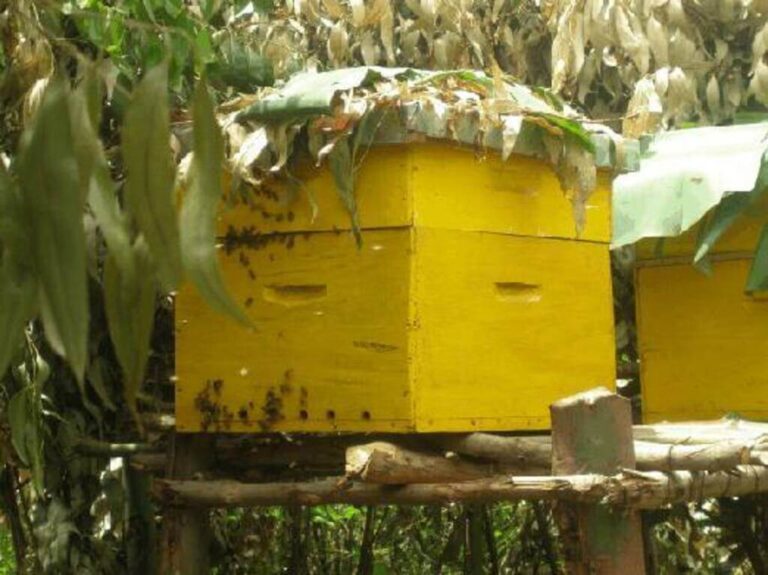
“We had 50 beehives – which were traditionally made and only 25 hives were colonised.” But last year, 2025, the group set about reviving and actively colonising the empty hives.
“We started by cleaning, removing pest that had invaded the unoccupied hives, dead insects and raised them high above the ground to keep them from animal intrusion.”
“We also reapplied beewax or propolis in the hives and in about two to three days, we started seeing movement of bees around these hives. We also took a step of moving some bee combs into those that were not experiencing bees’ movement and in less than a month, we got the hives fully colonised.”
Their 2025 harvest was more than doubled by the recolonisation, to over 200 kg of honey, helped further by extra planting to provide more nectar.
“We have been planting flowers and nectar producing plants like sunflower around the forest where our apiary is, maintaining the acacia trees and our Aloe Vera farms which have been significant in keeping bee colonies around the apiary.”
With the extra funds they bought additional and modern beehives, buying close to 200 Langstroth hives and Kenya Top Bar hives over 10 months, and successfully getting them all fully occupied with the same methods.
“During harvesting, we no longer use traditional means like burning the whole hive, which used to chase away the colonies. Rather, we puff a little smoke from the side of the hive, picking combs capped with white wax, removing bees, cutting the honey and leaving some for the bees. This is made possible with the modern beehives like langstroth, which has a wire that separates the honey from the queen, eggs or larvae.”
Jacinta said they are anticipating harvesting about 800kg of honey from the 200 hives this year, following help from the NATURE Project by Swisscontact Kenya and the Wyss Academy for Nature in developing additional hive products as well.
“The programme engaged us in training on climate-smart solutions for high-yield bee keeping, management of colonies, harvesting and navigation of the bee keeping value.”
“Now, we are guaranteed of making Sh500 per kilo of honey, Sh4,000 per gram of venom, Sh6,800 per kilo of pollen, Sh1,900 per kilo of propolis, Sh3,800 per kilo of of jelly and Sh700 per kilo of wax, based on the market value.”
The strong market demand is ongoing, said Jacinta, with Kenya producing 17 million metric tonnes of honey annually, according to the Food and Agriculture Organisation (FAO), compared with local demand of 47 million metric tonnes per year.
Get your farming news by email.
Free. Market prices, crop news and farmer opportunities, straight to your inbox.