Isiolo youth walk miles for Gum Arabic worth millions
3 min read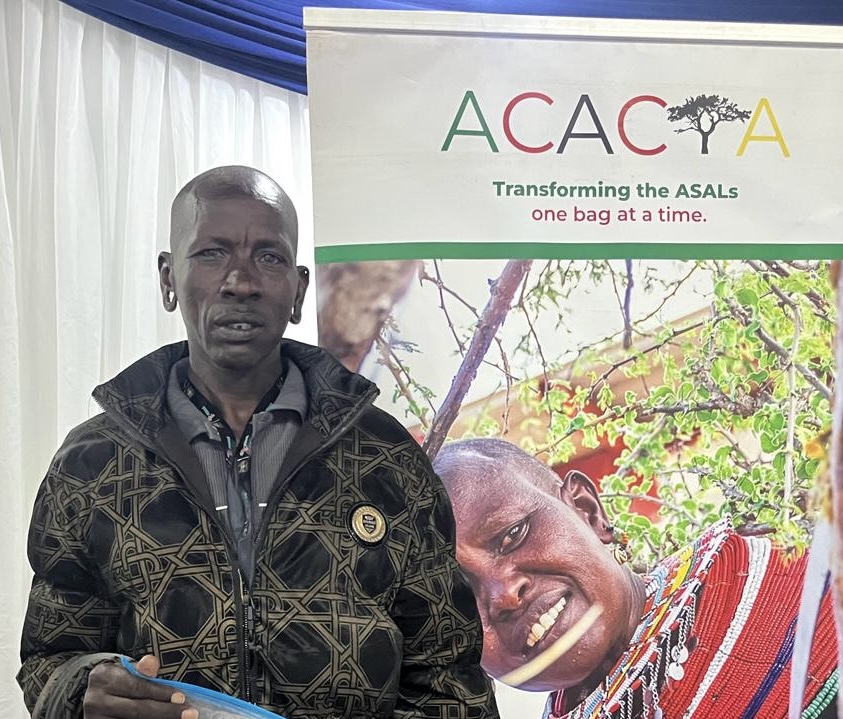
By Wycliffe Musalia
Sammy Lesokoli and a group of 20 people in Kipsing, Isiolo County have been walking more than 30 kilometres a day chasing millions of shillings from acacia trees that are progressively disappearing due to deforestation.
“We move around collecting Gum Arabic from acacia trees. We are about 500 collectors in Kipsing region… we walk sometimes 6 kilometres to 10 kilometres to find these trees, which have become limited in the area. On average, a collector walks about 30 kilometres to collect the gum.”
But Lesokoli and his team are walking approximately seven hours is the fact that a kilo of Gum Arabic promises them KSh 250 per day compared to the goats they reared, whose produce had been affected by drought, lack of water and pasture.
“In a good month, we collect on average 7-8 metric tonnes of honey and on low month, we collect 5-4 tonnes. We sell the gum to exporters who give us Sh250 per kilo,”
On average, the group collects about 5,000 to 8,000 kg of Gum Arabic, which pays them around Sh1.25m to Sh2m a month.
However, according to Lesokoli, the challenge to reaching the full potential of Gum Arabic lies in the acacia trees.
“The trees only grow naturally and most of them have been destroyed by people cutting them down as firewood, to build and fence their manyattas. Some forests have also been destroyed by animals.”
“We also face the challenge in planting of acacia trees since we are pastoralist communities, moving from one place to another in search of pasture for our livestock. We do not own land here, most of the land here is community-owned or private ranches. Therefore, you can’t plant a tree unless you agree as a community… you may plant and the other person destroys the tree.
He said acacia trees are easier to plant since they produce their own seeds and climatic condition of the region remains favourable, but pointed a finger to constrained water, land and human resources to grow the plant.
“We do not need to buy seedlings and there are no companies selling them in this region. Sometimes the seeds fall on the ground and grow but the young plants get destroyed, not growing to the standard maturity due to lack of water and care. We have a water challenge, so those near rivers wells are the only ones surviving.”
“An acacia tree that has grown on its own and then gets enough rainfall, usually takes about two years to start producing Gum Arabic.”
“I urge my fellow collectors and residents to think about this life-changing plant and start taking care of it… we can start planting acacia around our homes if we get the support of the community (with land), volunteers who can take care of the plants by watering them and keeping animals away.”
Reports show that Kenya produces about 300 to 400 metric tonnes of Gum Arabic, which according to Lesokoli, comes only from naturally existing acacia trees. This is way below the global demand, projected to reach $760 million-2.2 billion by 2030 to 2035.