Indigenous cherry tomato farmer triples production on high demand
4 min read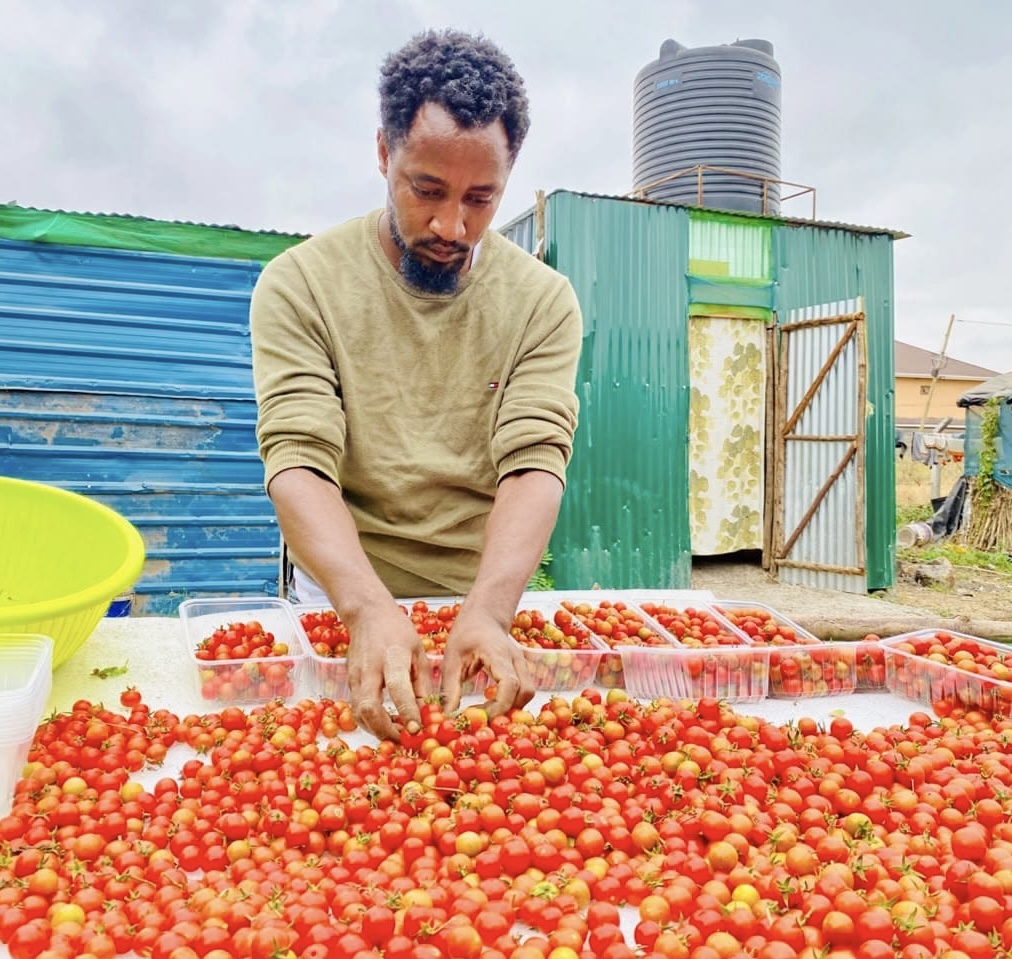
By Antynet Ford
A Machakos farmer has found demand growing so quickly for his dry-season indigenous cherry tomatoes, his only limit is now how much he can carry to his buyers, capped at 20kg per delivery until he gets his own vehicle.
Berbard Gitau began growing indigenous cherry tomatoes on his half-acre farm in Machakos for friends at the Museum of Kenya. But the high prices, new orders from retail chains in Joska, and growing demand in Nairobi have seen him now switch most of his space to the fruit, which has thrived through the dry months from May to July.
“I started specialising in cherry tomatoes because the profit of doing several other crops has been low. I have got an order from a local retail store here in Joska to supply 100kg in a week and that is why I am increasing the production from 40kg a week to over 150kg to meet the new demand, even as I continue supplying my usual customers,” said Bernard.
Bernard is now transplanting over 300 cherry tomatoes seedlings, from 1000 he has started in a nursery, to meet the expanded demand, and plans to sell the remainder to other farmers.
Before focusing on cherry tomatoes at the beginning of April, he had been growing sunflowers, eggplants, spinach, spring onions, maize, and mrenda.
“Then I had the indigenous cherry tomatoes grow on the farm on their own. I dried, scrubbed and produced more for seeds and began a nursery,” he said.
Because they are indigenous and hardy, they don’t need to be watered and he only has to make sure they are growing properly, by pruning them so they produce well.
“For example, during the last rainfall that we had in the last season, which is two months ago, I have never watered them. Just that rain water and some good pruning to help it fruit well and properly are what have been helping me make the supply every week to my customers. For a cherry tomato plant, if it is not pruned it will be very big and colonise a space,” he said.
“I sell to individuals working at the Museum of Kenya and I go there twice a week, on Tuesdays and Fridays. For them, I have been delivering 40 kilograms every week; that means 20Kgs of each day that I make the deliveries.”
“Our market has been increasing daily, because every time someone buys the cherry tomatoes, they come back for more and even their friends come making orders as they find them good, saying they have no acidity. My friends also keep asking for more even as we sell through our social media channels, where people have been making orders almost daily,” he said.
Because they are indigenous, he never needs to use any pesticides either, which customers like, he said, because it guarantees no residues.
“To ensure that the cherries stay longer after you harvest, you cut them with stems so that someone who will not place it on a fridge can stay with it for at least two weeks,” he said.
Bernard gets Sh8,000 a week from his current sales of 40kg at Sh200 per kg but his earnings are set to rise to over Sh48,000 a week, with the retail store paying twice as much per kg as his other customers.
“One of my biggest challenge is doing the deliveries, because I use a matatu. In a single delivery, apart from spending a lot of time on the road, the cost is also high, because in a day I end up spending more than Sh500. I am working hard to ensure that I get a vehicle to ease my deliveries. With a car, I could be doing more deliveries, but now with a matatu, I am limited because I do not want the cherries damaged on my way,” he said.
“I have only been doing 20kg for a single delivery. The amount automatically gets to more than double if I am to use my own car.”
For Bernard, the production of the cherries begins with land preparation where he mixes used mushroom substrate with soil as his homemade manure. He also where he also adds biochar and goat or chicken manure.
He then transplants the seedlings from the nursery where they stayed for a month, ensuring there is a one-meter space between one crop and another to stop it becoming one bush.
“You would rather plant few in your smaller space than many in the smaller space. After two months the cherries start to fruit,” he said.
He now plans to also begin processing cherry tomatoes, later this year, into chili- and garlic-flavored sauces, once production stabilizes, targeting hotels, butcheries and existing customers.