
Kakamega farmer doubles maize, stops deaths, with aflatoxin measures
By Wycliffe Musalia
The risk of crop losses to aflatoxin is set to soar this year as Kenya enters an El Niño season of heavy rains, but farmers such as Jacktone Indimuli in Kakamega have stopped the disease and saved their crops from losses that were topping 50 per cent, by changing how they harvest and store
Scientists at the world’s climate prediction centre officially confirmed an El Niño had begun on 11th June 2026: heralding up to two years of heavy rains for East Africa, and with experts speculating that the 2026 El Niño could be one of the worst of the last century. The last El Niño from 2023 to 2024 triggered crop losses of over Sh16bn in Kenya on flooding and extra diseases, destroying around 84,000 acrea of crops grown on 78,000 farms.
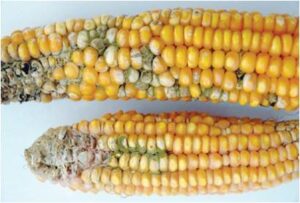
Wet weather increases the growth of the fungus on maize that causes poisonous aflatoxins, which kill humans by destroying their liver, triggering a spate of warnings from the Kenya Agricultural and Livestock Research Organisation (KALRO) and the Kenya Bureau of Standards (KEBS), this month, for extra vigilance consuming crops during the rains ahead.
But farmers can almost eliminate the poison with care in drying, said Jactone Indimuli, who farms in Lugari, Kakamega.
“I have a three acre farm and on overage It produces 70 bags. Before I learnt about proper methods of storage and drying, I could lose more than 40 bags to aflatoxin contamination,” he said.
“Every year, I lost sacks, especially during heavy rainfall from October to November, as I had nowhere to dry the maize. Sometimes I left them in the rain, not realising this was the main cause of the contamination.”
“My maize was affected, often due to ignorance about how to manage the produce after harvesting,” he said, having since done an agricultural extension workshop on how to stop the losses.
“Before, I used to keep maize in the store for about a week after harvest, before drying them. When drying, I put them on dew ground, until I learned about drying within a day after harvest, on a raised pallet and within the recommended moisture level, and not when it is raining. I now harvest and manage to keep the sacks safe without any contamination,” he said.
Some experts recommend farmers check the moisture level, which should be 12 per cent to 13per cent moisture, but there are no practical ways for farmers to measure this in the field, without investing Sh4,000 to Sh30,000 on a hand-held moisture minitor.
However, there are easy ways to get the moisture levels roughly right, by seeing if the maize kernel shatters if pressed between thumb nails or bitten, or if it only dents. If it doesn’t break under pressure, it is still too wet for harvesting, and at much higher risk of developing aflatoxins. If the grain feels cool to the hand, it is also too wet, or if it is discoloured or looking mouldy.
Jacktone has also saved his harvest from the poison by keeping it in plastic bags that don’t let air in and storing it in a cool and dry shed.
These moves are make-or-break in stopping the killer toxin, said Nyamira County agricultural extension officer Milton Ongeri, to FarmBizAfrica.
“I have seen a number of farmers harvest their maize from the farms, and when it comes to storage, they store it on damp ground. The maize then starts to mould, so it is the moulding that leads to the aflatoxin,” he said.
The poison then spreads to milk and eggs too, said Ongeri.
“In most cases, farmers take the affected maize after shearing or dressing, they feed their livestock, they feed their cattle, they feed their chickens, and without knowing that aflatoxin is a slow poison that accumulates in the body, when we also feed on the products of these animals.”
“Contaminated cereals should not be consumed by another person or another animal. It should not be consumed, so they should be destroyed by controlled burning or buried deep, about 10 feet,” he said.
Aflatoxins can kill humans within hours if eaten directly, but also kill quickly as liver cancer, with one recent study estimating there were around 1,480 new cases of liver cancer a year, in Tanzania, caused by aflatoxins, typically killing sufferers in under a year.
Get your farming news by email.
Free. Market prices, crop news and farmer opportunities, straight to your inbox.