Nyeri farmer ends years of crop destruction by moles with cow slurry
5 min read
By Francis Ndungu
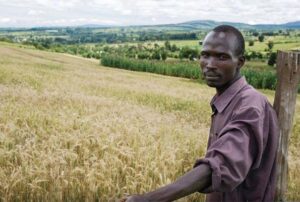
A Nyeri farmer has ended years of heavy crop losses to moles by applying slurry from his cows, which has driven the pests from his fields and more than tripled his crop production.
“Moles are the major pests in our region, causing more harm than good. Different farmers used different methods to control them but they re-occurred repeatedly. It is the most expensive pest to control in the farm as experts charge Sh1,500 to trap even one mole or a squirrel, which is also a threat,” said Johnson Kiama.
It is because Nyeri is a cool and wet region that it attracted more moles. “Moles prefer cool and moist soils, as they are easier to burrow in,” he said. “they are good soil aerators in plain fields without crops as they incorporate the soil when burrowing underground, but the problem emerges after planting when they start feeding on the roots of the plants.”
“In most cases pesticides do not work on them as they keep moving from one place to another, especially if they realise there is a human presence or scent. Sometimes it took me even a month without seeing them, yet most of the destruction was done underground. They were destructive and very difficult to get rid of. They burrowed in the soil and hid while destroying the roots of the plants.”
“I used to grow Irish potatoes and sweet potatoes for commercial purposes. In addition, I also grew beans and maize in small quantities. But they destroyed my crops for three consecutive years and left me disappointed. In my quarter of an acre under Irish potatoes I used to harvest more than 15 bags of potatoes, but later I could only harvest five bags and sometimes as low as three, depending on the level of attack.”
“I also planted the Bungoma 2 sweet potatoes variety, which did well in the market, but they were the moles’ favourite. My sweet potato sales became history after the attack by the moles with the vines hardly able to bear any potatoes and instead drying up and getting covered with the soil.”
“I abandoned my commercial crops. But I thought Napier grass would not face the same problem I previously faced and I could grow feed for my cattle.”
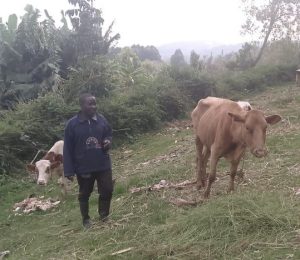
I has been buying feeds from the agrovet, but buying feeds for two Friesian cows was really costly. I even felt I had made a wrong decision starting dairy farming because the milk they produced could not cover the cost of the feed they consumed as they only produced 6 and 5 litres per cow.”
“So I planted grass on an acre of land after acquiring seeds from the agrovet and later planted Super and Red Napier. I aimed to harvest hay for my cows after the grass matured. But the mole problem got even worse. They invaded my grass and by the time it reached maturity after four months I could only harvest 150 bales of hay. They burrowed and raised heaps of soil in such a way that the grass cutter could not collect grass in some areas as it would have been baled together with soil, which would have caused rotting of the hay and health effects on my cows. Most of the area under hay produced nothing. My Napier grass was also affected, with its roots destroyed, and dried prematurely leaving me frustrated.”
“But I noticed that most of the hay came from near my home where my biogas chamber was. I realized the grass near the outlet grew long and healthy and was not attacked by moles. I checked it keenly and found that area contained no single mole, no attack, only healthy grass.”
“I experimented and carried some slurry to the other side of the farm where moles had invaded and applied it on the grass. To my surprise, after I applied the slurry, I found no moles in that area. They shifted to the edge of my farm where there was no slurry. The following day I decided to punish them and see their reaction. I took slurry to where they had settled and they shifted to another fresh place. That’s when I learned that slurry was indeed a control for moles.”
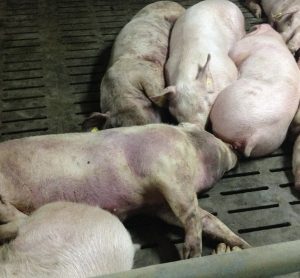
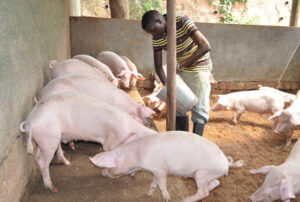
“From there onwards I started applying slurry on my farm and even in the portion where I had planted Napier, moles also disappeared after slurry application. I applied slurry on my whole farm and all the moles were nowhere to be found. Farmers came to my farm for advice and when they applied it on their farms it also worked excellently. Pig farmers also tried using pig slurry and it worked perfectly.”
Related news:
Farmer applies pigs’ manure in celery farming to keep off moles
Farmers use weeds to tame crop destroying moles
Weed-reading: Kilifi farmers improve yields by learning from invaders
“I also started to make slurry on my own by diluting cow dung with water, which looked like a porridge solution. I took a 100-litre drum and put water halfway and added 15 kilos of cow dung, sometimes adding urine and stirring it with a stick. I stirred until it was uniform, then carried it to the farm and applied it on the grass using a watering can. I repeated the method every season, especially after harvesting my grass or whenever I wanted to introduce a new crop. It immediately gave me a whole season without moles on my farm.”
“I later went back and started farming the crops I had abandoned because of the mole attacks, and no more moles attacked with the massive application of slurry, which also increased my harvest. I went back to potato production and started harvesting 20 to 25 bags. I also filled the gaps in my grass and Napier where they had dried and started harvesting 1,000 to 1,800 bales of hay per season, which was enough to feed my cattle for a whole year and reduced the cost of production.”
“The moles were all chased away by the awful smell from the slurry. Slurry was environmentally friendly, improved the soil on my farm and increased my production. On top of that the method is cheap, simple and required few skills, with my materials readily available and cost effective.”
Are you a farmer looking to grow the most profitable crop on your farm, with or without irrigation. Use FarmBizAfrica’s HarvestMAX on https://harvestmax.farmbizapps.com and it will tell you in less than a minute what the highest income-earning crops are for your weather, soil type and this season, based on your seasonal weather forecast. Don’t make weather losses ever again, and more than triple your income.