
Flower farmers suffer 70% export fall on Middle East war
By Lyzzie Owade
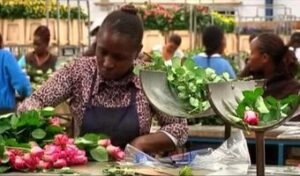
Kenyan flower farmers are reporting a 70 per cent fall in exports to the Middle East following the war between the US and Iran, forcing some farms to send sales teams to new markets such as the Netherlands as orders collapse.
Farmers said exports that previously reached 3,000 to 4,000 cartons a day to the Middle East have now dropped to about 1,000 cartons, while rising fuel costs and weak local demand have deepened the crisis.
FarmBiz Africa interviewed John Kibe, a flower farmer and pack house manager for Mahee Flowers. The company operates five farms including Mahee in Olkalou Town, Rimuruti in Mwazi, My Tree Flowers in Naivasha and Sharima Flowers in North Lake.
John has worked in the flower industry for the last 15 years.
He said flower demand in Kenya is strongest during celebrations such as Mother’s Day and Valentine’s Day.
“In Kenya the flowers are always bought during occasions like mothers day and valentine day. That’s when the flowers are in high demand you can end up selling upto 100 bunch a day which goes from Sh2500 depending on the length.”
“Normal days we do sell more on weekends when there is a celebration or parties somewhere and we do get like 4 to 5 people per day who need flowers,” he said.
But the larger export market has sharply weakened this year. The Middle East had been one of the biggest markets for Kenyan flowers, but the conflict has disrupted trade and caused many buyers to cut or cancel orders, said John.
“Since February this year we have been getting more challenges. In the past years, we could always export like 3000 to 4000 cartons to the Middle East, but now we only manage to export 1000 cartons per day.”.
Flowers farmers are now struggling to maintain profits, affecting the wider flower export industry, he said, with the UK market unable to absorb the volumes previously shipped to the Middle East.
“Most clients on UK airlines buy in small amounts. We only take 500 to 600 cartoons a day to those countries, thus no good market in those countries compaired to the Middle East,” said Kibe.
As a result, farms have started cutting back.
“This issue has forced most people to stop the workers from the farm since the profit margin is not enough to sustain them all, thus causing a lot of challenges.”
No farms are currently in a position to hire workers, he said. “The sales has gone down this year to 30%.”
“This has affected all types of roses, and what was always sold in the Kenya market were the rejects, the flowers that cannot be exported.”
These earn much lower prices, even as growers face higher costs, including rising fuel costs
“Most of these flowers are transported by vehicles from the farm to the pack house. For years we have been spending like Sh55,500 for 300ltrs but now we are paying up to Sh70,000, thus this affects us too.”
The lower export volumes have made certification costs harder to cover too.
“The taxes are very high and we have five bodies that you have to pay before the export. This is not a big issue since exporters have been paying them before the war started and that’s the only way that you can export your flowers with the correct certification.”
But they become harder to cover when the total sales are smaller.
June, July and August are normally the off season for flowers, making the current export crisis even harder to manage through the lull in sales.
Some exporters have started offering free cartons to retain customers and attract new buyers.
“Most exporters have now started to give out discounts to clients like when you buy 100 cartons you get three for free this is to maintain the customers and attract more people.”
Kibe said the collapse in Middle East demand has also forced flower farms to search for buyers in new countries.
“With this war it has forced us to take someone to other countries like the Netherlands to look for a market there since the demand is very low.”
Get your farming news by email.
Free. Market prices, crop news and farmer opportunities, straight to your inbox.