Ruiru farmer converts black cotton soil into working food plot
3 min read
By MaryAnne Musilo
Lilian Wanjiku is producing food for her family from a 50-by-100 foot plot of difficult black cotton soil by using trenches and abandoning poorly performing crops, but she could still produce twice as much, according to FarmBizAfrica’s AI agronomist HarvestMAX, by growing managu, cabbage, and arrowroot.
Initially, the soil in Lillian’s backyard, in Kibendera, Ruiru, seemed unusable for farming.“The soil really cracks when it is dry and holds water in rainy season. Like now that we are experiencing heavy rains, it is flooded,” she said.
The black cotton “is very hard to dig and so we dig in dry season. Getting to the shamba while it is raining is even really messy, because the mud can be very sticky.”
“I get one person who helps me in the shamba. That is just digging and weeding, which takes only a day,” she said, which she pays Sh600 for.
“I started with sukuma wiki to feed my family, which I grew using irrigation. I never thought they could do well, but they did,” she said.
However, frequent flooding during heavy rains forced her to look for ways to manage the plot’s water. “I decided to raise my shamba by adding another black cotton soil and building small trenches that drain the excess unwanted water.”
She then tried growing maize and beans. “My beans don’t do very well, because I harvest like half a 20-litre bucket, but the maize, I am happy with. I farm the Sungura variety, and I harvest about a sack and a half of 90kg. This I use it to feed my family, where we grind to maize flour and we also grind into bigger chunks, where I mix with chicken feed to feed my poultry,” she said.
The choice of Sungura is unusual as a drought-tolerant variety in soil that is prone to waterlogging. But its limited success has slowly helped the soil improve with the maize stalks decomposing into the soil to add organic matter into the heavy clay. The more organic matter there is in soil, the closer it moves towards being the ideal type of agricultural soil, loam.
READ ALSO:
Soil type can double maize yields: how to check and correct
Advanced field soil test gets better NPK accuracy, but at a cost
Shamba Assistant relaunches $400 soil test device for agronomists
“Slowly, the soil is improving. It is not as hard as it used to be. I think the maize stalks are playing a big role in improving the soil texture,” she said.
Around her, others have tried more expensive ways to improve the black cotton.
“One of my neighbours buys red soil and spreads it on top of the black cotton to make it easier to farm, although it can be costly for a small-scale farmer,” she said.
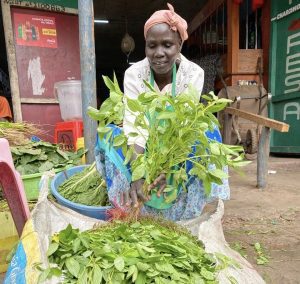
However, the FarmbizAfrica AI agronomist, HarvestMAX, advises that black cotton soils can still be profitable when farmers choose the ideal crops. According to HarvestMAX, crops such as swamp nightshade (managu), cabbage and arrowroot perform well in black cotton in Kiambu weather, tolerating both high moisture and heavy clay.
Arrowroot, in fact, benefits from the soil’s strong water-retention, and can generate high returns, while fast-growing vegetables like managu provide quick harvests and ready cash flow.
By matching the best crops to soils and weather, and adding drainage with trenches, black cotton plots can generate significant food and incomes, with the crop waste then steadily improving the soil too.
Are you a farmer looking to grow the most profitable crop on your farm, with or without irrigation. Use FarmBizAfrica’s HarvestMAX on https://harvestmax.farmbizapps.com and it will tell you in less than a minute what the highest income-earning crops are for your weather, soil type and this season, based on your seasonal weather forecast. Don’t make weather losses ever again, and more than triple your income.