Pesticide bans hit food production as unguided farmers suffer surge in crop losses
3 min read
Kenya’s food security is under new pressure as repeated bans on pesticides are removing ways farmers control crop diseases without guidance on alternatives, causing heavy losses as farmers experiment, often wrongly, on what they can use instead.
Analysis by FarmBizAfrica suggests the consequent food losses could now cut a further 200 calories a day from Kenyans’ average food consumption, moving them to amongst the most poorly fed in Africa.
The problem is most acute in fungicides, with the latest batch of bans including mancozeb, which follows the earlier withdrawal of the world’s other most used and affordable fungicide. chlorothalonil. Both these treatments had little pest resistance and only needed occasional use to prevent devastating crop diseases that include potato and tomato late blight, wheat rusts, bean anthracnose, and powdery mildew in vegetables and other crops.
All of these diseases spread quickly and can destroy entire crops if not controlled.
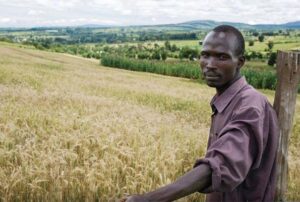
On his farm in Nyandarua County, potato farmer Isaac Mwaura said late blight spread through his crop and destroyed most of his harvest after the banning of chlorothalonil.
“I lost up to 80 per cent after the death of the whole plants,” he said. “Chlorothalonil worked excellently… but now am left stranded because I don’t know what to spray.”
“I used [the replacement] but it did not work.” In the end, he said, “I gave up on my potatoes, which rotted and thus were not conducive for consumption, nor for planting.”
Other farmers report similar losses in other crops. In wheat-growing areas, rust has caused heavy damage, with one farmer saying: “I almost collapsed… there were no kernels.” Another wheat farmer reported losing up to 90 per cent of his crop to the same disease.
Bean farmers have also reported heavy losses from anthracnose, a fungal disease that attacks pods and seeds. It can spread quickly during wet conditions and reduce both yield and quality.
In vegetables and horticultural crops, powdery mildew is also a major problem. It spreads fast on leaves and reduces the plant’s ability to grow and produce.
Across many of these diseases, one possible treatment option is copper sulphate. But copper is a contact fungicide, meaning it sits on the surface of the plant, where it helps prevent infection. It cannot stop diseases once they start and needs repeated spraying. It can also be washed off by rain, which reduces its effect, and can damage crops if wrongly applied.
It can also cause liver poisoning in humans, if used incorrectly.
“Many of the remaining fungicides need careful timing. If spraying is delayed, the disease can spread very fast,” said one crop protection expert to FarmBizAfrica.
Yet there has never been any national guidance on how to use any alternatives, leaving crop losses to multiply.
According to the impact analysis carried out by FarmBizAfrica, this unmanaged transition is now causing losses so great that the average number of calories per person in Kenya, which was already well below the average for Africa, is set to fall by a further 203 calories per person, or about 9 per cent.
If the disease control continues to remain unaddressed, it could even reduce Kenya to about 1,767 calories per person by 2034, putting Kenyans on among the lowest calorie levels in the world.
FarmBizAfrica is continuing to search all journals and all farmer experiences to communicate the best alternative ways to control these crop diseases, while also trying to build public understanding on how devastating they are to food security, poverty and health, if left uncontrolled.
Are you a farmer looking to grow the most profitable crop on your farm, with or without irrigation. Use FarmBizAfrica’s HarvestMAX on https://harvestmax.farmbizapps.com and it will tell you in less than a minute what the highest income-earning crops are for your weather, soil type and this season, based on your seasonal weather forecast. Don’t make weather losses ever again, and more than triple your income.