Dorper sheep farmer saves Sh1400 a day switching to farm-grown fodder regime
3 min read
By MaryAnne Musilo,
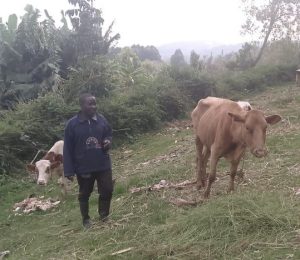
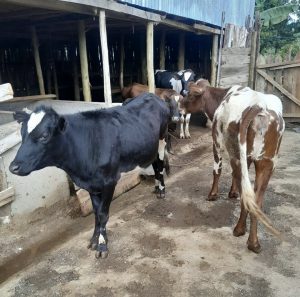
Ken Kamau, the director at Menengai Echo Ranch Farm in Nakuru, has moved his 300 sheep off a diet of hay that was costing him Sh1400 a day and entirely onto farm-grown fodder, mixing brachiaria grass and legumes to give them a high-protein diet.
“Before, I used to feed my 300 sheep on hay, where I used to buy one hay at about Sh200. For my sheep, I needed like seven bales of hay per day. I would also graze them,” said Ken, who has since converted slowly to growing entirely his own fodder instead
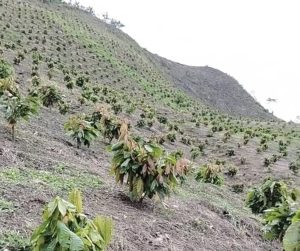
He first got the idea at a seminar. “After visiting the seminar at Nakuru, I got the idea, but I did not put it into action then, that was around 2021. Then, the following year, I visited another farm and saw how they were growing grasses to feed their cows. That is when I put the idea into action. I bought the Mulato variety cuttings at Sh10 per cutting.”
Brachiaria is a tropical forage grass that better survives in higher temperatures and helps conserve.
“I had a space of around one-and- a-half acres and that is where I planted the grass. The nutrients are pretty much okay, but I also grow other grasses like Super Napier, Red Napier, and legumes like Lucerne and Desmogium to boost the protein for the animals,” he said.
He switched the diet gradually to stop the sheep from having digestive problems.
“When I started feeding the grass to my sheep, I started by mixing the grass with hay. So I reduced the hay from seven bales a day to four. Also, for the grass, I let it sun dry for a day then fed the sheep. This is because freshly cut grass has high water content and, drying it, I make sure the sheep get the nutrients. I reduced the hay as days went by to now not buying it,” he said.
Mixing the grasses with the legumes is important to get healthy sheep, said Ken.
“A growing lamb needs a lot of energy and protein. I mix around 70% of grass and 20% of legumes, which provides a balance of energy from the grass and protein from the legumes. It is also important to note that I don’t let the bracharia grass mature fully for, as it matures, the fibre increases and protein tends to decline. I harvest it when it is young,” he said.
He also grows the mix of grasses, and makes silage as well, to make sure his animals are well fed even when drought slows the bracharia grass. “When there is no rainfall, the grass takes longer to get to the grazing stage. That is why I grow other grasses to feed my sheep,” he said.
“In selling Dorpers or let me say any animal or livestock, good health and weight is key. For now, I’m grazing the sheep on the grass, and feeding them silage, which I make using maize stalks. I also add on minerals as I give them salt,” he said.
Ken also makes a little extra income selling the bracharia cuttings to other farmers.
“I sell at Sh10 per cutting, the same price as I also bought. I bought 4800 cuttings for the one-and-a-half acres. The advantage is once planted you do not need to replant again,” he said