
Omena shortages hit fishers even as prices double
By Lyzzie Owade
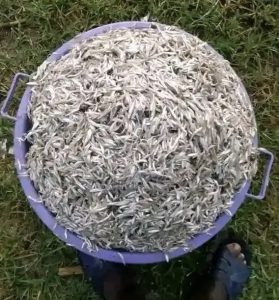
The collapse in Omena volumes in Lake Victoria has made the fish often too expensive for locals and pushed fishers into long nights fishing with mixed rewards, but for the traders who have stayed in the sector, profits have grown.
The lake’s fish sticks have been falling for over 20 years, with the Lake Victoria Fisheries Organisation (LVFO) reporting steep declines from 2015 to 2020, while the fish catch in Kenya’s inland waters fell from over 200,000 tonnes in 2002 to 88,000 in 2022, according to government data. But while LVFO was publishing annual data on the stocks, it has published no new figures since 2020,
The most recent big data available is from 2023, when the Kenyan Lake Victoria catch fell by 18 per cent to 70,318 tonnes. But fishers, middlemen and retailers all report that what was long Kenya’s largest fish by volume has continued to decline, with prices doubling since 2022.
As an industry that has supported many thousands, the falling volumes are changing the fortunes of everyone in the buying chain from the lake to the customer.
Simon Omondi, a fisherman from Honge Beach in Siaya County, started fishing after high school. He was employed in a primary school earning Sh5000 a month. But with his other siblings in school, he needed to earn more, and his dad was also a fisherman.
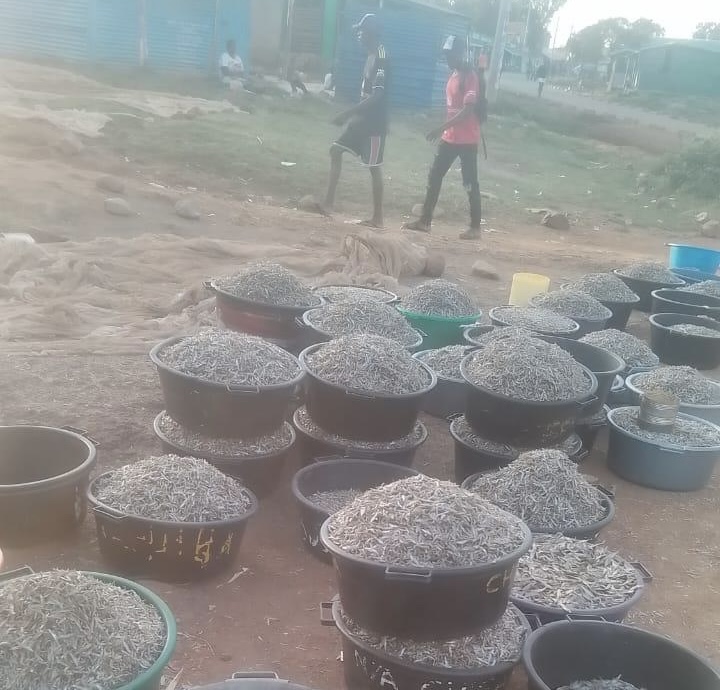
But the catch has become increasingly sporadic as more people fish.‘’On good days, we can get upto 30 basins, but on bad days, we end up catching nothing,” he said.
Prices also fluctuate every day depending on how much he catches.
“When it’s bad, we earn from Sh300 and when it’s good it’s Sh1000 per night. Only 4 people go to fish every night as the rest of the team will wait till morning to go and get what has come out from the team. When you don’t go at night, you can even get only Sh100.”.
“People believe that Uganda has more omena than Kenya and the price is cheap. But the omena in Uganda are not as good as the ones we have in Kenya, that’s why the prices are different,” said Simon.
The fish is priced per basin. “In previous years, one basin was going for as low as Sh500. But the lowest price nowadays may start from Sh2500, but sometimes it raises upto Sh5000.”
The prices on short days are just too high for locals, said Simon “When the prices are high most people who are doing the business around cannot buy it, so we sell it to people who come from Bondo, Kisumu or even Siaya town,’’ as urban buyers in western Kenya.
The work is also hard, “the person who is operating the boat engine ofted experiences poor blood circulation.”
For buyers and middle men, the soaring prices have had a mixed impact, with some getting out because the buying price is so high. But for those who have stayed in, business is booming,,with fewer sellers across the smaller volumes, but at much higher prices.
Farmbiz Africa interviewed Rhoda, who lives in Usenge, by Lake Victoria, but supplies omena to other counties, including Mombasa and Nairobi.
‘’I started this business with one trough and I was selling it to the local buyers. In a day I could sell 6kg which by then was going for Sh150 for a 2kg jar . Most of the people in the market were buying food and were buying a small bowl, which was going for Sh20,’’ she said
On visiting her sister, who was doing fish business in Gikomba, Rhoda gained her first bigger clients.
“I didn’t have enough capital, so I took Sh25,000 from the chama and I started sending omena in bulk. I started with two customers who wanted one sack each in Nairobi. A sack was going for Sh10,000 back then.”
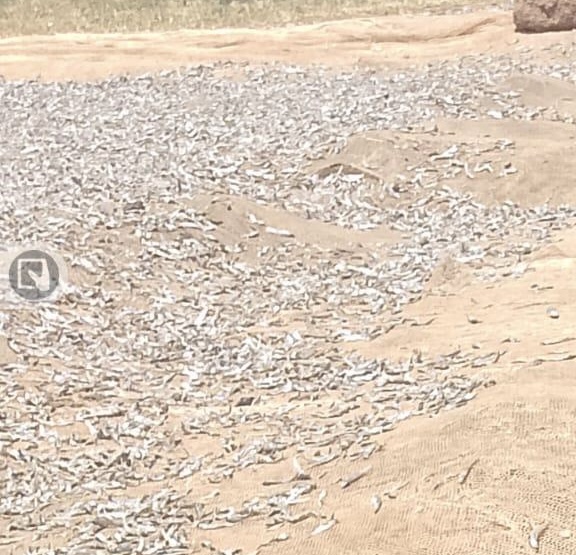
‘’The good thing with this business is that, when you buy one basin at even Sh2000, after drying it will produce like one trough and another half. So the half one is the profit we are making. Plus there are always the small fish thst we sell separately and that’s another profit,’’ she said.
Rhoda now can sell upto 6 sacks in a week, so her volumes have grown, and so have the prices, at now Sh28,000, mostly to customers in Mombasa and Nairobi. But she only sells for prepayment, she said, as nonpayment happens too many times when she delivers ahead.
Millicent Auma, who lives in Malindi on the Coast, has been selling omena for the last nine years. She orders the fish from all the landing beaches around Lake Victoria, in a business that is now paying the school fees for her three kids, with one at the university.
‘’I started this business when I couldn’t manage to survive by selling tomatoes. I was selling tomatoes and onions. But what I was getting in the business wasn’t enough and that’s when I had to think of other ways I can get more profit,” she said.
When she started the business, one sack of 90kg cost around Sh11,000 and transport was Sh600, and she used to order two sacks a week.But her volumes and the profit per sack are much higher now.
“Now one sack of 90kg costs around Sh30,000 and transport is Sh1,000. This has seen people look for other businesses,” said Millicent. But she is profiting..
‘’I measure the 90kg sack out with a 10-litre bucket for toss, and always get 28 to 30 buckets. Each bucket we sell at Sh1300 to Sh1500 to those taking them to kiosks where people buy for eating, from as low as Sh50. In a week, they buy a sack of 90kg thus creating a profit of Sh7,000 to Sh14,000’’ she said.
“The secret with selling omena is knowing the number of buckets you have got, then you will know how to sell it well for you to get a profit.”
When sales are good, Millicent can sell upto four buckets in a day. The only challenge she has is when the omena were not well dried at the lake, which means she has to dry them again to stop them changing colour or going bad, which makes a bad smell that drives customers away.
Get your farming news by email.
Free. Market prices, crop news and farmer opportunities, straight to your inbox.