Nanyuki weavers paying farmers for wool they were throwing away
4 min read
By Lyzzie Owade and Antynet Ford
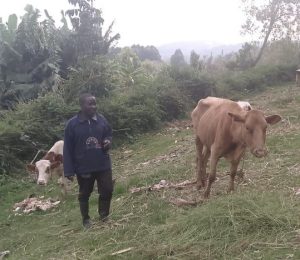
The Nanyuki Weavers and Spinners group is paying Sh60 to Sh120 per kilogram for shorn wool from farmers in Nanyuki, Timau, and Nakuru that was previously being thrown away. The group cleans and hand-spins the wool to make scarves, mats, shawls, sweaters, and baby clothes.
“Most of our wool comes from Nakuru, where most people raise sheep. Our expert is always on the field so he knows the type of wool we use. He collects wool from the shearing area and we have to send someone to pick it up,” said group member Naomi.
The group said prices depend on wool quality, judged by cleanliness and grading. Dirt, plant matter, and “black jack” – a common weed whose seeds stick to wool – lower the price. “We don’t just take wool which has more dirt and black jack,” they said.
After shearing, the wool is washed to remove dirt, dried in the sun, and hand-carded using paddle-like brushes with wires that separate the fleece. “After we shear, we use the two hand machines to remove dirt from the wool, making it clean. The machine has wires which entirely remove all the dirt and make it even softer,” she said.
“The cleaning also makes it soft. After it’s cleaned, you can either dye it before making the thread or make the thread first then dye it.”
Spinning is done on a small electric wooden machine, powered by solar. The wool is spun into fine thread. “After threading, it’s taken into the next step of making rolls for sale. With the thread, we also sew our own shawls and sweaters for sale,” she said.
The thread is also given to women who weave at home and return finished items for sale. More than 280 women have been trained, and many have started their own weaving projects.
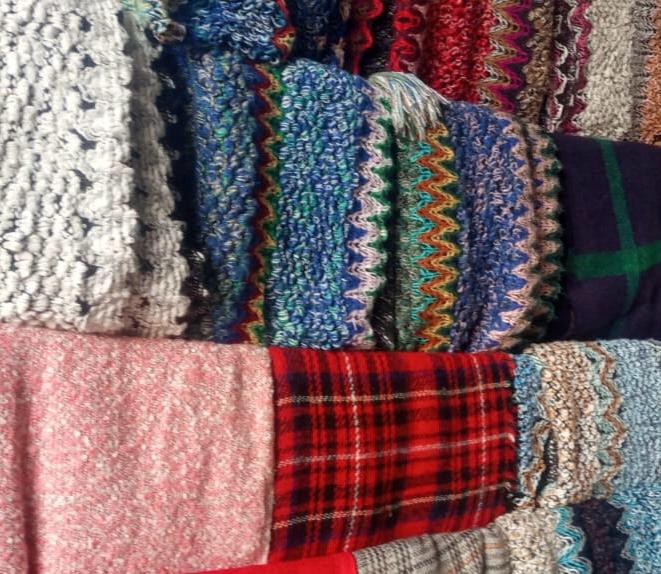
“We are always around 100 in the business, but only 18 come into the station since some come from a long way away, so they just pick up the wool and take it home to weave, then bring it back when it’s done.”
For the weavers, the largest single purchase from one farmer was 2,000kg of wool.
“The amount of thread we get from a kilogram depends on its thickness. But when you’re getting one kilogram of wool, you don’t get one kilogram of thread. It always drops by 10 or 15 per cent. When spinning on the machine, it’s a huge amount of thread. If it’s by hand, it’s always small compared to machine spinning.”
But each stage of adding value increases profit. “For a farmer who only sells shear to us, they do not get the full amount for the final wool, as we have to clean it, and weave it into goods. For us, we then make an extra amount from the threads and its products because we have added a lot of value to it. For example, one kilogram of wool gives up to 18 rolls of thread. That’s a lot of value added. The scarves then make up to Sh300 per piece, although that depends what the customer wants. So the profit comes a bit more at each stage in the value addition.”
The group also sells finished mats for Sh3,500 to Sh6,000 depending on size. “You can see that our prices are high, but it takes a lot of time since we have no machines. Making one mat can take several days depending on the design.”
But the weaving supports women in the community, as well as providing a new income for farmers, and an aide in their sheep farming.
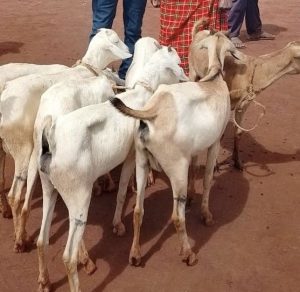
Kenya has around 18.9 million sheep, but there is often a shortage of professional shearers, leading to delays in shearing that can cause illness for overheated sheep.
“We have specific suppliers, but at times we buy from various farmers who are not our normal suppliers. We also offer shearing services where we go on the ground and shear the sheep ourselves for the farmers,” the group said.
Related News:
Eldoret journalist builds new life as high-earning sheep shearer
Nyandarua couple blazing trail for Hampshire Down sheep farming in Kenya
Long experience makes farmer an all-time county champion
But payment time can vary. “We have used most of our farmers for a long time and they understand our situation. So if we’ve got no money to pay them, they always understand and they can wait until we sell the products.”
Some breeds also produce wool that is hard to use. “We don’t take the Dorper wool since their wool is hard to comb,” said Naomi.
Globally, wool is used for clothing, insulation, sound-proofing, polishing pads, soil conditioners, slug repellents, slow-release fertiliser pellets, absorbent pads for oil spills, packaging material, and lanolin for creams. In Kenya, most wool is wasted because it is coarse and local processing is limited. The Nanyuki weavers said their buying and spinning local wool is giving farmers and women new income.
Are you a farmer looking to grow the most profitable crop on your farm, with or without irrigation. Use FarmBizAfrica’s HarvestMAX on https://harvestmax.farmbizapps.com and it will tell you in less than a minute what the highest income-earning crops are for your weather, soil type and this season, based on your seasonal weather forecast. Don’t make weather losses ever again, and more than triple your income.