
Private forest surge during logging ban enjoys harvesting boom
By Antynet Ford
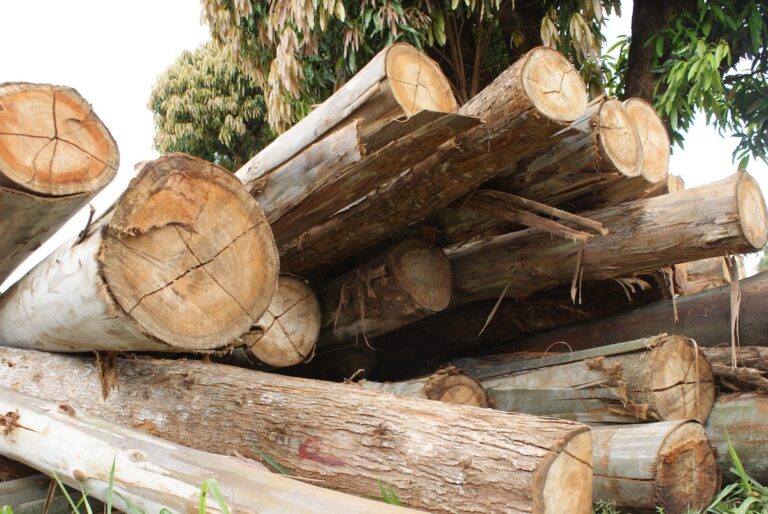
The lifting of the logging ban in Kenya has driven an increase in timber prices of 30 to 50 per cent and a 42.5 per cent increase in private forest harvesting, but has also caused a surge in tree theft and new challenges of reforestation in a twin track process for public and private forestry.
The ban from 2018 to 2023 was only applied to public and community forests, driving a surge in forestry grown on farmers’ own land.
“When there was the ban, private wood farmers benefited a lot, because the ban was only on the government gazetted forests. Private farmers were free to sell their trees as they wanted, as long as the set procedures were followed by the saw millers and merchants. Many farmers got into the planting of trees because they learnt that it is profitable. The only ban that affects private farmers is on the indigenous exotic tree,” said Fredrick Ashiona, a KFS Extension Officer in an interview with FarmBizAfrica.
This expansion in private planting led to a boom in selling at the higher timber prices, with research published in October 2025 reporting a 42 per cent increase in harvest from private farms in Nyandarua County after the ban was lifted, but almost three-quarters of farmers reporting tree thefts, and evidence of illegal logging.
In this, the regulation for public and private forestry is different, but applied through saw millers and transport permits for both types of forestry.
For public forests, “you cannot sell trees that are not on tender for sale. To buy trees in a public forest, you have to be a prequalified saw miller registered by the Kenya Forest Service (KFS). The trees you are buying also need to have been advertised that they are being sold, and you apply through the normal tender application for you to be determined whether you qualify or not,” he said.
For all forestry, a transport permit is required, but private forestry does not need an advertised tender. Instead, it must have a certificate of origin to prove where the timber came from.
Saw millers who harvest trees illegally are charged according to the law they have broken, either for illegal transportation or illegal logging. “Those who harvest trees in a public forest without a permit are committing theft (illegal logging). Some transport harvested material without a movement permit, for purposes of traceability, and that is an offence too,” said Fredrick.
Saw millers can only get a transport permit for private forestry with a certificate of origin, thus covering all bases.
The restoration of public timber sales and surge in private forestry are consequently now driving up permit revenues. The research in the Ol’Jororok area of Nyandarua County, reported a 38.7 per cent post-moratorium increase in permit revenues.
But reforestation faces further challenges.
For public forests, the logging ban was lifted by the president in 2023, while the ban on Mau Forest was lifted last year after 5000 hectares had reached the maturity period for harvest in public forests. For these forests, there is controlled harvesting that goes to tender, with only mature trees harvested and sold through a regulated process, and reforestation by the Kenya Forestry Service post-harvest.
However, with the ban seeing Kenya surpass its 10 per cent minimum tree cover target in June 2022 aided by the surge in private forestry, it now plans to raise tree cover to 30 per cent by 2032 by planting 15 billion trees and maintaining and expanding its private forests.
To support that growth, farmers are reported to have been provided an exemption on land rates and on income tax from timber income. However, the Kenya Revenue Service has been unable to advise on the amount or application of the exemption, reporting that sharing this information is a process.
Researchers warn that to meet the government’s aims, reforestation and compliance will be priorities.
Get your farming news by email.
Free. Market prices, crop news and farmer opportunities, straight to your inbox.