Dragon fruit prices down 1/3rd on boom in supply
3 min read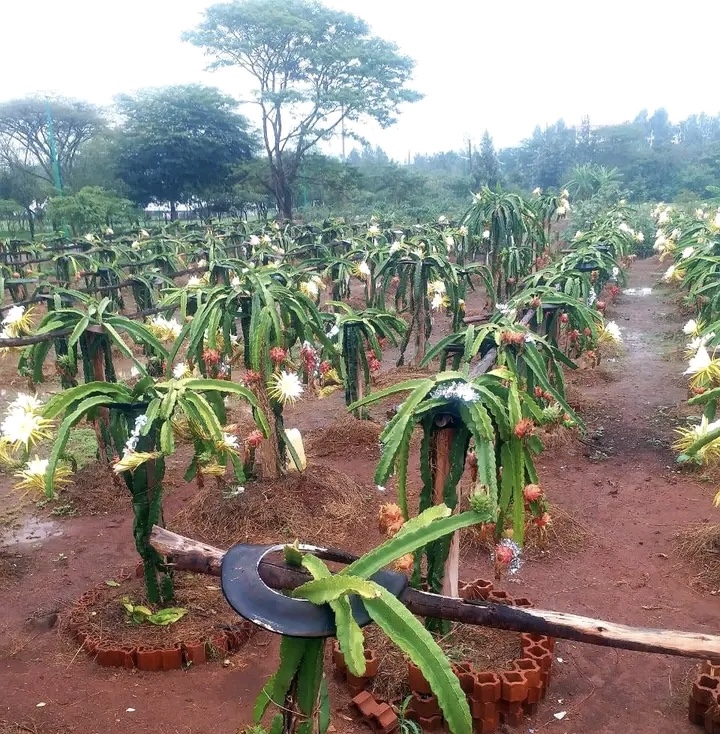
By Lyzzie Owade
Dragon fruit prices have dropped by over a third since last year as thousands of Kenyan farmers enter the sector faster than demand is growing
Homa Bay dragon fruit farmer Arnold Ochieng’ said prices that were at a minimu if Sh500 a fruit have now fallen as low as Sh150 from local buyers, while supermarket prices have fallen to Sh350 a fruit.
The price drop comes as dragon fruit farming spreads rapidly across Kenya. The Kenya Dragon Fruit Farmers Network, started by some of the country’s pioneer growers, now has about 22,000 members, up from only a few growers several years ago, according to previous FarmBizAfrica reporting.
At the same time, Kenya’s domestic market for the fruit remains limited, with most sales concentrated in supermarkets, hotels, high-income urban buyers, and health-conscious consumers.
“The variety I grow for now I got it from Nyeri and it’s called Wambugu, a type of dragon fruit. It’s like grafted,” he said.
“When the fruit matures well the least you can sell the fruit is Sh500 minimum, and maximum depending on where you are and the market demand.”.
“Now the price has reduced to Sh350 to all the supermarkets I supply. The local buyer who used to buy the fruits from Sh250 now can even lower the price to Sh150.”.
“In a day I can get around four people who are asking upto five pieces in a day. I have to agree with the price since they are my neighbours and also keeping the relationship and there are other people doing the same.”
“This is because it’s now common in all areas and most people are growing it,” said Arnold, but ‘most people still don’t know much about the fruit thus making the market to be low.”.
“The biggest challenge I get is that most supermarkets always just want to buy in pieces and the highest orders are like 50 pieces.”
“I want to expand my farm so I can start exporting because export markets need tonnes of fruit, not just kilos. That is where dragon fruit is more profitable,” he said.
Global dragon fruit imports are dominated by the United States, Europe, the Middle East, and China, with commercial importers commonly seeking multi-tonne consignments supplied consistently through the year.
Previous FarmBizAfrica reporting found Kenyan dragon fruit farmers had already received interest from buyers in Dubai, Italy, Jordan, and Uganda, but many struggled to meet the volume and certification requirements needed for export supply chains.
“I harvest about 50 fruits from each plant when it is well managed using manure and watering. The watering is not frequent but only once in a while,” he said.
“All my fruits grow almost the same size, which makes selling easier because they all go at the same price.”
“The common pest is the fruit flies, but not there at the beginning until it matures. Farmers use fruit traps; they don’t apply any chemical to it,” he said.