Government edges off record agriculture lows in 2026/7 budget with donor programmes
4 min read
By Antynet Ford
The government has announced a marginal rise in agricultural spending in its budget speech for the year ahead, combining the country’s fertiliser subsidy with a series of donor- sponsored programmes, to edge forwards while maintaining its new position as one of the lowest agricultural spenders in Africa.
Kenya last year committed at the Uganda CAADP agreement of African Union countries to commit 10% of its public expenditure to agriculture by 2035. At last year’s 1.1 per cent, it had fallen substantially below most African countries, and to less than half the levels of neighbouring countries, such as Ugana, while Rwanda is running at over 4 per cent and moving ahead rapidly.
Of Kenya’s Sh4.8 trillion budget for 2026/27, it announced spending on agriculture and food systems of Sh64 billion, or 1.3 per cent of spending, of which the majority falls under tied donor programmes.
Agriculture accounts for something over 22 per cent of Kenya’s GDP, but is in decline, with the country losing leadership in many product areas and reporting calories per head – measuring how much food its population gets – that have moved steadily further below the average for Africa,
Of the public spending in the year ahead, the government announced the Fertilizer Subsidy Programme was being maintained and would receive Sh18 billion, which is government funded.
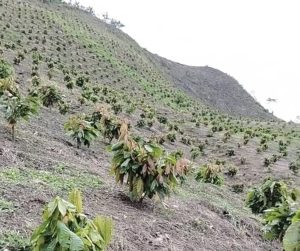
It is also maintaining the donor-supported seed subsidy, which will receive Sh2 billion, and the Coffee Seedlings Programme, which is also donor supported,
It further affirmed that there would be spending under a series of large donor-supported or donor-funded programmes, including the World-Bank financed National Agricultural Value Chain Development project and market linkages, which has been allocated Sh4.7 billion.
The Food Systems Resilience Project, also funded by the World Bank, will spend Sh5.4 billion, while the African Development Bank Resilience for Food and Nutrition Security Program will spend Sh1.6billion.
Other donor-funded spends will be Sh3.3 billion for De-Risking, Inclusion and Value Enhancement of Pastoral Economies Programme and Sh1.3 billion for Kenya Livestock Commercialization Programme (KeLCoP) and Sh400 million for the Livestock Value Chain Support Project, as well as Sh2.1 billion for Aquaculture Business Development, Sh1.8 billion for the Kenya Marine Fisheries and Socio-Economic Development Project, and Sh578 million for Kabonyo Fisheries and Aquaculture Training Center.
Of these, the government is providing some of the funding for the livestock commercialisation and aquaculture projects.
It has also allocated some of the Land Ministry’s funding to agricultural land issues, as Sh9.4 billion for the settlement of the landless, Sh5 billion for the landless in the Coast region, with Sh892 million for processing and registration of Title Deeds; and Sh388 million for the digitization of Land Registries to secure tenure, reduce disputes and unlock productive land use.
It is also contributing to the IFAD-funded Rural Kenya Financial Inclusion Facility to achieve a spend of Sh1.1 billion, and is allocating Sh550 million for the Centre for Entrepreneurship Project to strengthen incubation, skills and business development services.
“They span informal home-based enterprises, artisans, mechanics, tailors, carpenters, fabricators, and medium-sized firms. Nurturing this sector is essential for broad-based job creation and inclusive growth. Lack of affordable credit remains a major constraint for MSMEs and households at the bottom of the pyramid,” said Treasury Cabinet Secretary John Mbadi.
The exceptionally low spending on agriculture in Kenya has continued to draw concerns from analysts, but the CS said the government had deliberately insulated agriculture from further significant cuts because of its importance to household incomes, food supply and economic growth.
“We have prioritized stability in the agricultural sector by avoiding major cuts, keeping the fertilizer subsidy steady at approximately KSh18 billion and sugar reforms at KSh2.5 billion. While Parliament reduced the coffee cherry allocation, we are shifting our focus to address critical coffee debt and expand seed provisions,” said the CS.
The budget also introduces Sh2.5 billion for sugar sector reforms, a move expected to support ongoing efforts to revitalize Kenya’s sugar industry, improve mill performance and strengthen farmer earnings.
According to the Treasury, adjustments were made in other sectors to preserve critical agricultural spending. Several commercially viable energy projects were moved away from direct Exchequer financing and redirected to alternative financing structures, including the National Infrastructure Fund and Public-Private Partnerships (PPPs), creating room to maintain support for agriculture.
Parliamentary budget reviews have warned that agriculture remains underfunded relative to its contribution to employment, exports and food security.
The most recent FAO figures for Kenya show the calories per Kenyan per day falling almost continuously as government spending on the sector has reduced, reaching 2100 calories per person per day by 2022, which was 18 per cent below the average for all of Africa, of 2567 calories per person per day.
However, government projections indicate the agricultural investments will support increased food production, expand access to farm inputs, strengthen value chains and cushion farmers against climate-related shocks.