Embu farmer’s pruning guide to get 3 grape harvests a year
3 min read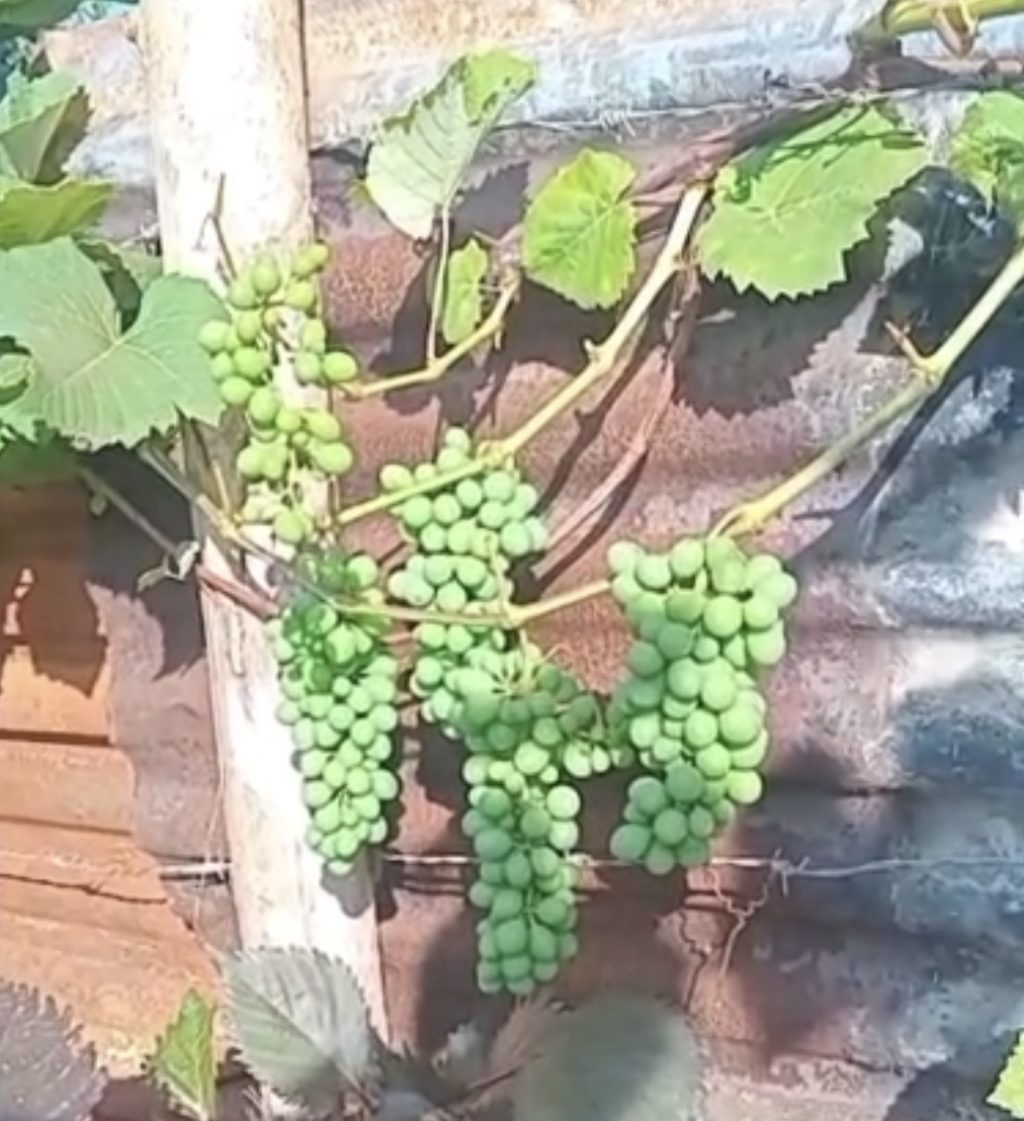
Screenshot
By Antynet Ford
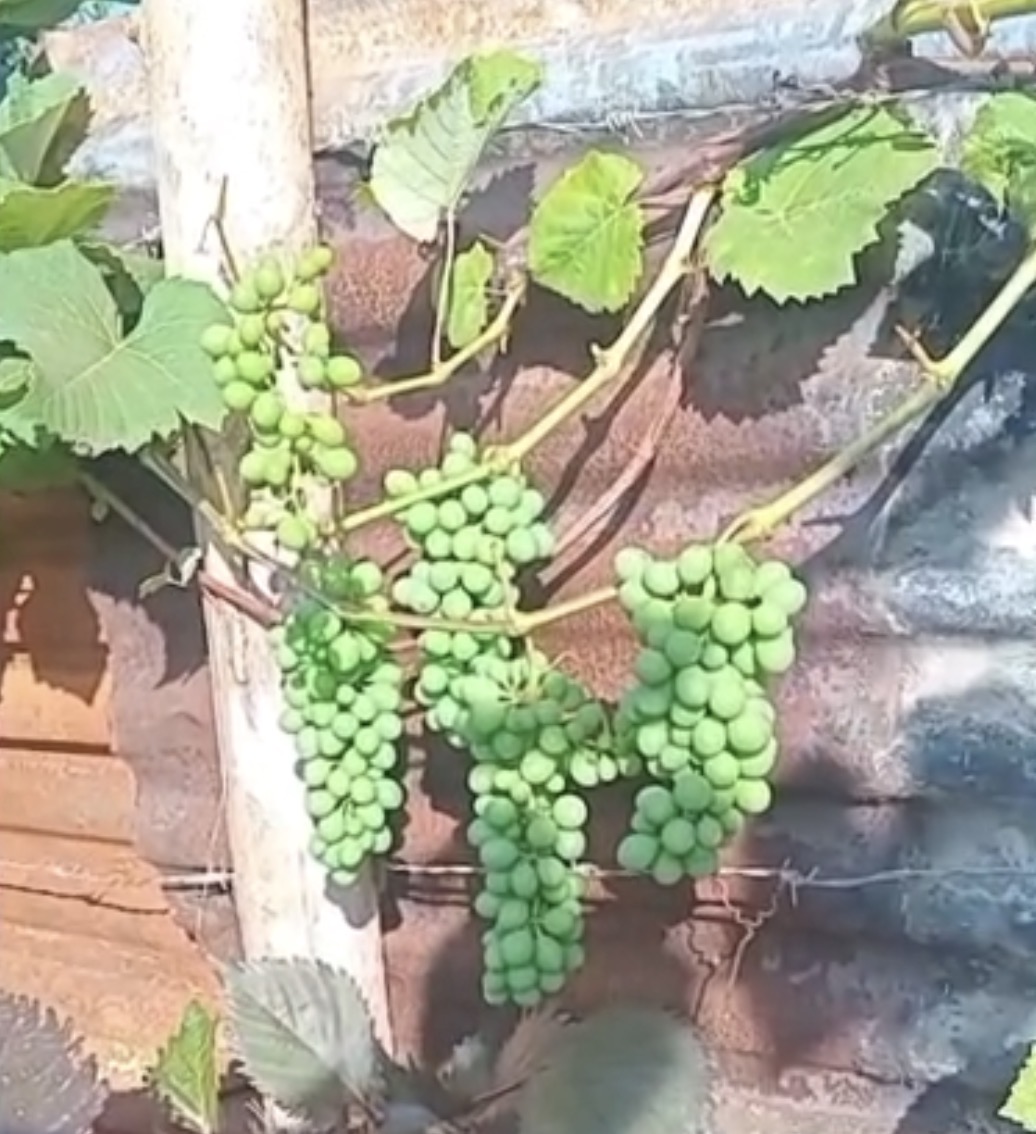
Grapes, globally, give better fruit with heavy pruning, but in Kenya, farmers have discovered that pruning brings on a whole new harvest, where the rest of the world only gets one harvest a year, positioning the country as a potential leader in the crop.
Talking to FarmBizAfrica, Embu grape farmer Keith Muriuki has shared the secret to triple-harvest pruning, with research by the Tanzania Agricultural Research Institute (TARI) affirming that “grapevines usually produce fruits from the current season’s growth and not the previous ones,” and perform better with 99 per cent pruning.
“The biggest challenge is that when you plant the crop at first, you may think that it does not fruit even though the plant is healthy. Until you do pruning, that is when it flowers and then produces fruits,” saud Keith.
“The yield is always good when the pruning is properly done. You will always hear many farmers complain that their plant is not producing fruit and that it is dormant but you need to prune properly at the mother stem.”
“You do not cut off the whole stem; it is the branches that shoot from the mother stem that are pruned. After you prune, you will see it flowering and later producing fruit. When you harvest and fail to prune after the harvest, it shall again not fruit. So the pruning is what makes the plants break the dormancy,” he said.
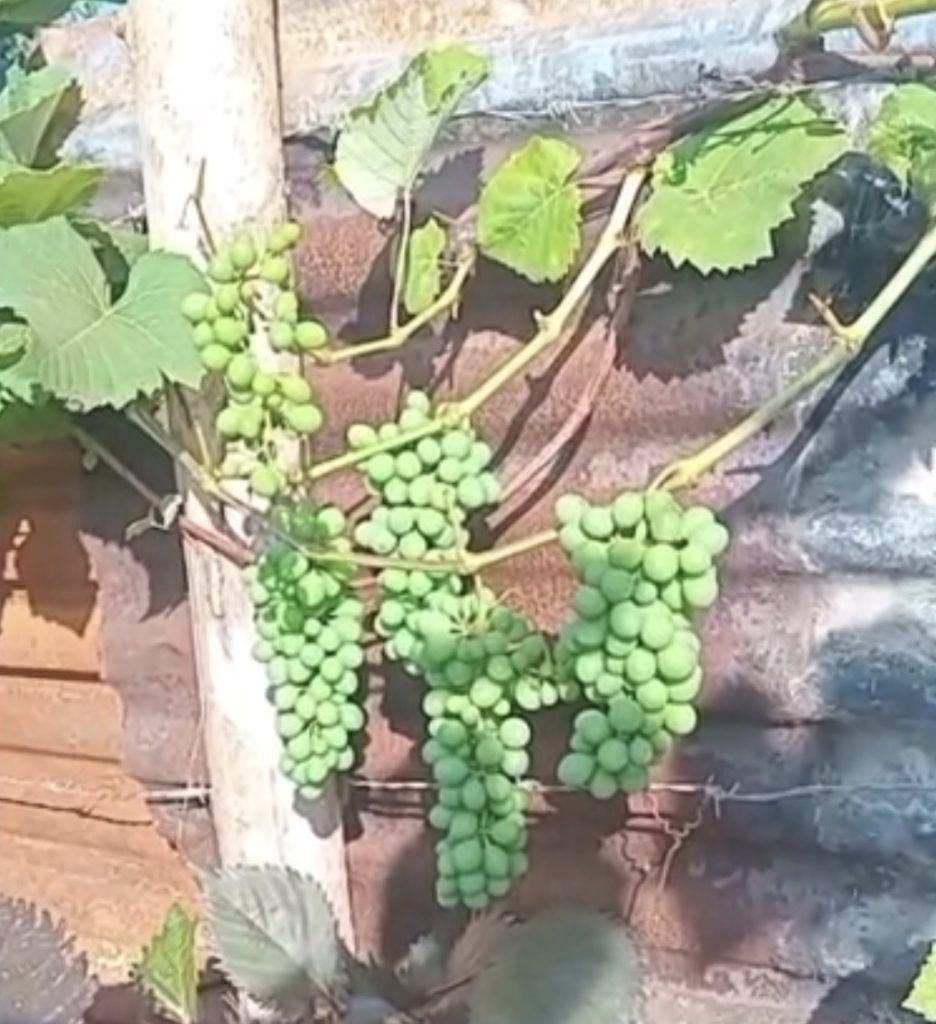
Keith also gets grape seedlings by pruning.
“Grapes are planted from the branch cuttings and not the seeds. The seeds do not germinate if planted. The stem is made in a proper way, as shown in the photos.”
“you cut them and then you soak to a rooting hormone to get the seedlings.”
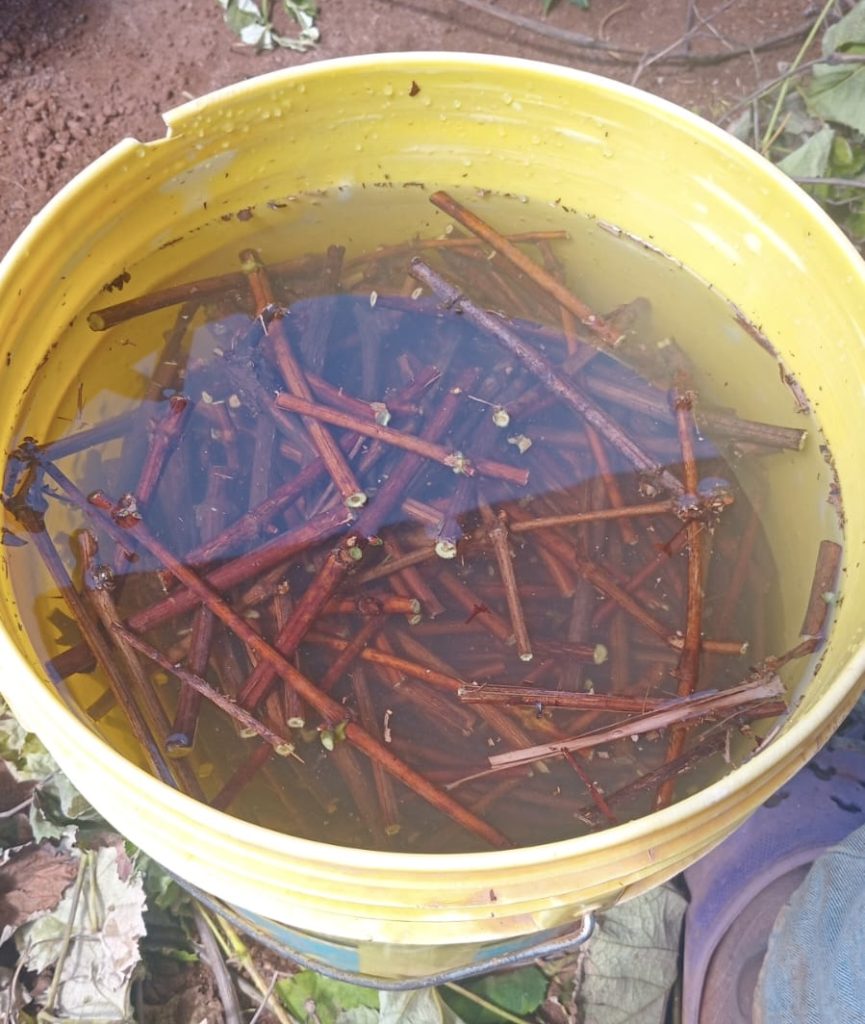
“There is no technology or unique thing that is associated with grapes. They are just planted like passion fruits on wires to get support.. But without being pruned, grapevines grow tangled and weak, leading to overcrowded shoots, poor airflow, smaller grapes, and a higher risk of fungal issues, he said.
The grape farmer has two options for pruning the vines, he said, with the first one being spur pruning, which involves cutting the back cane and leaving only 2-3 buds, which directs the plant’s strength into a limited number of buds, ensuring vigorous and productive shoots.
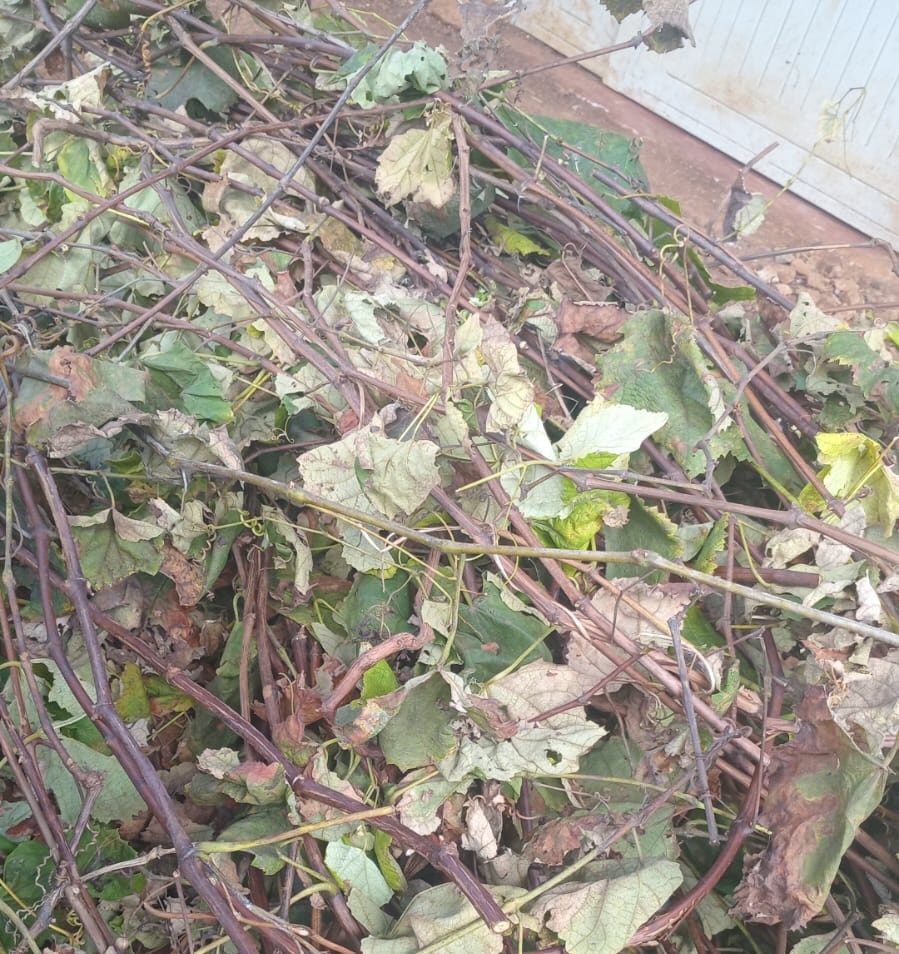
“These buds become the next season’s fruitful shoots. Compared to cane pruning, which keeps 8-12 buds, spur pruning maintains compact growth, making it ideal for small areas. During spur pruning, the old, woody canes from the previous year are removed, cutting close to the main trunk,” he said.
“You need to choose a healthy young cane and reduce it to 2-3 buds, then make a clean, angled cut to allow water to drain away.”
“After that, you are required to leave about 1 cm of wood above the top bud to protect it and avoid dead wood. With this, the benefits are stronger and more fertile shoots, which have an improved airflow and easier vine management, reducing disease risk and making a more predictable and consistent harvest over time,” he said.