Ugandan cocoa farmers exposed to price swings by lack of local processing
4 min read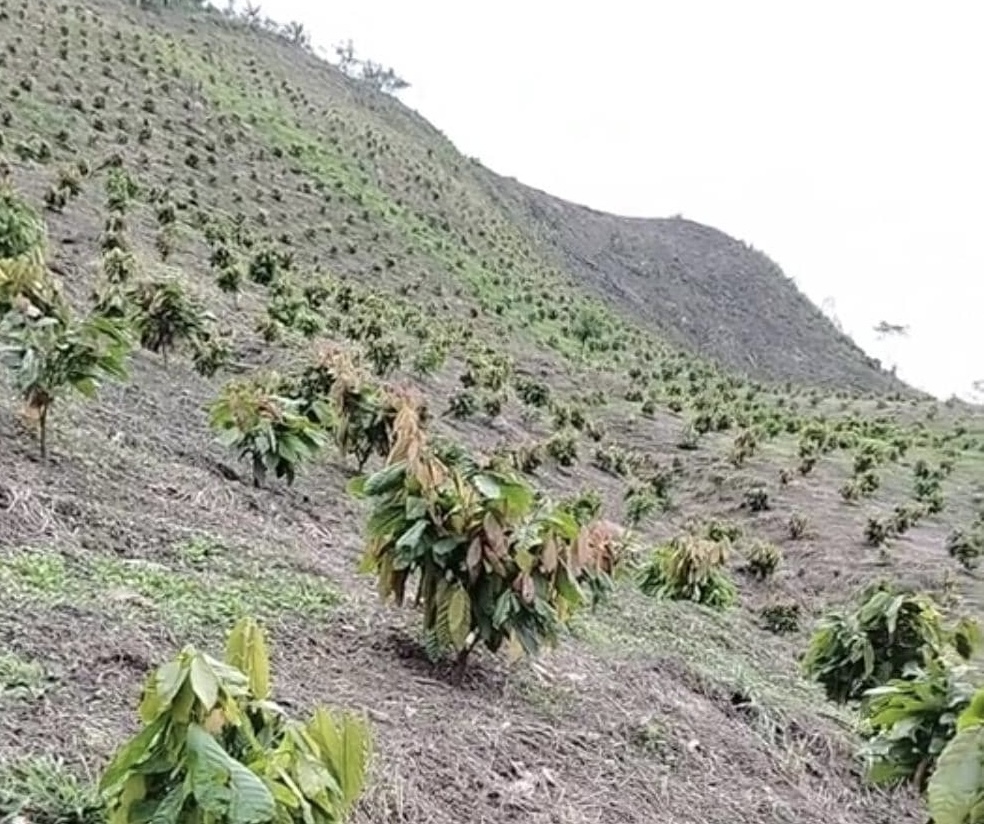
By Antynet Ford
Collins Dembe has found a high earner in western Uganda in cocoa, but the lack of local processing has exposed him doubly to falling international prices for cocoa, and the falling value of the Ugandan shilling against the dollar..
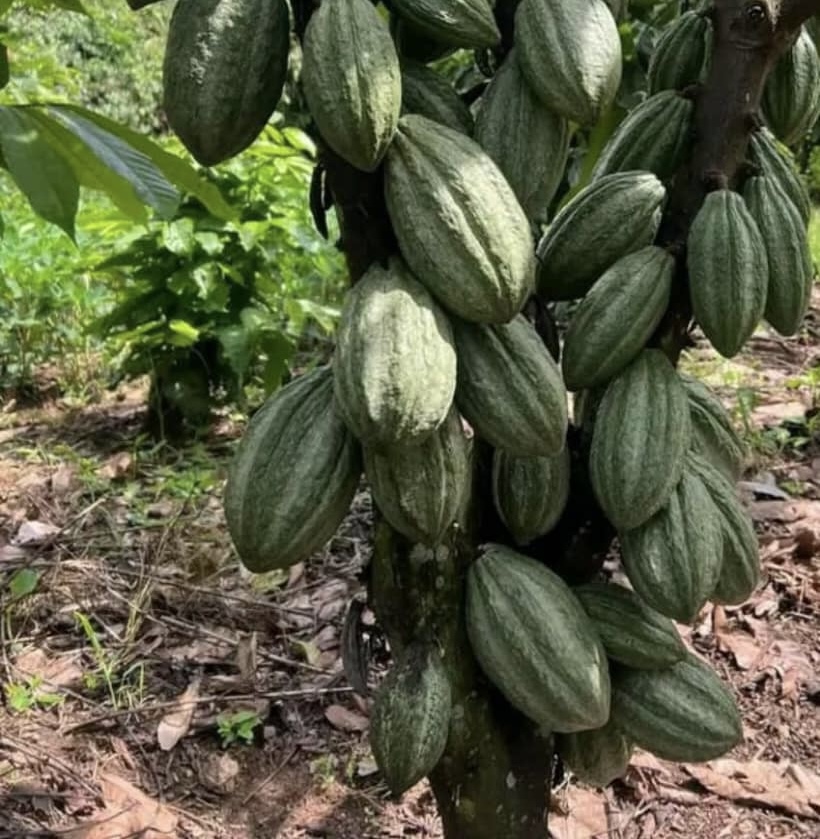
Growing cocoa on two hectares in Bundibugyo in western Uganda, Collins has been intercropping it with bananas for the last 14 years, earning around $45,000 a year from the commodity. But the prices can move very sharply and suddenly against him, with almost all of the country’s cocoa sold to Europe ans Asia in dollar prices.
“For the last five years, the biggest challenge that I have been experiencing is price fluctuations, because it is sold at world market prices. For example, last week, a tonne was being sold at $6800, but now, this week, we are at $6,000, as we are speaking, meaning me, who had stocked waiting for a higher price, i am greatly affected as the prices are going down rapidly,” said Collins.
“The biggest percentage of my cocoa sales is in the export market; that is why you are hearing about the sales at world prices. I sell mostly to those exporting to Europe and Asia,”
“The locally available factories producing cocoa powder do not buy much from us producing in large scale, as they are small-scale; that is also why we are struggling to find buyers even here in East Africa. They just buy according to the small demand.”
“We sell mostly to exporters, especially ICAM Chocolate Uganda, Bundicao Limited, Olam Uganda Ltd, African Trade Winds, and ESCO Uganda, among others,” he said.
But the exposure directly to global cocoa prices is made doubly sensitive by exchange rates, with the Ugandan shilling having fallen by 11 per cent in value against the US dollar in the last year, and by more than 6 per cent in just the last three months.
“Prices are drastically reducing from what we were expecting. In previous years, that is two to five years ago, it would cost Sh1000(Kenyan shillings) for a kilogram of cocoa beans here in Uganda, which is almost Sh30,000 Ugandan shillings. It has gone down to being sold for Sh5,000-Sh8,000 Ugandan shillings, which is very little,” he said.
“When I sent you the video, a kilogram was being sold at $5.7, and it has now gone down further to $4.8, and it is like it is reducing almost on a daily basis. People just buy it at a higher price for a few days, then it goes down again. I truly do not know much about the reasons why the prices keep going down, only that I know it is grown by a few people, yet the prices are still not very good,” he said.
However, the availability of cocoa has also surged in Uganda – from around 35,000 tonnes a year for many years, to almost 53,000 tonnes in 2023/24, and 76,000 tonnes in 2024/25, while local processing has hardly risen.
This has heightened interest in all opportunities for local processing, such as the project by Chambers Federation, announced on FarmBizAfrica, to source Kenyan cocoa for local processing into Kenyan chocolate.
“I saw it as a chance in Chambers Federation announcement as I am ready to embrace the East African regional market because as a farmer, I cannot depend on one market. That is why I was ready to supply, though they are currently buying only from Kenya. I thought they would accept from Uganda too, because most of my cocoa seedlings buyers are from Kenya. There is a guy in Kwale County who even recently bought 100 seedlings, which is the maximum to ever sell on a one off,” he said.
“Getting a reliable market means I will increase my production even more. A reliable market will also mean prices will not drop as they currently do because I know they may stabilise,” said Collins.
“Those who want to grow cocoa, I will encourage them to do it even more. because when it has grown, you do not spend a lot, but the harvest is good. It yields properly and keeps your family moving economically,” he said.
For him and other cocoa farmers in western Uganda, the bigger cocoa season starts this September and continues until April of the following year, followed by a smaller season from May.
“In the big season, on my two hectares, I produce 100 kgs per harvest in a good month. A month has two harvests where we do it at the middle of the month and at the end of the month; that is, two weeks apart,” said Collins.