Middle East crisis cutting exporter’s meat sales 60% into Q4 2026
8 min read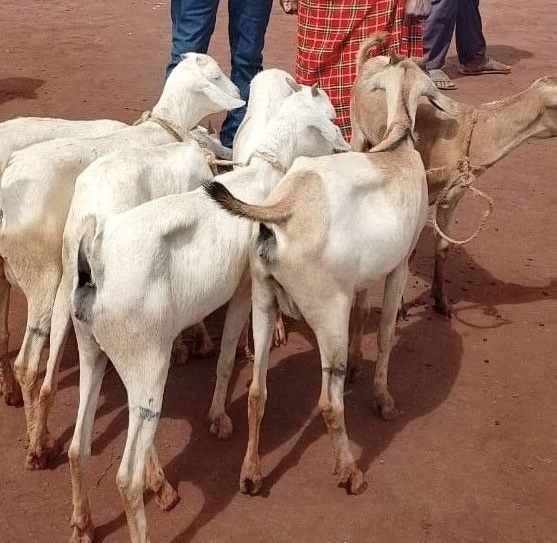
By Antynet Ford
Kenyan meat exporter LiveMO has been forced to reduce its weekly export for the sixth month consecutively by 60 per cent following the disruption in air entry to the Middle East War, forcing it to turn to locally available buyers to sustain its 6,000 supply farmers.
In a contraction now affecting Kenya’s meat exporters throughout 2026 and into the final quarter of the year, LiveMO revealed that since February, their weekly export has reduced from 200 tonnes, exporting 40 tonnes daily from Monday to Friday, to just 80 tonnes dispatched two days a week
“Now you cannot do 40 tonnes daily, as there are no cargo flights going there on a daily basis as it was previously. The ones that are there, you are paying an ‘arm and a leg ‘, so the only option is two days a week. Also, we are many and one carrier cannot do your business alone as they will always say the percentage they are offering you on the space available and it is upon you to decide,” said LiveMO Communication Lead Beryl Lisa, in an exclusive interview with FarmbizAfrica during the Kenya Meat Expo 2026,
“Challenges are there in the export market, especially for those of us who export where the war is. We have been affected by the war, as logistics costs are now triple what it was before the Middle East War. This means the cost of doing business is higher, and that means we are constrained in terms of how much we can export, as clients buying the meat would not want to share the export charges. If they have ordered, they want their normal prices, but the truth is, we have to have the conversation that if we keep doing business like that, we shall not be in business any more,” she said.
Some of LiveMO’s clients in the UAE have understood the changed times since the war started and have adjusted to share the freight charges.
“We are grateful because not all exporters have the same experience as some have had to stop exporting until things calm. Also, some clients have stopped buying because their businesses have been affected by the war. Anyone can tell you that forex rates in the UAE are the most volatile, and some buyers just decided to leave the business of importing meat until things shall stabilise and ‘i will think about it’. So, if that was your client, you have lost business,” she said.
“We are not back to exporting as we were before the Middle East War. Until the war is finished and the prices go back to what they were, things are not okay. When the war started, the freight charges tripled, and right now it is still double. That means the volumes have reduced, even as there is pressure for the clients to buy more. Until things stabilize and we go back to exporting daily as it was, we are still selling less,” she said
“Before the war, we were exporting 200 tonnes of meat, which is 40 tonnes for fives week days. But now we are only exporting 80 tonnes in two days of the week days, each having the normal 40 tonnes per day.”
“And what is challenging us, as exporters, is to diversify and also look for local markets, because, now, if the export market is not working, we shall not close down the business and send our employees home, as they have families that depend on them. That is why we have diversified and are also having to sell our meat locally here in Kenya,” she said.
Currently the 6000 farmers recruited by LiveMO are in three counties only, Kajiado, Kilifi, and Laikipia which, it claims, have the highest numbers of animals in the country and are safe in terms of security. Pastoralist farmers, particularly, depend on them to buy their animals.
“They know they will sell to LiveMO. If we close, it is the farmer that we are hurting most, and we have to re-strategise when our Middle East market is hurt,” she said.
But Africa needs to have good policies in place that will see exporters get value from their sale of meat in the region and not ‘peanuts’ as they do now, she said.
“We have looked for the local market to also keep the farmer financed and keep our workers well paid. We are pivoting to look for the domestic market and also regionally because we know AFCTA has also made it a little bit easy, but still there has to be policies in place for it to make sense, because the region is open, but the pricing is useless, because you look at it and it is like giving out meat for free as you are not making anything out of it. So, until policies are put in place to make the free trade area profitable, we keep struggling,” she said.
This is even as they eye the North African market as their next target, where she said prices are fair compared to other regions of the continent.
“The next market that we are eyeing after the United Arab Emirates is North Africa. For us, as meat exporters, we fully depend on the government to make this possible, because they are the ones who can make an agreement with the governments in North Africa by sharing with them that meat from Kenya is good and that they should buy from us (exporters). We have been telling this to the government through meetings with the ministry where LiveMO sits with the Cabinet Secretary twice every month. So we are pushing to see the North Africa meat export market open for us,” she said.
Meanwhile, farmers are protected from the high freight charges, she said, by keeping animals at its own, large aggregation centres on its farms to smooth pricing and margins,
“So our farmers will always bring the animals, and we shall pay as per the agreement we have. When the animal is brought, I will keep it to ensure it is fattened to add kilograms, and the extra kilograms that it adds our profit; so the farmer does not have to be affected,” she said.
“Those who tell farmers that they will buy their animals according to the market trends, for example, where they have to reduce the number of animals being bought and such, do so because they might be selling locally, and there is no market for the same. Our company is set up so that the farmer is the person we depend on most, and we cannot be unfair to them, because we will not be able to fulfill our target market if we do,” she said.
“We have to remember that farmers have options; before we approached and contracted them, they were still going to the market and selling their animals, so ‘what am I offering that will make them stop going to the market and sell to me’? I have to be fair enough because when the farmer is okay, they will always defend you. They understand us so well and know that we can never extend the freight charges to them, as at times they even inquire if they can incur some costs,” she said.
“We are in the market, and we will always know how to recover the money because we do not sell at the same price that we got at. We have extra kilograms that we did not pay for, so the farmer does not have to suffer.”
While the Ministry of Agriculture has been announcing that exports have increased, LiveMO said the number of meat exporters had indeed increased, so, despite the falls on Middle East access, it was not inconceivable volumes had grown overall.
“The person who can say how it is affecting them is the farmer. A farmer will tell you how they are dealing with the exporter and they will share if it is good or bad and it is only them who can give the proper perspective of that statement. They will tell you in terms of pricing and supply,” said Beryl.
There is no one price in this, said Beryl.
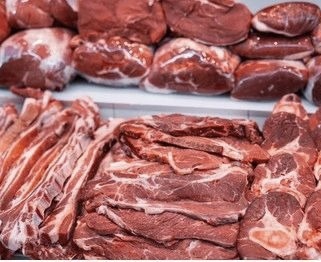
“We sell in dollars and every country has its own price. There can never be an average price for meat exports, as there are countries that take a full carcass, where you sell the whole animal, say, if it is a goat, as it is and there are countries that take a butchery size. There are countries that take prime cuts. The price for a kilogram of a prime cut and a butchery size is not the same. A kilogram of butchery size and that of a full carcass is not the same. So the prices vary from client, to needs, to country. There are countries where you cannot export a full carcass and you will need to cut them but there are countries that do not accept that,” she said.
However, LiveMo exports meat of animals below the age of one year, which is export quality, meaning they are lean, more soft and very juicy. We export beef, mutton and goat meat, she said
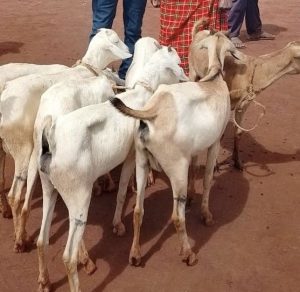
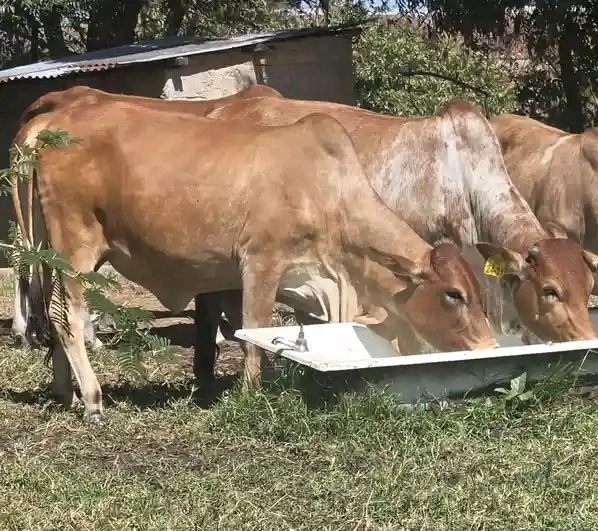
“For the farmers that we have recruited, we tell them how to keep their animals, how to feed them, and how to vaccinate them. The other thing we do is give them superior breeds like boar goats, Kalahari Red Cows, and the Meatmaster sheep for crossbreeding on their farms. The three are known for their hardiness and meat production, with the Kalahari Red being a popular breed in Kenya for its adaptability and meat quality. The sheep are gaining popularity also for their ability to thrive in harsh conditions and produce high-quality meat. We do it for them because we want quality meat,” she said.
For some breeders, the suspension of imports of these superior breeds from South Africa, on its Foot and Mouth Disease (FMD) outbreak, has prevented up-breeding, but not for LiveMo.
“We have not been impacted by the South African import ban because we do not depend only on South African breeds. We also get superior breeds from Ethiopia, Tunisia, and Morocco. Even here in Kenya, I have a lot of options, so we are not limited. Here in the country of we go to KALRO, we get the breeds, so there is nothing to worry about a ban import from South Africa,” Beryl said.
“Options cannot be affected by FMD. In the counties that we buy from, every village, two facilitators help us educate the farmers any time, as there is no limit on the trainings. Any time a farmer hears something on the radio or watches on TV, they will go to the village facilitator. We fully depend on people spreading the news so that in case they need anything; they can easily find it.”