Farmers reap double growing trees with crops
6 min read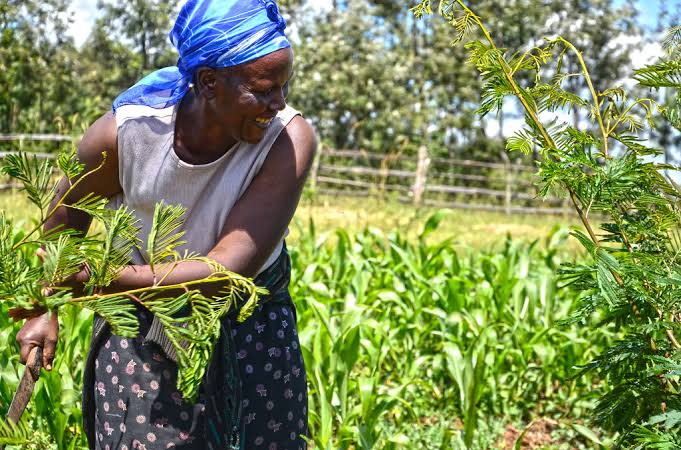
Smallholder farmers in Kenya are embracing planting trees that do not compete with crops for nutrients a venture that is paying off with some of the trees even fertilizing the soils while offering the farmers extra income.
The practice known as agroforestry has been championed by government and other agricultural institutions as having returned impressive results in the other parts of the world like India and Vietnam where it has been practiced.
In Kenya it is being hailed as a practice that is key in shielding farmers from the vagaries of weather that have become common place.
Related News:Climate finance company commits Sh2.6B to promote reforestation & sustainable agriculture in Kenya
Related News:Smallholder farmers use trees to fertilize soils & extra income
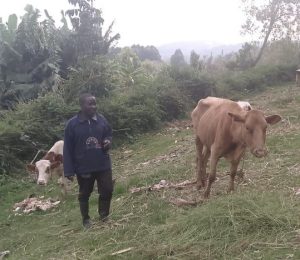
John Chepsoi a farmer in Nakuru has successfully embraced agroforestry which is bringing numerous benefits to him, his livestock, crops, soil, and the environment at large. They are Nitrogen Fixing Trees (NFTs). It began when he planted a few trees on a section of the plot four years back. He observed that the soil in the area with the trees usually looked fertile and alive. The crops were healthier and yielded more compared to the bare land. This led him to introduce more trees on his plot to increase fertility and increase production. He has harvested potatoes and his beans are blossoming. He is expecting a good harvest this season as he says all systems are functioning well under this agroforestry method of farming.
He uses the trees as fodder for livestock and also as fire wood. When cut, he says that they are able to coppice again, hence avoiding the urge to invade the forest. Some of these trees include: grevillea, luceana, calliandra, acacia and sesbania sesban. The Kenya Forestry Research Institute (KEFRI) provides useful information to field workers and farmers on different useful trees that can be planted in farmland.
One example of the acacia tree, which has long been combined with traditional farming in Africa, is theFaidherbia albida, also known as “Mgunga” in Swahili. It possesses the unique ability to produce much needed nitrogen for the soil and plants. With its phenology, Faidherbia goes dormant and sheds its nitrogen-rich leaves during the early rainy season, when crops are being planted, and resumes leaf growth in the dry season.
All natural
Through an agroforestry system, John farms without the application of synthetic fertilizers (DAP/CAN) commonly used by many farmers, but lets nature perform this duty through NFTs. His style of farming has been a productive and conservative one, and he sees these as a long-term strategy and is happy he followed the path of agroforestry. “The goodness of agroforest trees is that they are there to offer their free services all year round,” he adds.
He is planning to establish an agroforestry nursery in the future where he can raise and sell seedlings to other farmers, in the effort of spreading the benefits of agroforestry in building sustainable future and earning income.
John explains that during the dry season, from December to March, some trees are able to shed their leaves, while others remain green, which he uses to feed his livestock. He further says that producing staple food crops like maize, sorghum and millet under these agroforestry conditions dramatically increases their drought resilience in dry years because of the positive soil moisture and better microclimate.
The fallen leaves, weeds and crop residues don’t go to waste. They are heaped to naturally decompose and later used to fertilize the farm. John is keen not to throw away any of this, as he calls it a treasure. After they are heaped, they usually attract many beneficial micro organisms, which feed on them. As we turn a heap together, there were hundreds of earthworms at work. Earthworms are described as “ecosystem engineers.” Charles Darwin referred them as “Earth ploughs.”
They contribute to enriching and improving soil for plants, animals and even humans. Earthworms create tunnels in the soil by burrowing, which aerates the soil to allow air, water and nutrients to reach deep within the soil. Earthworms eat the soil which has organic matter. After the organic matter is digested, the earthworms release waste from their bodies, called castings, which contain many nutrients for the crops. As an important addition to their other roles, trees not only act as natural fertilizers, but as niche for these hardworking earthworms and microbial life.
Through constant pruning and cutting firewood, he is able to increase the organic matter (leaves) in the soil, which act as mulch, keeping it moist and well aerated, and increases the activity and population of microbial life in the soil. The leaves also act as humus, a very important feature in building soil fertility.
Related News:Trans Nzoia farmer beats unreliable rains with smart farming
Other benefits
John also acknowledges that trees are able to suppress weeds, reducing the time and energy needed for weeding, and promoting “easy to work” soil. Other trees, like luecena, attract bees during flowering. While collecting nectar, they help in pollination and repelling harmful insects. Trees here are able to provide a microclimate. The place is cool, and you could feel the breeze. John says he is able to work without feeling the hot sun, and the same applies to the crops. “These trees protect my crops from both dry season and heavy rains,” John says. And adds that, “it conserves soils and reduces run off in my small plot.”
With growing concerns about how small holder farmers can continue to feed themselves in their small farms without destroying local ecosystems agroforestry is the best thing to happen to sustainable farming. I applaud small scale farmers like John and hope that other small scale farmers will follow suit and plant trees on their farms for a better and more productive future.
Are you a farmer looking to grow the most profitable crop on your farm, with or without irrigation. Use FarmBizAfrica’s HarvestMAX on https://harvestmax.farmbizapps.com and it will tell you in less than a minute what the highest income-earning crops are for your weather, soil type and this season, based on your seasonal weather forecast. Don’t make weather losses ever again, and more than triple your income.