
Healthy red cabbage delivers 12x price of green cabbage for Nyandarua farmer
By Francis Ndungu
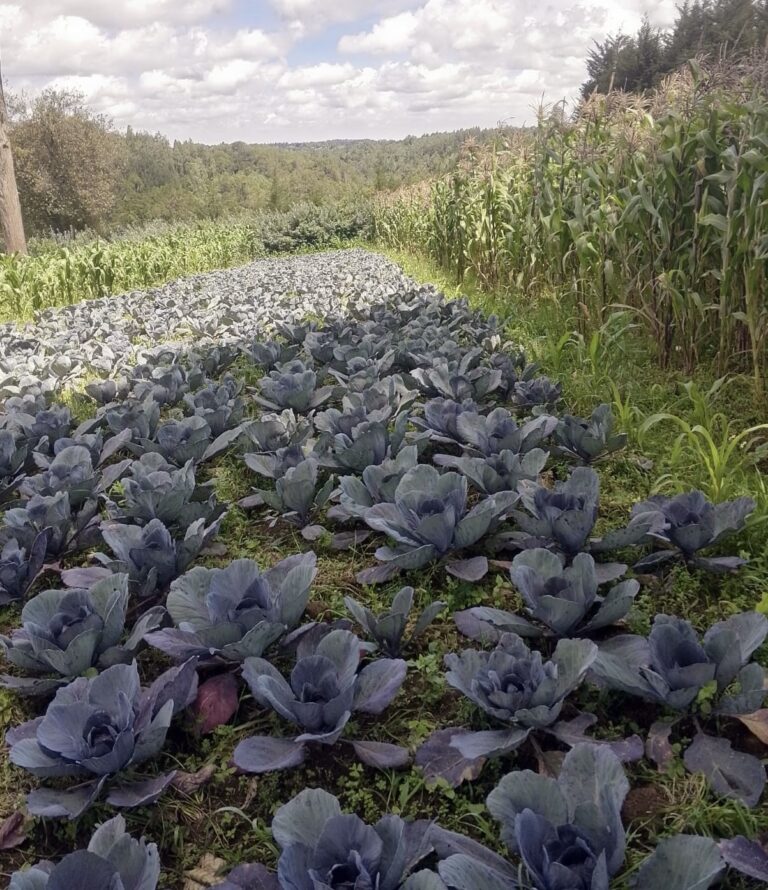
Samuel Mwangi from Mbirithi ward, Nyandarua, has built a thriving business on red cabbages after local hospitals and companies began demanding the crop for its health benefits, just as prices for ordinary cabbages crashed.
Green cabbages have fallen to as little as Sh10 a kilo in open-air markets, sometimes failing to sell at all. In contrast, Samuel now sells red cabbages at Sh120 a kilo to hospitals, schools and food companies, while even open markets pay Sh40 a kilo. “Three companies that were already buying my cauliflowers promised they would buy red cabbages if I planted them, so I put three-quarters of my land under red cabbages,” he said.
But the buyers asked him to supply organically grown produce, which became his biggest challenge. “The companies and the hospital limited me from using strong pesticides so I decided to grow them organically,” said Samuel.
Their demand for red cabbage to boost health is backed by research. Peer-reviewed studies show red cabbage is rich in anthocyanins. A review in the Journal of Food Science found regular consumption of anthocyanin-rich vegetables like red cabbage was linked to lower risks of heart disease and type 2 diabetes. Other studies in the European Journal of Nutrition report improved gut health and potential protection against certain cancers. These findings explain why doctors increasingly recommend red cabbage in diets for patients with long-term health conditions.
To meet this demand, Samuel started a nursery of the Turkish F1 variety, transplanting seedlings at one foot by 1.5 foot spacing. “I irrigated from the river, applied well-rotted manure, and top-dressed once with fertilizer. Most heads reached four to six kilos,” he said. He harvested 9,000 heads weighing more than 40 tonnes in three months. “Before I even contacted my buyers, three other companies came directly to the farm. I raised my price to Sh120 and they never hesitated to buy.”

Among those buyers were Quick Basket, City Fresh and Plissé, which packed the cabbages for export or sold them on to supermarkets, while hospitals and schools bought for diet management.
But securing his crop organically has been a challenge. He uses cattle manure to build fertility and fennel plants between the crop lines to reduce aphids, although he says they only cut infestations by around 30 per cent in red cabbages, compared with 70 per cent in his cauliflowers.
His toughest battle came with whiteflies, which repeatedly invaded his cabbages. “Whiteflies were a threat but easily manageable because if I started spraying, they always flew to the edges of my farm where the spray operation was not happening. When the temperature cooled down and pesticide was less effective, they came back and continued attacking my crops,” he said.
To counter this, Samuel began spraying not only the crop but also the field edges where the flies settled. “Anytime I was spraying against whiteflies I sprayed at the edges where they always settled. Then, when I sprayed the cabbages, they flew and landed on the pesticide wash at the edges and died. After some hours I would check and confirm they had died,” he said.
When cash was tight, he adapted further. “Sometimes when I ran out of cash, I bought only a little pesticide and sprayed at the edges. I disturbed the whiteflies inside the plantation so they flew out, landed on the sprayed edges and still died,” he said.
Samuel used pyrethrin sprays, derived from pyrethrum, to limit pesticide residues. He combined this with regular crop scouting. “I checked every two days, turning leaves to see if aphids or whiteflies were present. Sometimes I did spot sprays only on infested corners instead of spraying the whole farm which is costly,” he said.
He also kept planting fennel strips every five rows of cabbages to suppress aphids naturally. “The plants produce an unpleasant smell which draws aphids away. In red cabbages it only reduced them by about 30 per cent, but it still helped cut down costs,” he said.

His ultimate success with the red cabbage has drawn other farmers. “Farmers even came for training on my farm after they realised the cabbages could do well in our region because it was kind of a new crop,” he said. According to the Horticultural Crops Directorate, cabbage is one of Kenya’s most widely grown vegetables, but farmers are now diversifying.
Meanwhile, Samuel has divided his land to plant red cabbages in staggered cycles, ensuring steady supply. But he warns prices may ease from the current levels at up to 12 times the price of normal cabbages. “Red cabbages have become so popular and we are expecting a slight drop because many farmers have rushed to plant them after realising they do well in the market,” he said.
Are you a farmer looking to grow the most profitable crop on your farm, with or without irrigation. Use FarmBizAfrica’s HarvestMAX on https://harvestmax.farmbizapps.com and it will tell you in less than a minute what the highest income-earning crops are for your weather, soil type and this season, based on your seasonal weather forecast. Don’t make weather losses ever again, and more than triple your income.
Get your farming news by email.
Free. Market prices, crop news and farmer opportunities, straight to your inbox.