Nyamira farmer uses cropless clay soil to make bricks
3 min read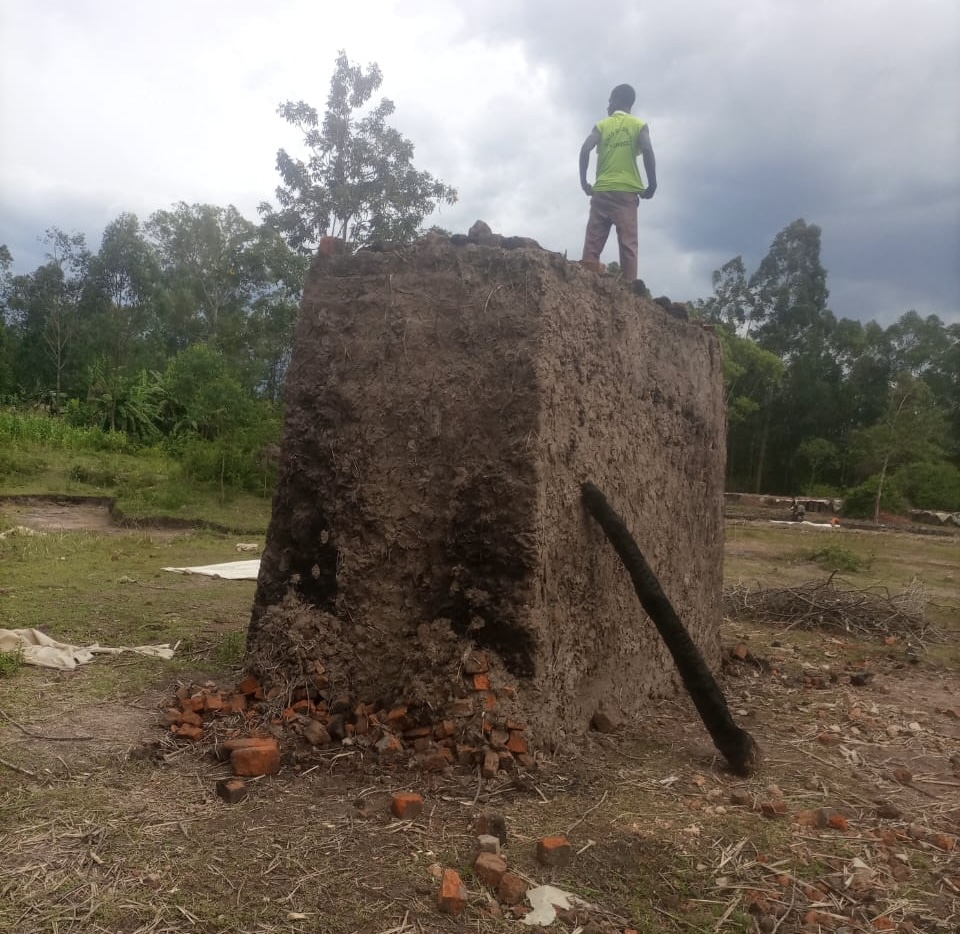
By Felix Ochieng Akech
A Nyamira County farmer has turned his waterlogged clay land into a brick-making business earning up to Sh30,000 per firing, and ending years of farm losses on half his tw-acre farm.
Maize, beans and watermelon had repeatedly failed Amos Achok’s farm in Nyamira in its wet and compacted clay soil.
“A quarter acre of beans should give at least 150 kilos. Here I harvested about 40 kilos,” he said. “Seeds would rot, fertilizer disappeared into the mud, and tractors could not even plough properly. Each season I lost between Sh8,000 and Sh10,000.”
But after using some of the clay to mould bricks to repair his kitchen, he dried them and “they didn’t crack. Neighbours started asking to buy some,” he said. “That’s when I realised this soil was good for something after all.”
He started making the burnt clay bricks using soil dug from marked sections of the farm. Every 1,000 bricks needed soil from a pit about 5 metres by 4 metres and 1 metre deep, which he then created new and better soil for.

“I don’t dig randomly. I rotate the pits, and after removing the clay, I refill them with crop residues, ash from the kiln, animal manure and topsoil,” Amos said. “I now use the refilled areas for bananas and napier grass, which do better than maize on the reclaimed soil.”
To make the bricks, he breaks the clay up, soaks it for one to two days in a lined pit, and mixes it by foot until it is sticky. He then moulds it in wooden frames and leaves the bricks to dry in the sun for five to seven days before firing.
Amos fires the bricks in a clamp kiln that he builds each time by piling up the unfired bricks with wood between them and covering the whole pile with mud.
“I put the firewood into channels at the base of the clamp, and the bricks are stacked above it,” he said. “Once lit, the fire burns for about 24 hours. I control the airflow using soil and metal sheets to ensure even burning.”

Each firing uses about one pickup load of firewood.
“If the fire is too strong, the bricks crack. If it’s weak, they remain soft. You have to monitor it the whole night,” said Amos.
After cooling, the bricks sell from the farm at between Sh7,000 and Sh8,000 per 1,000, and he sells to builders, schools, churches and families building their own homes. Most of his buyers collect their bricks for him, while larger orders use hired lorries.
Amos earns profits of Sh20,000 to Sh30,000 per firing after deducting the costs of his labour and firewood.

“Compared to crops, this income is predictable,” he said. “It pays school fees, buys livestock and supports the farm.”
RELATED NEWS:
Kalro offers all farmers low-cost pathway to 8x yields with laboratory soil tests
Farmers turn sand into soil with low-cost spin on global technologies
Soil compaction robs farmers of 60% of their yield
He still grows crops on the lighter soils, using income from bricks to pay for inputs.
“Not all land is for crops,” said Amos. “This soil failed me as a farmer, but it works as a raw material. Brick-making saved this land from being abandoned.”
“Sometimes the land is not useless,” Amos said. “It is just meant for something else.”
But he said brick-making must be planned carefully. “Clay doesn’t appear overnight, so you must think long term. If you dig, you must also restore.”
Are you a farmer looking to grow the most profitable crop on your farm, with or without irrigation. Use FarmBizAfrica’s HarvestMAX on https://harvestmax.farmbizapps.com and it will tell you in less than a minute what the highest income-earning crops are for your weather, soil type and this season, based on your seasonal weather forecast. Don’t make weather losses ever again, and more than triple your income.