Pineapple farmer triples profits to Sh1m per acre by finetuning
4 min read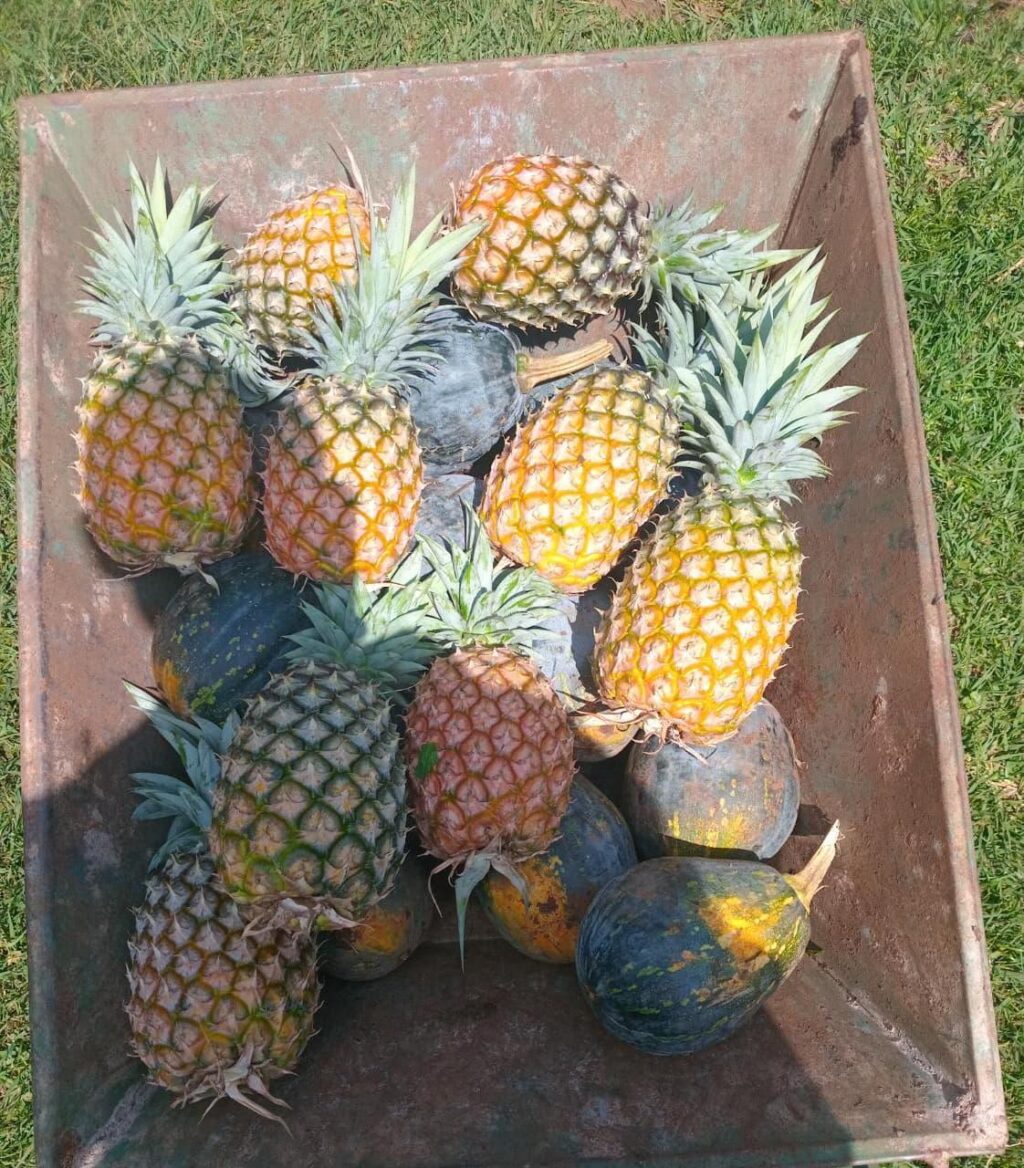
By Felix Ochieng Akech
A pineapple farmer in Migori has tripled his profits, now earning income of Sh1m an acre, by changing spacing, testing his soil, and forcing flowers.
Maxwell Nyokuk shifted to pineapples from maize and beans six years ago, to get a more drought-tolerant and profitable crop for his one acre in Rongo, Migori County, but he began with little knowledge.
“At first, I planted my pineapples without proper spacing. I just planted where there was space, thinking that the more plants I put, the higher the yield. I also applied fertiliser only once after planting and depended mostly on rainfall,” he said.
“Because of this, my plants were competing for nutrients, many fruits were small, and they matured at different times. When buyers came, they rejected many fruits due to poor size and uneven ripening. I was harvesting about 18,000 fruits per acre, but only around 12,000 were marketable,” he said.
“After attending a training by an extension officer, I learned that pineapples should be spaced at 30 centimetres within rows and 60 centimetres between rows in double-row planting. I uprooted part of my old crop and replanted using correct spacing,” he said.
“I also took soil samples to the county lab, and the results showed my soil was low in potassium and organic matter, which are very important for fruit size and sweetness.”
“Previously, I used to apply only DAP at planting. After soil testing, I started using compost manure before planting to improve soil structure, then NPK 17:17:17 two months after planting, and potassium-rich fertiliser like NPK 13:0:46 before fruiting,” he said.
“I now apply fertiliser three times instead of once, and I apply it in a ring around the plant, not directly on the stem. I also mulch with dry grass to hold in moisture and stop so many weeds.”.
Another change, as he learned what sold best was his move to forcing flowers.
“Before, flowering happened naturally, so harvesting was spread over months. But buyers prefer a set harvest because they want to collect in bulk,” he said.
“Now I use calcium carbide solution for flower forcing when the plants are about eight to nine months old and well developed. This helps the plants flower at the same time, which means I can harvest most of the crop all together,” he said.
“This helped me plan for the market and get better prices because I could sell larger volumes at once.”
“My average price improved to about Sh40 per fruit compared to about Sh25 before,” he said.
Altogether, his changes have solved four major problems, he said, in small fruit size, uneven maturity, low buyer confidence, and high rejection rates.
“My plants became more healthy, yield increased from about 18,000 to 28,000 fruits per acre, and marketable fruits increased to about 26,000 fruits,” he said. Rejections also fell. “Before, buyers rejected almost 30 percent of my fruits. Now rejection is less than five percent.”
READ ALSO:
Kilifi farmer banks on pineapples as season’s low-cost money maker
Self-help group learns pineapples in Nyeri break away from low-earning coffee
Nandi farmer who abandoned maize for pineapples has no regrets
“Yes, costs increased slightly because of soil testing, fertiliser and labour for replanting, but the increase in income is much higher than the extra costs. I now spend about Sh120,000 per acre compared to about Sh70,000 before, but my profits are so much higher, it is definitely worth it.”
“At the start, I was earning about Sh300,000 per acre per season. Now, I earn over Sh1,000,000 per acre after taking out my production costs. My profits have more than tripled,” he said.
“The key was to stop planting randomly and guessing with fertilisers. Pineapple is very sensitive to spacing and nutrients,” he said. “Small changes, when done correctly, can completely change the results.”.
“My next step is to start value addition by supplying peeled and packaged pineapples to hotels and schools, and also planting improved varieties that are sweeter and mature faster. I also want to invest in drip irrigation so I am not fully dependent on rainfall,” he said.
Are you a farmer looking to grow the most profitable crop on your farm, with or without irrigation. Use FarmBizAfrica’s HarvestMAX on https://harvestmax.farmbizapps.com and it will tell you in less than a minute what the highest income-earning crops are for your weather, soil type and this season, based on your seasonal weather forecast. Don’t make weather losses ever again, and more than triple your income.