
Snow pea farmer triples output by working directly with exporter on crop management
By Anyetta Ford and Wairimu Gikenye
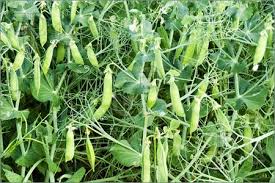
Cyprian Odhiambo has nearly tripled his snow pea yields in two years, rising from 118kg to 380kg per kilo of seed, by working directly with his main exporter on exactly when and how to fertilise and spray his crops.
Based in Mbooni, Makueni County, Cyprian moved his snow pea farming there in 2022 after failing to make it viable in Luo Nyanza. “Snow peas had never been grown in Nyanza, and people don’t consume them there. Exporters also aren’t keen on produce from Nyanza as it’s too far from Nairobi,” he said.
His breakthrough followed guidance from Lui Farm Ltd, his main exporter, which directed him on how to get higher yields while conforming with the strict European Union pesticide and handling regulations. “They guide us on what to spray and when, so that our produce meets export standards,” said Cyprian.
In his first season in Mbooni, he applied just one kilo of fertilizer per kilo of seed. “I didn’t apply enough fertilizer; I was using only one kilo per kilo of seed, but you’re supposed to use three to four kilos,” he said.
He was also under-spraying. “I used to spray against aphids once a week, but the recommendation is two to three times weekly. Snow peas are very delicate and timing is everything,” he said.
By correcting on these, he raised his yields to 380kg per kilo of seed, pushing close to the 400kg to 500kg ideal.
Achieving that increase has seen him run opposite to the trend in Kenya, where total snow pea exports have fallen sharply in the last two years. By 2023, Kenya’s total exports of snow peas had fallen from 8,200 tonnes in 2021, to 6,800 tonnes, according to the Horticultural Crops Directorate.
Cyprian said rising input prices have been a factor in this. “A 20 kg bag of calcium ammonium nitrate used to be about Sh2,500 in 2023; now it’s Sh3,500,” he said. Pesticides have risen around 25 per cent in price, while the high-yield F1 seed variety is often unavailable. “Every farmer wants F1 seed because it gives better yields, but sometimes you just can’t find it,” he said.
But by selling directly to an exporter he has been able to cover the input costs and grow his output.
Read Also:
Seed shortages exacerbating collapse of Kenyan vegetable exports, say exporters
Kenya’s only MRL tester safeguards export farmers from lost millions
Sugar snap, snow pea farmers enjoy more than doubled record prices
“There has been an increase in exporting companies in Makueni, unlike in the previous days, where there were many brokers. This has helped farmers in this region to enjoy their labour as they now deal directly with the exporters. The farmers are a bit safe in terms of earning as there are agreements made before the sale. With brokers, they always paid half and never paid the rest of the remainder. Brokers would even con farmers by saying their produce is rejects, while they would still go with the produce and sell the produce to exporters.”
In addition, “brokers come during the peak season and double the price, but after a week or two, they are gone, whereas with the export company, they remain throughout the year,” he said.
Generally, “farmers lack basic inputs like fertilizers and chemicals. When such essentials are lacking, definitely the production goes down. By lack, I mean they are expensive to purchase. They are readily available, yes, but the prices are exorbitant for farmers,” he said.
“That has made farmers demoralized because the inputs are high and the yields are below expectations and then buyers go as low as Sh70 per kilo, which is very low. But, even though the prices vary in different seasons, such as peak and off-peak, the exporters will always have their fixed prices that they never lower or raise. That has always been the agreement.”
The farmers are also protected from other costs. “Freight charges are on exporters, but they’ll always share once in a while by saying ‘the market is not good’ and we understand.”.
Working directly with an exporter has also aligned him with the country’s main export agency. “The procedures by KEPHIS do not affect us in any way because we have always been following them, and to some extent, they have not affected the production,” he said.
As a result, European prices of between Sh90 per kilo in summer and up to Sh150 per kilo in winter have continued to make the business worthwhile.
“Snow peas are a good business if you manage your inputs, timing, and scale well. It’s been a steep learning curve, but I’m getting there,” he said.
Are you a farmer looking to grow the most profitable crop on your farm, with or without irrigation. Use FarmBizAfrica’s HarvestMAX on https://harvestmax.farmbizapps.com and it will tell you in less than a minute what the highest income-earning crops are for your weather, soil type and this season, based on your seasonal weather forecast. Don’t make weather losses ever again, and more than triple your income.
Get your farming news by email.
Free. Market prices, crop news and farmer opportunities, straight to your inbox.