
Community milk cooler ups Kisumu farmer incomes 1/5th
By Felix Ochieng Akech
A new community milk cooler in Kisumu is lifting farmers’ incomes by 15–20 per cent, with smallholders such as Eddy Okello losing far less milk and earning steady prices.
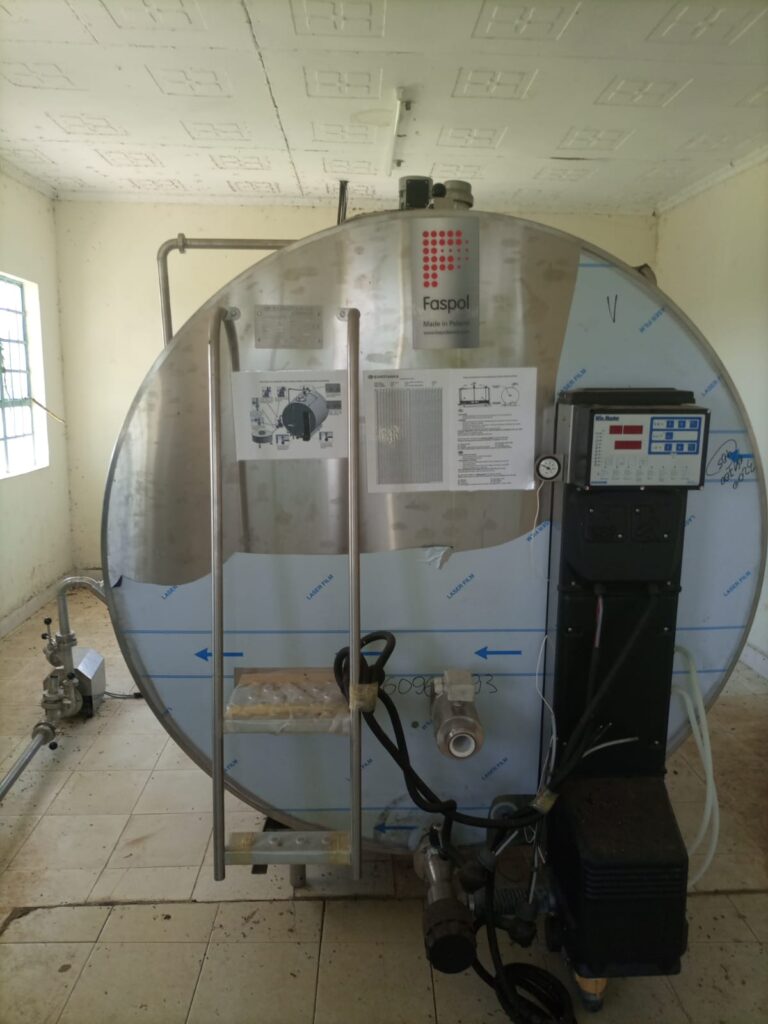
The 1,500-litre Bulk Milk Cooler (BMC), installed by the Kisumu Dairy Cooperative in 2022 at its main collection centre, now receives 1,000–1,300 litres a day from about 60 farmers across Kisumu, Otieno Oyoo, Nyakach and surrounding areas.
The cooperative charges Sh3 per litre for cooling, or Sh5 for non-members, and chills milk to about 4 degrees for early-morning collection by the processor.
Eddy joined the cooling centre in early 2023. Before that dairy farming felt like “rolling dice with the weather,” he said
“I used to sell to hawkers. But sometimes they came late and the milk spoiled. We used to keep milk in plastic containers in the kitchen. If the buyer delayed even one hour when it was hot, the milk would go bad. I remember many days I had to pour everything because it had clotted,” he said.
“Losses were too much. During the dry season, I could lose two or three litres almost daily. It was painful because cows eat every day but the milk was being wasted.” Delivering less than 15 litres a day, he said, meant “money disappearing almost literally down the drain.”
Cooperative manager Peter Musire said the entire region was facing the same problems. “Before we got this cooler in 2022, we were losing a lot of milk. During hot days, by the time collectors came, the milk had already spoiled. Farmers were really discouraged.”
Peter said the BMC sits at the cooperative’s main collection centre but serves a wide area. “Farmers from Otieno Oyoo, Nyakach and even some from Kisumu bring their milk here.”
“The stirrer mixes it so the quality stays even. The processor comes every morning between 5:30 and 6:00 a.m.”
“Since I joined this centre, at least I know my milk is safe. Hawkers pay fast but if they delay, you lose everything. With the cooler, you get receipts, proper testing, and better prices. It is better for long-term dairy farming,” said Eddy.
“I pay Sh3 per litre. But honestly, it is cheaper than losing milk at home. Even if I pay Sh90 in a day, I know all my milk will be accepted by the buyer.”
The BMC has strict rules for delivery, said Peter. “The milk must be delivered in clean aluminum cans, no water added, and cows must be milked in a clean area. If milk fails the lactometer or alcohol test, we don’t pour it in.”
Cleaning is intensive. “We use the CIP system, the valves and the top sprayer. We wash with hot water and detergent after the processor collects. If you don’t clean well, bacteria grow and the processor will reject the milk,” he said.
Eddy said this discipline had changed his home routines too. “We clean our cans more seriously now. If your milk fails the test here, you go back with it. That has taught us discipline. Even my wife says the kitchen is cleaner these days.”
As a result, “the quality has really gone up,” said Peter. “We don’t get penalties for bacteria anymore. The processor added Sh2 extra per litre for chilled milk.”
Related News:
Urban residents to save Sh2,000 monthly on power bills with new organic biogas digester
Kenya Dairy Board warns of dangerous milk in the market
Homa Bay aeration centre lays out vision of replacing middlemen with government system
Eddy said that was a bonus that adds up. “It looks small, but for someone like me delivering 10–12 litres a day, it adds up. In a month I feel the difference and the cooperative pays consistently every month.”
Electricity remains biggest headache,. “If power goes off for long, the milk can warm up. Cleaning also takes time because we wash the tank after every collection,” said Peter.
“We worry when the power goes off,” said Eddy. “But the reduced spoilage us so much, I have added one more cow this year because my market is now stable.”
“The centre has also brought unity. We meet here every morning, talk, share ideas. Also farmers are earning more. People used to fear dairy farming, but now many are coming back.”
Are you a farmer looking to grow the most profitable crop on your farm, with or without irrigation. Use FarmBizAfrica’s HarvestMAX on https://harvestmax.farmbizapps.com and it will tell you in less than a minute what the highest income-earning crops are for your weather, soil type and this season, based on your seasonal weather forecast. Don’t make weather losses ever again, and more than triple your income.ther forecast. Don’t make weather losses ever again, and more than triple your income.
Get your farming news by email.
Free. Market prices, crop news and farmer opportunities, straight to your inbox.