
Farmer ends sukuma wiki club root by giving growing patch a turn with maize and onions

By Felix Ochieng Akech
Sukuma wiki farmer Phanis Opisa has almost doubled her harvest after stopping a severe club root outbreak that had destroyed nearly half her crop.
The problem began when her sukuma started wilting three weeks after planting on her farm in Awendo, Migori County. “At first, I blamed the sun,” she said. “But even after watering, they kept dying. When I uprooted one, I saw the roots were swollen like a club thick and twisted. That’s when I realized something was eating them from inside the soil.”
She said the disease wiped out almost half her sukuma. “I lost almost half of my sukuma that time,” said Phanis. “From my quarter-acre, I used to harvest ten to twelve bags every two months, but that season I only got three. The rest never grew tall enough to pick. I used to sell to market women in Rongo town, but I had to stop for a while because they said my sukuma looked weak and yellowish.”
Phanis said she had planted sukuma in the same patch for years. “It’s close to water, so it was convenient. I never thought soil could get sick,” she said. “I just added cow manure and went on. I didn’t know I was helping the pest to stay and multiply.”
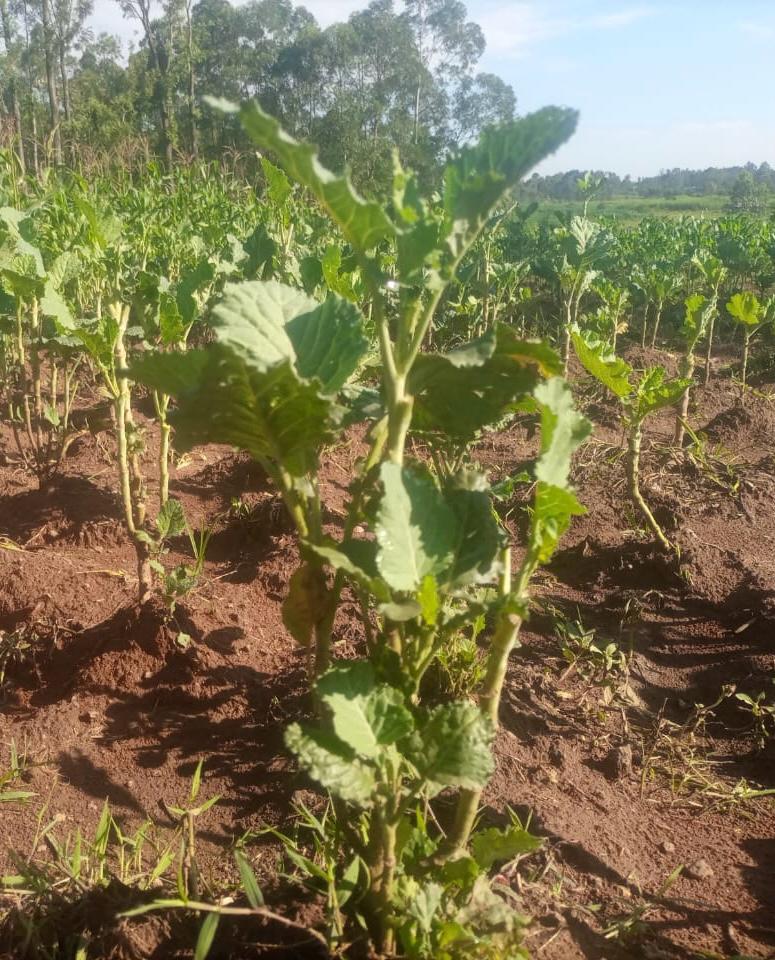
She said she first understood the problem after a discussion at church. “A friend told me her cabbage had suffered the same problem. She called it club root and said it comes from a soil disease that attacks sukuma and cabbage roots. She had solved it by planting maize and beans there instead for a season. I didn’t believe her until I visited her farm her new sukuma looked strong and healthy. That’s when I decided to rotate my crops too.”
Phanis said she rested the garden after harvesting the few plants that survived and planted maize and onions. “I later added wood ash and lime to the soil before planting sukuma again,” she explained. “I also raised the beds for better drainage and started removing any infected plants as soon as I saw them. I made sure no water stayed around the roots.”
She said the results came quickly. “This season, I’ve barely seen any wilting,” she said. “When I check the roots, they’re white and clean no swelling. The sukuma leaves are greener and bigger. I now harvest every week instead of every two weeks. From the new plot, I’ve almost doubled my harvest. The women who buy from me in Rongo say my sukuma now stays fresh longer.”
Read Also:
Farmers rescue sukuma wiki from yield-slashing, 20-year soil disease
Sack farming increases sukuma wiki production 75X in Makueni
Hardy Siberian kale (Sukumawiki) variety cultivars available for Kenyan farmers
Phanis said she also tried natural pest control. “I started intercropping sukuma with spring onions and marigolds. I think their smell helps keep away the small soil insects,” she said. “I’ve also reduced chemical sprays. I only use soap water and an organic foliar. My costs have gone down, and the sukuma still looks very healthy.”
Her main lesson, she said, is that continuous planting in the same soil exposes farmers to club root for years. “Don’t plant sukuma or cabbage in the same soil every year,” she said. “If you see swollen roots, move your garden immediately and let the soil rest. Add lime or wood ash before planting again. Club root hides in the soil for years if you ignore it. But once you change how you farm, the sukuma will reward you.”
Are you a farmer looking to grow the most profitable crop on your farm, with or without irrigation. Use FarmBizAfrica’s HarvestMAX on https://harvestmax.farmbizapps.com and it will tell you in less than a minute what the highest income-earning crops are for your weather, soil type and this season, based on your seasonal weather forecast. Don’t make weather losses ever again, and more than triple your income.
Get your farming news by email.
Free. Market prices, crop news and farmer opportunities, straight to your inbox.