
Kirinyaga farmer turns low-grade eighth acre into Sh190,000 thorned melon money spinner
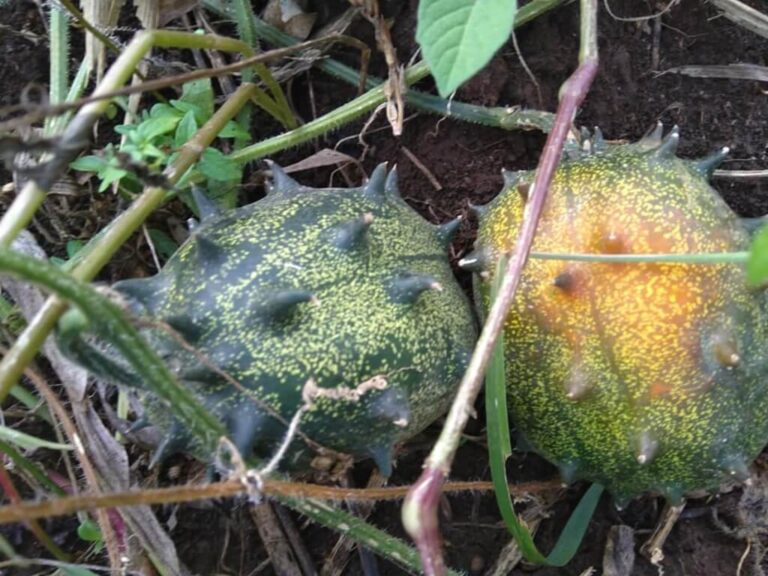
A Kirinyaga farmer is earning Sh190,000 from his eighth-acre plot every four months after pivoting from growing low-earning bananas and sugarcane to thorned melons.
Stanley Thuranira has set aside an eighth of his four-acre piece of land in Kutus to grow the African thorned melon. Towards the end of August, September, October, and early November he sells about 19,000 fruits at ten shillings each to traders in Nairobi’s Marikiti market and mama mbogas in Kutus town.
Kiwano, more commonly called the African thorned or horned melon has gone from a weed menace to lining farmer pockets because, underneath its tough exterior, the fruit is bursting with health benefits which many Kenyans are increasingly aware of.
“To get thorned melon buyers you’ll have to grow it through irrigation because there are limited buyers for the fruit once it rains and it starts growing wild on farms across the country,” Thuranira said.
Growing the fruit during the hot and warm season using irrigation also pushes its production to 30 fruits per plant. The water used to irrigate it should ideally be warm because the fruit thrives in heat. Thuranira archives this by filling water into a disused metal tank and watering his plants with a metal jerrycan. Once in the shamba, his fruits are watered five days a week.
Related News: Meru County leads in cultivation of thorny melon fruit
Related News: Health conscious Kenyans drive cultivation of neglected thorny fruit
The fruit should also be fed with plenty of manure or compost which besides giving the plant food to grow also holds the water fed to plants for up to five days.
The farmer informs that thorn melons come in three varieties in Kenya. These are giant, thornless, and thorned thorn melons. “The small thorned melons are the ones with a market and I ensure only its seeds go into my nursery,” he said.
The journey to commercial thorned melon farming begins with getting seeds from the healthiest and most vigorous fruits. These are harvested and completely sun-dried for about five days awaiting to be planted.
Right before planting these seeds are kept inside polythene bags for three to five days to speed up their sprouting and increase the germination percentage. They are then transferred to a nursery where they are planted in a set of three to five seeds for 21 days. “This ensures you can easily thin out the seedlings selecting the strongest two to three plants for every set to go to the field,” he said.
The seedlings are planted in the field three feet apart between the rows and four feet apart between each seedling. They are grown on raised rows which help to heat up the soil and prevent waterlogging which easily kills the fruit. This spacing gives the fruit enough space for its leaves to fill up and create food for as many fruits as possible.
When well-fed, the fruit starts flowering in a month and a half and gives its first set of fruits after three months.
While the fruit is not susceptible to most diseases, Stanley sprays a mixture of two litres of urine harvested from his rabbits diluted with three litres of water every three times every two weeks.
Related News: Dragonfruit farmer creates health and wealth, launching Vietnamese semi-arid crop in Kenya
Related News: Consumers chase healthier replacement for sugar vaulting stevia market above all other herbs
One thorned melon contains 18 per cent of the required daily vitamin C intake which minimises aging damage to the skin and also protects it from sun damage and parts of the skin darkening. It also enhances the skin’s healing process.
It also has a high amount of iron which prevents anaemia. The condition which reduces the amount of red blood cells the body produces causes a sufferer to be tired, short of breath, and dizzy, as well as having headaches and cold hands and feet. It also contains a healthy amount of magnesium which builds strong bones, especially in women who have just given birth and those going through menopause, and essential minerals like sodium, calcium, and potassium which prevent heart disease and regulate blood pressure– one of the rising causes of death in Kenya.
Are you a farmer looking to grow the most profitable crop on your farm, with or without irrigation. Use FarmBizAfrica’s HarvestMAX on https://harvestmax.farmbizapps.com and it will tell you in less than a minute what the highest income-earning crops are for your weather, soil type and this season, based on your seasonal weather forecast. Don’t make weather losses ever again, and more than triple your income.
Get your farming news by email.
Free. Market prices, crop news and farmer opportunities, straight to your inbox.