Livestock farmer stops calf and price losses with electronic ear tags
4 min read
By Felix Ochieng Akech
Livestock farmer Eilijah Rote ended an Sh8,000 cut in his cow’s sales price and has stopped losing his calves with electronic ear tags that record each animal’s vaccination, breeding, and health history.
“I lost that money because I couldn’t prove vaccination,” said Elijah Rote from Oyani Farm in Uriri, Migori County. “The trader asked if I had any proof of vaccination. I didn’t. He lowered the price by almost Sh8,000. That day I told myself I must start keeping better records.”
Elijah said he began using Radio Frequency Identification (RFID) tags after a friend managing a ranch in Nakuru showed him the system. “He showed me how they scan and see all the details on the phone. I was shocked,” he said. “I searched online, found a supplier in Kisumu, AgriTech Solutions Kenya, and ordered my first ten tags.”
Each tag cost Sh900, with a handheld reader and a FarmTrack mobile app that stores and syncs data. “The app works even offline,” he said. “It shows vaccination schedules, milk yields, and breeding records as different screens.”
Elijah said he fitted the first tags himself after watching a tutorial. “It’s just like fixing a normal ear tag,” he said. “Once fitted, you scan it, and it immediately records that cow’s ID.”
The tag has a blinking light. “That light shows the tag is active,” he said. “It tells me when the cow was last served, when she calved, and even when to expect the next heat.”
He said the technology stopped missed vaccinations and improved milk consistency.
“Before this, I was running everything from my head. I’d forget vaccination dates or repeat treatments for the same cow. I lost a calf once because I couldn’t trace the records,” he said.
But now I no longer forgot vaccination days. I got alerts on my phone, and my vet could check treatment history before giving any drug. Milk yields became more consistent,” he said.
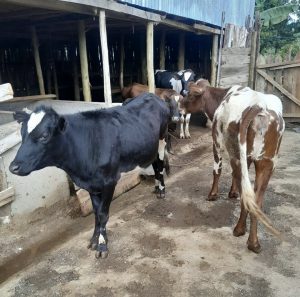
When one of his Friesian cows showed signs of mastitis, the vet checked the app to confirm it had received antibiotics two weeks earlier and adjusted treatment. “That’s when I saw the real value,” said Elijah. “No more guesswork.”
He said buyers now offer better prices because of the records. “Traders like that I can show full records – vaccination dates, breeding cycles, even parent history,” he said. “It builds trust. One buyer from Rongo paid me better because he saw everything on the screen.”
“Even small farmers like me can manage animals like commercial ranches,” he said. “I can now plan breeding, monitor milk, and track growth easily.”
“I didn’t want to be left behind,” he said. “If traceability becomes mandatory, I’ll already be ready.”

He said the tags can be removed but are traceable. “They can be cut off, yes, but it leaves a mark, and every tag number is saved in the system. So if someone steals and sells the cow, it’s easy to trace,” he said.
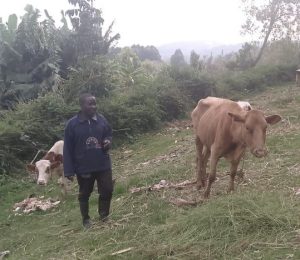
Elijah’s herd of twelve cows is now fully tagged, and he plans to extend the system to goats. “It’s like giving every animal a birth certificate,” he said. “Each tag carries its life story.”
His move into tagging cones as the Ministry of Agriculture is implementing a national digital livestock identification programme. The National Livestock Identification and Traceability System (N-LITS), launched in 2019 and expanded as ANITRAC in 2025, aims to assign every cow a unique ID for disease control and export compliance.
“When an animal moves or is vaccinated, that information can be updated immediately,” said Dr Peter Njoroge of the Kenya Livestock Research Organization (KALRO). “It’s an efficient way to control disease outbreaks and prevent theft because each animal can be traced digitally.”
Large ranches such as Loldia in Naivasha and Brookside Dairy contract farms have already adopted electronic tagging. “It makes a big difference when you can trace every litre of milk back to the cow that produced it,” said a Naivasha farm supervisor.
Related News:
Ruiru farmer gets close to Sh100,000 insurance payout on stolen milk cow
Timed insemination saves Nyeri farmer from quitting dairy after cows fail to conceive
Laikipia farmer shares cure for oxalis and bee poison after five cows die in a day
Youth groups supported by the Kenya Dairy Board in Nyeri and Kiambu counties are piloting similar systems using shared scanners and mobile apps. A starter kit including 10 tags, a handheld reader, and software costs between Sh8,000 and Sh15,000, depending on brand and features.
Suppliers include AgriTech Solutions Kenya, FarmSmart Africa, and Rift Valley Tech Supplies. Some county governments subsidise tags through insurance and digital extension programmes in arid counties such as Isiolo and Baringo.
“Markets in the EU, UAE, and other regions want full traceability for meat and hides,” said Dr Njoroge. “Without digital identification, our farmers could miss out on premium markets.”
Elijah said the technology helps him manage his herd more efficiently. “Now I know which cow is due for service, which one needs minerals, and when to expect milk drops,” he said. “I don’t lose money anymore.”
Are you a farmer looking to grow the most profitable crop on your farm, with or without irrigation. Use FarmBizAfrica’s HarvestMAX on https://harvestmax.farmbizapps.com and it will tell you in less than a minute what the highest income-earning crops are for your weather, soil type and this season, based on your seasonal weather forecast. Don’t make weather losses ever again, and more than triple your income.