Migori farmer cuts feed ¼+ and lifts milk production by weighing portions
4 min read
By Felix Ochieng Akech
When Migori farmer David Odeka realised his dairy cows were eating too much and producing too little, he invented a simple way to measure daily feed portions cutting waste by nearly half and boosting milk output.
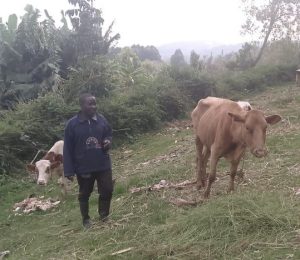
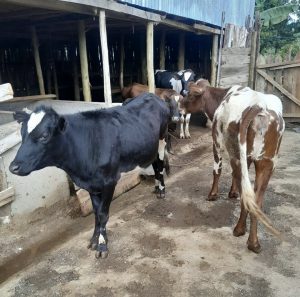
At Oyani Livestock Farm in Uriri sub county, Odeka noticed the farm’s Friesian and Jersey cows were consuming huge amounts of silage and hay, yet yields remained stagnant. “We used to just pile feed in the trough and let them eat until they were full,” he says. “But feed prices kept rising, and we couldn’t afford the losses anymore.”
In fact, the over feeding was reducing his cows’ milk.
When cows are fed too much every day, they start turning feed into body fat instead of milk. Their bodies waste energy storing fat, so milk production drops even though they are eating plenty.
Too much rich feed can also upset digestion and make cows feel uncomfortable or sick, which further reduces milk.
Cows make the most milk when they are eating the right volume of feed, which saw David set out to find exactly how much feed each cow needed.
Working with a local livestock officer, Odeka began measuring rations using a hanging scale and plastic bucket marked in kilograms. He recorded how much each cow consumed and how much milk it produced. Within three weeks, the difference was clear.
“Before, we were giving around 60 kilograms of feed per Friesian daily,” Odeka explains. “Now, after adjusting according to weight and milk yield, each gets about 45 kilograms and milk production has actually gone up.”
The secret, he said, is feeding according to body weight and production, not guesswork.
Jerseys, being smaller, require about 14 kilograms of total dry matter daily, while Friesians need between 45–60 kilograms depending on their stage of lactation.
“Once we measured and recorded properly, we realised most farmers overfeed by at least 20 per cent,” said Miriam Atieno, a livestock extension officer in Migori who trains dairy farmers on feed budgeting.
According to Atieno, the standard rule of thumb is that a dairy cow should consume feed equal to about 3% of its body weight in dry matter each day.
For example, a 500kg Friesian requires around 15kg of dry matter, which can come from silage, hay, and concentrate combined. Wet feed like fresh Napier or maize silage should be weighed to account for moisture, which is something most farmers overlook.
To simplify feeding at Oyani, Odeka built a small feed measurement table using locally available buckets, plastic tubs, and hanging scales.
He marked the average weights of common feeds, for example, one 20 litre bucket of maize silage weighs roughly 12kg. This allows workers to measure portions without expensive equipment.
“We’ve saved almost one-third of our feed costs,” Odeka says. “And the cows are healthier they finish their feed without leftovers, and the milk stays consistent.”
The change also reduced manure waste and improved hygiene around the sheds. “When cows overeat, a lot of feed goes undigested,” Atieno explains. “By feeding the right amount, you not only save feed but also improve digestion efficiency.”
Related News:
Kenya’s forgotten drought miracle answer to wheat & animal feed shortages
Fodder sorghum doubles milk production
Nyandarua farmer maintains milk production through hay & silage-making
Beyond Oyani, local farmers are now adopting Odeka’s feed measurement method, marking containers and using cheap weighing scales sold in markets for under Sh1,000. “It’s not about big machines,” Odeka says. “It’s about understanding what your cow really needs and not feeding blindly.”
His next goal is to integrate a simple mobile app for feed records something that could help farmers across Migori track costs and milk yields over time.
“This is a small idea,” Odeka smiles, “but it’s saving us thousands every month. Feeding smart is better than feeding more.”
Key Takeaways for Farmers
Feed cows based on 3% of their body weight in dry matter per day.
Use buckets or hanging scales to measure feed instead of estimating.
Record feed input vs. milk yield adjust portions gradually.
Avoid leftovers: consistent feeding improves digestion and milk stability.
Small changes in feed management can reduce costs by up to 30%.
Are you a farmer looking to grow the most profitable crop on your farm, with or without irrigation. Use FarmBizAfrica’s HarvestMAX on https://harvestmax.farmbizapps.com and it will tell you in less than a minute what the highest income-earning crops are for your weather, soil type and this season, based on your seasonal weather forecast. Don’t make weather losses ever again, and more than triple your income.